
Socket preservation
A graft placed at the time of extraction maintains ridge volume and keeps future implant or restorative options open.
Patient Education
The jawbone is living tissue that depends on stimulation to stay healthy. A natural tooth root presses on the bone each time you chew, signaling the body to maintain it. When a tooth is lost — or when gum disease destroys the supporting bone — that signal stops, and the bone gradually shrinks away.
Lost bone can make implants difficult and can change the shape of the face over time. The good news is that bone can be rebuilt. Modern grafting and guided regeneration techniques restore the foundation, often making treatment possible in cases that were once considered hopeless.
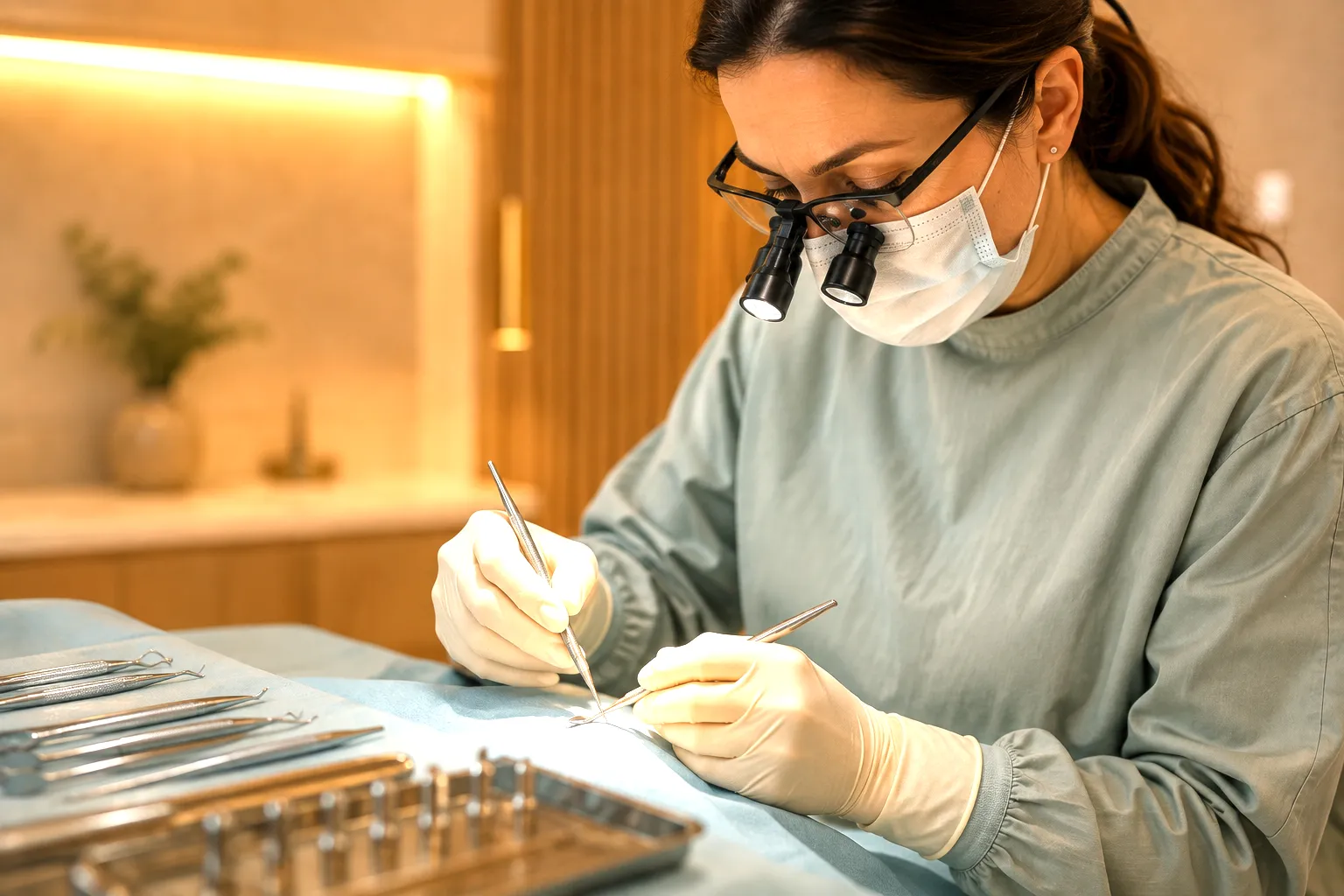
Several common situations lead to loss of jawbone — most of them silent until the effect becomes visible or an implant is planned:
Grafting adds material to the deficient site that acts as a scaffold. Your own bone then grows into and replaces it over the following months, creating new, living bone. The approach is matched to how much bone is missing and where:
A graft placed at the time of extraction maintains ridge volume and keeps future implant or restorative options open.
Rebuilds width and height in a jaw ridge that has narrowed or flattened, restoring a foundation for implants.
A barrier membrane protects a graft site so the body can regenerate bone where it has been lost.
Adds bone beneath the sinus in the upper back jaw, where the sinus often expands after tooth loss.
Larger, more advanced reconstruction for sites with significant bone deficiency.
Rebuilds gum tissue alongside bone to protect the result and improve appearance.
Many grafts heal quietly in the background while you go about daily life, and are often performed at the same time as other treatment. Once the foundation is restored, dental implants become a predictable, long-term option.
Further reading on our blog: Bone Loss in the Jaw: Causes, Risks & Consequences looks at why the jaw resorbs, and Bone Regeneration: Modern Approaches covers the techniques used to rebuild it.
Every effort is made to preserve natural teeth. But when a tooth is too damaged by infection, fracture, trauma, or advanced periodontal disease to be saved, a carefully planned extraction can protect your overall oral health and prevent further complications.
Removing the tooth is only the first step. Without treatment, the jawbone around the empty socket can begin to shrink almost immediately — leading to bone loss, shifting teeth, changes to the bite and facial profile, and greater difficulty replacing the tooth later.
Dr. Smith frequently places a bone graft immediately after a tooth is removed — often called ridge or socket preservation — to hold the natural contours of the jaw and limit future loss. Grafting the site as the tooth comes out helps:
As a specialist in periodontics, implant dentistry, and oral reconstruction, Dr. Jane Smith has extensive experience treating severe infection, advanced bone loss, failed dental work, and complex reconstruction needs. The goal is never simply to remove a tooth — it is to preserve and rebuild the foundation needed for lifelong oral health.
Many patients feel anxious about extractions. Sedation options let treatment be carried out safely and comfortably while keeping stress and anxiety to a minimum.
Whether the goal is preserving bone, preparing for a dental implant, or restoring your smile after tooth loss, every extraction is performed with the future in mind — protecting bone today to create the strongest possible foundation for tomorrow.
If bone grafting, a sinus lift, or ridge augmentation has been recommended and you’d like to be certain it’s the right approach, a specialist second opinion is a low-cost, no-pressure way to confirm your options first.
Request a second opinionFor referring doctors
Ridge augmentation, GBR, sinus elevation, and block grafting for the sites that need a foundation before implants — planned and sequenced in coordination with your restorative treatment.
This information is provided for educational purposes and is not a substitute for a professional evaluation. Diagnosis and treatment should always be determined by a qualified dental professional based on your individual condition.