
Dental Implant Dentistry
Bone Reconstruction & Grafting
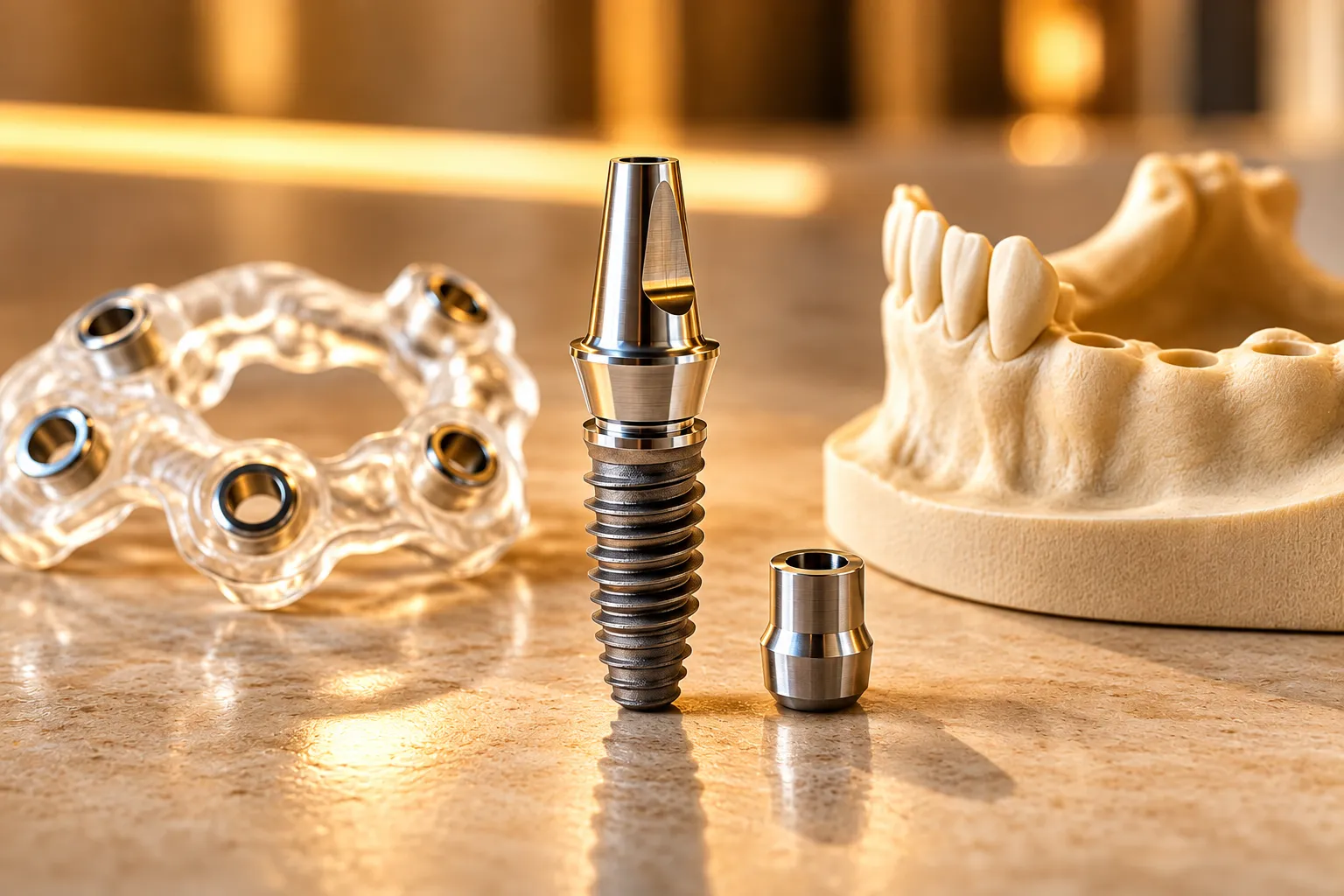
What Is Dental Bone Grafting?
Bone grafting — also described as bone augmentation — is the foundational procedure in implant dentistry. It restores jawbone volume lost to extraction, periodontal disease, infection, or trauma, because without enough bone an implant cannot be placed securely, positioned correctly, or expected to last.
Jawbone is not static. It exists to carry the load of teeth, and it maintains itself in response to that load. Remove the tooth and the bone that surrounded it loses its purpose: it remodels, thins, and shrinks — fastest in the first months, then slowly and indefinitely. This is why a jaw that has been missing teeth for years looks and measures so differently from one that lost them last month.
A graft does not simply fill the gap with a substitute. The material placed acts as a scaffold and, over the following months, your own body works through it — resorbing the graft and depositing living bone in its place. What ultimately holds the implant is your bone, grown into the shape the graft made room for.
Bone grafting is a family of procedures rather than a single operation. A socket grafted at extraction, a thin ridge widened before implants, a sinus floor lifted in the upper back jaw, and a defect around a diseased implant are all bone grafting, but they differ substantially in technique, healing time, and predictability. The specific pages linked below cover each in detail.
Bone grafting materials
Four categories of graft material are in routine use, and many cases combine them — a slow-resorbing mineral to hold volume, mixed with a material that turns over faster.
Autograft — your own bone
Harvested from elsewhere in your jaw. It carries your own living bone cells and remains the biological benchmark, at the cost of a second surgical site.
Allograft — human donor bone
Processed and sterilized bone from a licensed tissue bank. Widely used, avoids a second surgical site, and integrates predictably.
Xenograft — animal‑derived mineral
Bone mineral, usually bovine, with all organic material removed. It resorbs very slowly, which makes it excellent at holding ridge volume over time.
Alloplast — synthetic material
Manufactured graft materials such as calcium phosphates and bioactive glasses. Fully synthetic, with no donor or animal source.
Who it’s for
- Insufficient bone volume for planned dental implants
- Bone loss following extraction, periodontal disease, infection, or trauma
- A collapsed, narrow, or knife-edged ridge that needs rebuilding first
- Long-standing tooth loss with significant resorption already established
- Upper back teeth where the sinus has expanded into the available bone
- Patients told elsewhere that they don’t have enough bone for implants
- Rebuilding support around a natural tooth or a diseased implant
What to expect
- 1
Assessment & 3D imaging
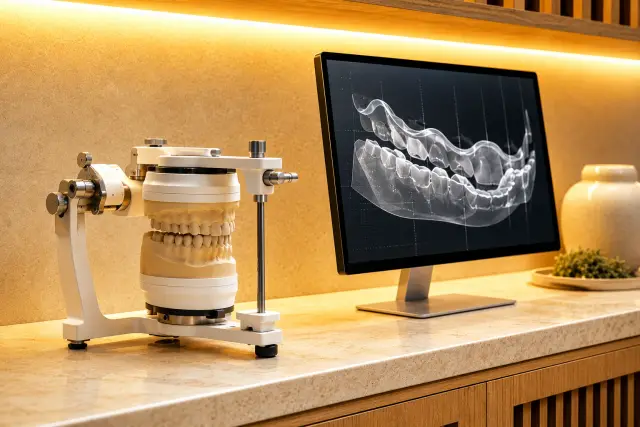
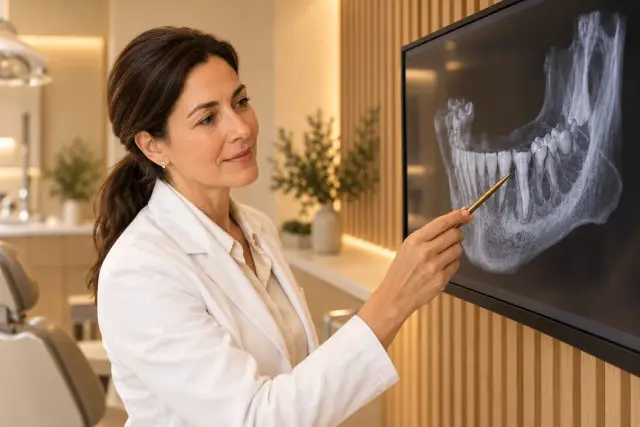
CBCT imaging maps bone volume, density, and architecture in three dimensions — measuring what’s actually there against what the planned implant needs.
- 2
Choosing technique and material
The type of defect determines both the surgical approach and the graft material. A contained socket, a narrow ridge, and a sinus floor each call for something different.
- 3
Grafting procedure
Under local anesthesia the site is accessed and cleaned, graft material is placed and shaped, and a barrier membrane is added where the space needs protecting from soft tissue.
- 4
Closure & protection
The gum is closed over the graft. Keeping the site covered and undisturbed during early healing matters more to the outcome than almost anything else.
- 5
Bone maturation
Your body remodels the graft into living bone over the following months. Larger reconstructions take proportionally longer.
- 6
Confirmation & implant placement
Follow-up imaging confirms the rebuilt volume before implants are placed — we verify rather than assume the site is ready.
Recovery & aftercare
Bone grafting is performed under local anesthesia and is typically well tolerated. Most patients describe the first two or three days as sore rather than painful, with swelling peaking around day two or three and then improving. Over-the-counter pain relief and cold compresses are enough for the majority of cases.
Protecting the graft is what determines the result. That means no smoking, no vigorous rinsing or spitting, no pressure on the site from chewing or from a denture we haven’t relieved, and no pulling at the lip to inspect the area. Losing an occasional surface granule in the first week is normal; significant swelling, drainage, or a bad taste is not, and warrants a call.
Healing before implants can be placed generally ranges from a few months for small grafts to considerably longer for larger reconstructions. Rather than committing to a date in advance, we re-image and confirm the site has matured — placing an implant into an immature graft defeats the purpose of the graft.
Common questions
- Is bone grafting painful?
- It is performed under local anesthesia, so the procedure itself is comfortable. Afterward, most patients report soreness rather than pain, managed with over-the-counter medication. Grafts that require harvesting bone from a second site in your own jaw involve more discomfort, which is one reason donor and synthetic materials are so often used instead.
- How long does bone grafting take to heal?
- It depends heavily on what was done. A small socket graft matures much faster than a large ridge reconstruction or a sinus lift. Rather than quoting a fixed number, we confirm readiness with a follow-up scan — the site is ready when the imaging says it is.
- Where does the bone come from?
- There are four sources, often combined: your own bone (autograft), processed human donor bone from a licensed tissue bank (allograft), bone mineral of animal origin (xenograft), and synthetic materials (alloplast). They differ in how quickly the body turns them over and how well they hold volume, and the choice is matched to the defect.
- Is donor or animal-derived graft material safe?
- Materials from licensed tissue banks are rigorously screened and processed to remove cellular and organic components, leaving the mineral scaffold. They have been used routinely for decades. We’re happy to discuss the specific material planned for your case, including options if you have religious or personal preferences about the source.
- Can I have implants without a bone graft?
- Frequently, yes — plenty of patients have adequate bone and need no augmentation at all. Grafting is recommended when the measurements show there isn’t enough bone to place an implant safely and in the right position. When a graft can reasonably be avoided, we’ll say so.
- What happens if a bone graft fails?
- Grafts occasionally fail to integrate, usually because of infection, movement of the site during healing, or smoking. If that happens the site is cleaned, allowed to settle, and the graft can generally be repeated — often successfully once the cause has been addressed.
- Does bone grafting affect my sinuses or nerves?
- Grafting in the upper back jaw involves the sinus and grafting in the lower back jaw sits near the nerve supplying the lip and chin, which is precisely why CBCT imaging is used to map both before surgery. Planning in three dimensions is what keeps these structures out of harm’s way.
- I was told I don’t have enough bone for implants. Is that final?
- Rarely. It usually means implants can’t be placed into the bone as it stands today, which is a different statement. Ridge augmentation, sinus elevation, and guided bone regeneration exist to change that starting point, and many patients turned away elsewhere turn out to be treatable.
Want a second opinion first?
If you’ve been quoted implant, bone-grafting, or sinus-lift treatment and want to be sure it’s the right plan, a specialist second opinion is a low-cost, no-pressure way to confirm your options before you commit.
Request a second opinionTalk to a specialist about bone reconstruction & grafting
Whether you’re a patient considering treatment or a dentist referring a case, we’ll evaluate, plan, and coordinate care from diagnosis through follow-up.
Sources
This information is provided for educational purposes and is not a substitute for a professional evaluation. Diagnosis and treatment should always be determined by a qualified dental professional based on your individual condition.