Dental Implant Dentistry
Full‑Arch Implant Rehabilitation
What Is Full‑Arch Implant Rehabilitation?
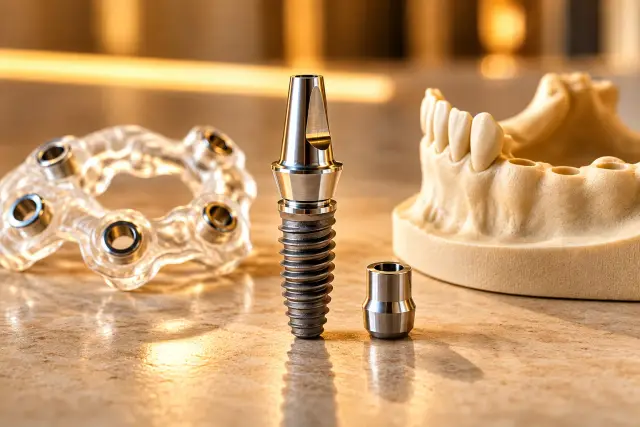
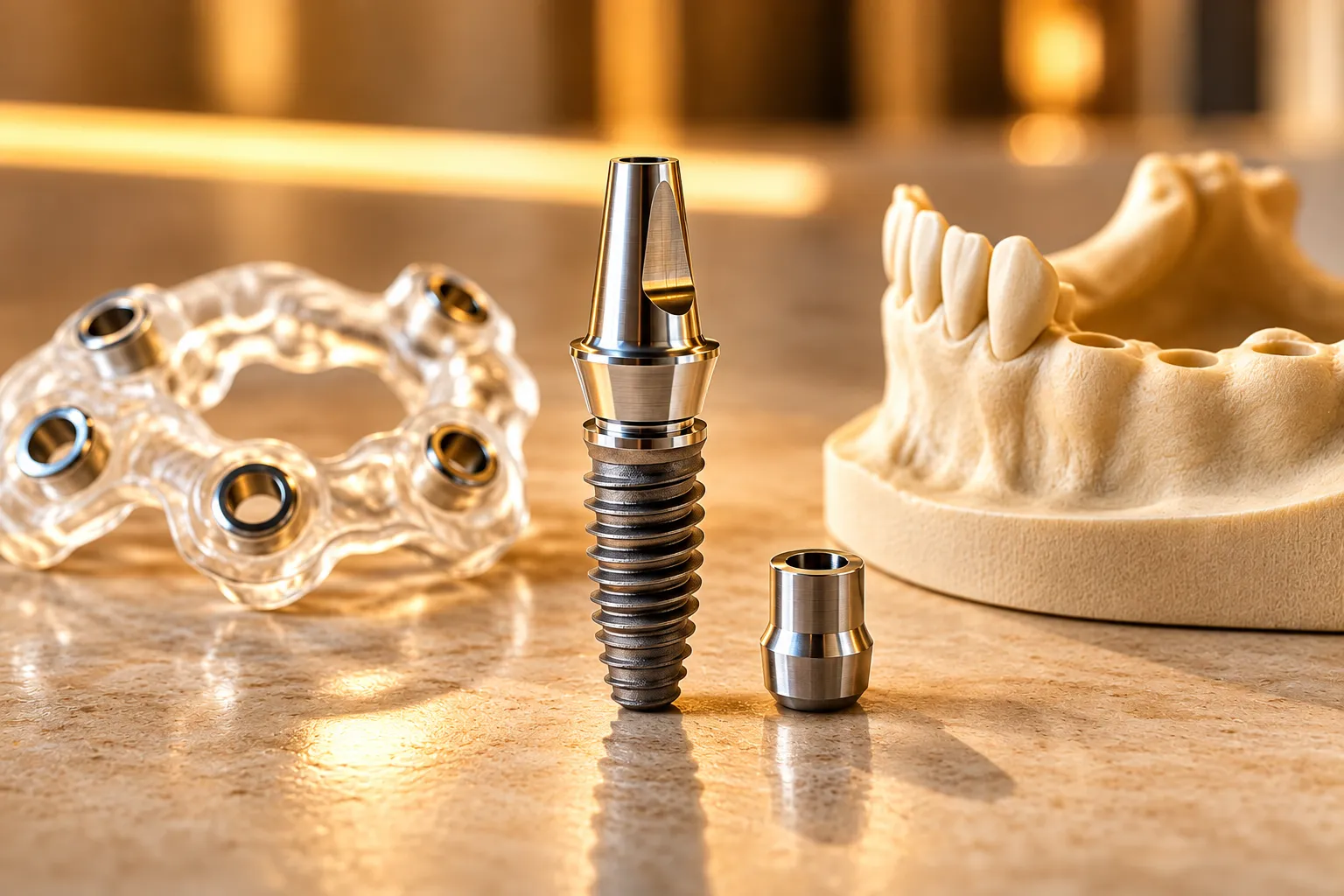
Full-arch implant rehabilitation replaces an entire upper or lower set of teeth with a fixed bridge carried on a small number of strategically placed implants — typically four to six per arch. Unlike a denture, the restoration is attached to the implants and does not move, shift, come out at night, or need adhesive.
The insight that makes it possible is that a full arch of teeth doesn’t require a full arch of implants. Bite forces can be distributed across a rigid bridge to a handful of well-positioned supports, and the implants at the back can be tilted forward to engage the denser, more plentiful bone toward the front of the jaw. That tilting is what lets many patients avoid the extensive grafting that vertical placement in resorbed back bone would otherwise require.
This is the treatment for people at the end of a long dental road: an arch of teeth that periodontal disease has undermined beyond saving, or an existing denture that has never really worked. It is a significant undertaking, and it is planned as a reconstruction of the whole arch rather than as a series of tooth replacements.
The result restores more than chewing. A full-arch prosthesis is designed to support the lip and cheeks, set the vertical dimension of the face correctly, and give back a bite that works — things a loose lower denture cannot do at all.
Common full‑arch approaches
These describe how many implants carry the arch and how they’re positioned. The right one is determined by your bone, your bite, and your goals.
All‑on-4® implant concept
Four implants per arch, with the two rear implants tilted forward to engage denser bone. Minimizes the need for grafting and is the most widely recognized protocol.
All‑on-6 implant protocol
Six implants per arch for additional support and load distribution — often preferred for heavy bites, grinders, or where longer-term redundancy is valued.
Custom full‑arch rehabilitation
An implant number and configuration designed entirely around your anatomy, bone volume, and esthetic goals rather than a preset protocol.
Implant‑retained overdenture
A removable prosthesis clipping onto a small number of implants. Considerably more stable than a conventional denture, easier to clean, and a lower-cost option — but still taken out daily.
Who it’s for
- Most or all teeth missing in one or both jaws
- An entire arch of teeth failing from advanced periodontal disease
- Existing removable dentures that are loose, painful, or unstable
- A lower denture that will not stay in place — the most common reason patients come in
- Difficulty chewing, speaking, or eating in public
- Facial collapse or a sunken appearance from long-term tooth loss
- A preference for fixed teeth over anything removable
What to expect
- 1
Comprehensive planning
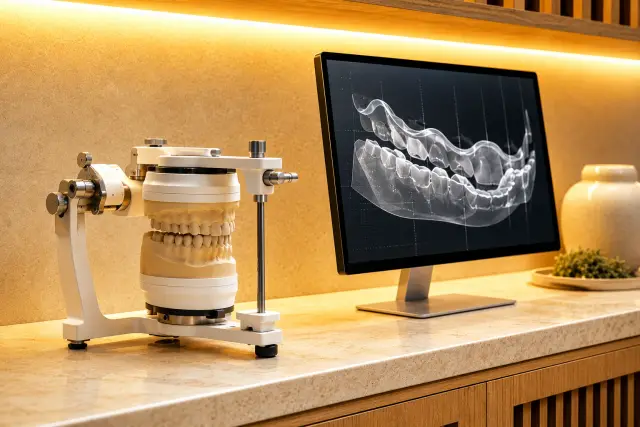
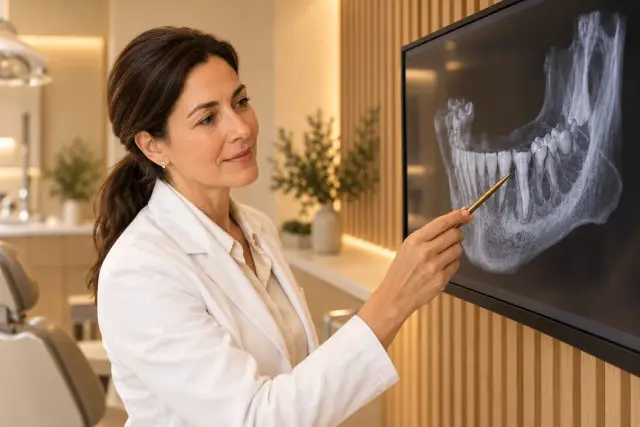
CBCT imaging, digital scanning, and a full smile and bite analysis map the arch. Placement is planned digitally so implants engage the best available bone and reduce the need for extensive grafting.
- 2
Surgical day
Any remaining failing teeth are removed, the ridge is prepared, and typically four to six implants per arch are placed in one coordinated visit, usually with sedation.
- 3
Immediate provisional teeth
In most cases a fixed provisional bridge is attached the same day, so you leave with teeth rather than with nothing.
- 4
Healing & integration
The implants integrate with the bone over the following months while you wear and function on the provisional.
- 5
Refining the design
The provisional is used as a working prototype — how it looks, how you speak, and how you chew all inform the final design before anything is made permanent.
- 6
Final restoration
A definitive fixed bridge is fabricated and fitted, designed for facial support, balanced bite function, and appearance, in coordination with your restorative dentist.
Recovery & aftercare
The surgical day is a substantial appointment and the first week is the most demanding part of the process — expect noticeable swelling and bruising peaking around the second or third day, then improving steadily. Prescribed pain relief and cold compresses cover it for most patients.
You will be on a soft diet for several weeks and a non-chewing-intensive one for longer. The provisional bridge is strong enough for normal life but not for hard or crusty food, and overloading it during integration is the main avoidable risk in the whole treatment.
Cleaning underneath the bridge becomes part of daily life from the outset — a fixed full-arch restoration is cleaned around and beneath rather than taken out, and you’ll be taught the technique before you leave. Long-term maintenance visits are not optional with this treatment; they are what makes it last.
Common questions
- How long does full-arch treatment take from start to finish?
- Most patients receive fixed provisional teeth on the day of surgery, then function on those while the implants integrate over the following months before the definitive bridge is made. So you have fixed teeth almost immediately, but the finished restoration comes later in the year.
- Are these teeth removable?
- The bridge is fixed — attached to the implants with screws and not removable by you. It is designed to be unscrewed by the dentist for maintenance, which is different from a denture you take out at night.
- How is this different from implant-supported dentures?
- An implant-retained overdenture clips onto a small number of implants and is still removed daily for cleaning; it’s more stable than a conventional denture but still a denture. A fixed full-arch bridge stays in. Overdentures cost less and are easier to clean; fixed bridges feel far more like natural teeth. Both are legitimate, and which suits you depends on your priorities and anatomy.
- Will I need bone grafting?
- Often less than you’d expect. Tilting the posterior implants to use the denser bone available further forward avoids grafting in many cases where vertical placement would have required it. Severely resorbed jaws may still need augmentation, which the planning scan determines.
- Do I really only need four implants?
- Four can be sufficient — the concept is well established — but it isn’t automatic. Bone quality, how hard you bite, whether you grind, and whether we’re treating one arch or both all feed into whether four, five, or six is the right number for you. We plan the number to the case, not to a brand name.
- How do I clean under a fixed bridge?
- With a combination of a water flosser, specialized floss threaders, and interdental brushes designed to reach beneath the bridge. It takes practice and is genuinely more involved than brushing natural teeth. You’ll be taught it thoroughly, and the maintenance appointments include professional cleaning under the prosthesis.
- What happens if one implant fails years later?
- A full-arch bridge is designed with some redundancy. Depending on which implant is affected and where it sits, the bridge can often be supported by the remaining implants while the site heals and a replacement is placed. It is a manageable problem, not a return to square one.
- Will it change how I look?
- Usually for the better, and deliberately so. Long-term tooth loss shortens the lower face and lets the lips fall inward. A full-arch restoration is designed to restore that facial support and the correct vertical height, which is why the provisional stage — where the design is tested and adjusted — matters so much.
Want a second opinion first?
If you’ve been quoted implant, bone-grafting, or sinus-lift treatment and want to be sure it’s the right plan, a specialist second opinion is a low-cost, no-pressure way to confirm your options before you commit.
Request a second opinionTalk to a specialist about full‑arch implant rehabilitation
Whether you’re a patient considering treatment or a dentist referring a case, we’ll evaluate, plan, and coordinate care from diagnosis through follow-up.
Sources
This information is provided for educational purposes and is not a substitute for a professional evaluation. Diagnosis and treatment should always be determined by a qualified dental professional based on your individual condition.