

Advanced Periodontal Care
Scaling & Root Planing (Deep Cleaning)
What Is Scaling and Root Planing?
Scaling and root planing is the most effective non-surgical treatment for periodontal disease — often considered the gold standard for treating gum disease. When plaque and bacteria collect beneath the gumline, they can trigger chronic inflammation that gradually destroys the bone and tissue supporting your teeth — and, left untreated, can lead to recession, loose teeth, and tooth loss.
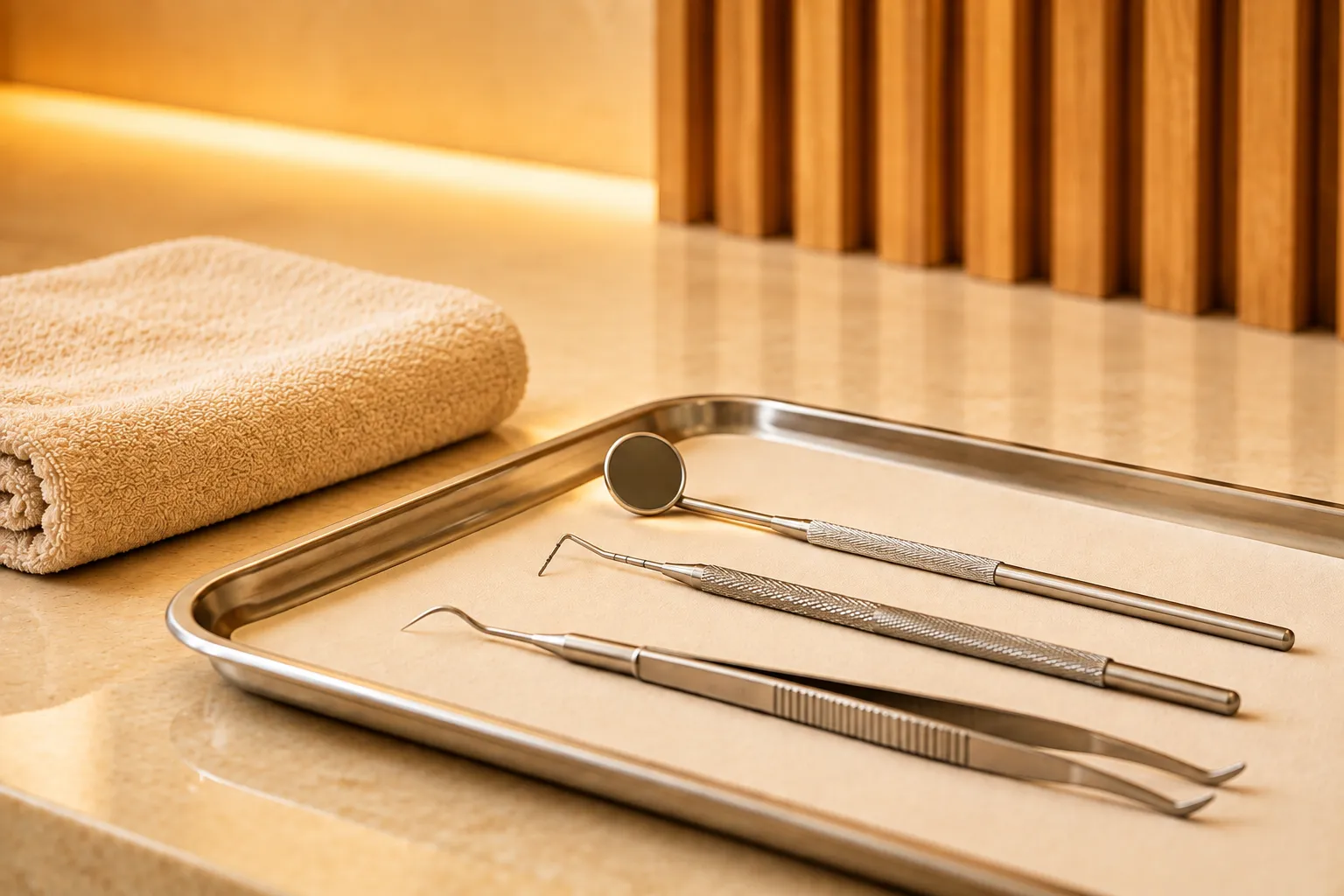
Scaling removes plaque, tartar, and bacterial biofilm from the teeth and from beneath the gums. Root planing then smooths the exposed root surfaces, helping the gums reattach more securely and making it harder for bacteria to build up again. It is often the first step in bringing gum disease under control.
Who it’s for
- Gingivitis that hasn’t responded to routine cleanings
- Early to moderate periodontitis with deeper pockets
- Persistent bleeding gums or chronic bad breath from bacterial buildup
- Early bone loss associated with periodontal disease
- Heavy calculus deposits beneath the gumline
- Patients who have not had a dental cleaning in several years
- As the first phase of treatment before deciding whether surgery is needed
What to expect
- 1
Charting first
Pocket depths, bleeding points, recession, and bone levels are recorded so there is a baseline to measure the response against.
- 2
Comfort
Local anesthesia is typically used to numb the treatment area, so cleaning below the gumline is comfortable rather than something to endure.
- 3
Scaling
Ultrasonic and precision hand instruments remove plaque and calculus from above and below the gumline, including deposits fused to the root.
- 4
Root planing
The root surfaces are smoothed and cleaned of contaminated deposits, so the gum can reattach against a surface that isn’t harboring bacteria.
- 5
Staging
Depending on the extent of disease, treatment is completed in one appointment or divided across visits, commonly by quadrant or half the mouth at a time.
- 6
Re-evaluation
The mouth is re-charted a few weeks later. This is the appointment that determines whether the disease is controlled or whether surgery is warranted.
Recovery & aftercare
Most patients notice mild tenderness and cold sensitivity for a few days afterward, which is easily managed with over-the-counter pain relief and a desensitizing toothpaste. The numbness from local anesthesia wears off over the first few hours.
As the inflammation resolves, swollen gum tissue shrinks back to a healthy volume — so teeth can look slightly longer and spaces between them can open up. This is the swelling going down rather than something being taken away, and it is a sign of healing even though it doesn’t feel like one at first.
Excellent home care and keeping the recommended maintenance visits are what make the results last. Once the gums have settled we re-chart, confirm the response, and set an appropriate periodontal maintenance schedule.
Common questions
- Is scaling and root planing the same as a regular cleaning?
- No. A routine cleaning removes plaque and tartar above the gumline for patients with healthy gums. Scaling and root planing is a therapeutic procedure that treats periodontal disease by cleaning below the gumline and smoothing the tooth roots.
- Will my gums grow back after treatment?
- The gums can become healthier and inflammation can subside, but lost gum tissue does not typically regenerate on its own. If significant recession is present, gum grafting may be recommended.
- How long do the results last?
- With good home care and regular periodontal maintenance, the benefits can be long-lasting. Ongoing care is essential to help prevent gum disease from recurring.
- Does scaling and root planing hurt?
- It shouldn’t. Local anesthesia is used for the areas being treated, so the cleaning itself is comfortable. Afterward, expect tenderness and cold sensitivity for a few days — noticeable but readily managed with over-the-counter medication and a desensitizing toothpaste.
- Why does it take more than one appointment?
- Because doing it properly takes time. Thorough instrumentation below the gumline across a whole mouth is more than one visit’s work, and treating a section at a time under anesthesia is more comfortable and more accurate than rushing all of it in one sitting.
- Why do my teeth look longer and my gums seem to have shrunk?
- Inflamed gum tissue is swollen. As the infection resolves, that swelling goes down and the gum returns to its true position — which reveals how much support had already been lost beneath it. It is the resolution of disease showing you the underlying reality, not the treatment causing recession.
- Will I need surgery afterward?
- That’s precisely what the re-evaluation appointment determines, and for many patients the answer is no. Pockets that have shallowed and stopped bleeding need maintenance, not surgery. Sites that remain deep and inflamed are the ones where surgery gets discussed.
- How often will I need this repeated?
- Scaling and root planing is a course of treatment, not something repeated indefinitely. Once the disease is controlled you move on to periodontal maintenance at three-to-four month intervals. Repeating full deep cleaning is only appropriate if disease genuinely recurs.
- Do I need antibiotics with it?
- Usually not. Mechanical removal of the biofilm and calculus is what resolves the infection; antibiotics don’t penetrate an established biofilm well enough to substitute for it. Locally applied antimicrobials are sometimes useful at specific stubborn sites, and systemic antibiotics are reserved for aggressive or unusually rapid disease.
- Can the bone I’ve already lost be rebuilt?
- Sometimes, depending on the shape of the defect. Deep, narrow defects contained by surrounding bone walls respond to regenerative therapy; broad, shallow horizontal loss generally cannot be rebuilt. Where regeneration isn’t realistic, the aim is to stop further loss and keep what remains — which is achievable in the great majority of cases.
Talk to a specialist about scaling & root planing (deep cleaning)
Whether you’re a patient considering treatment or a dentist referring a case, we’ll evaluate, plan, and coordinate care from diagnosis through follow-up.
Sources
This information is provided for educational purposes and is not a substitute for a professional evaluation. Diagnosis and treatment should always be determined by a qualified dental professional based on your individual condition.