
TMJ & Functional Bite Therapy
Comprehensive TMJ Evaluation
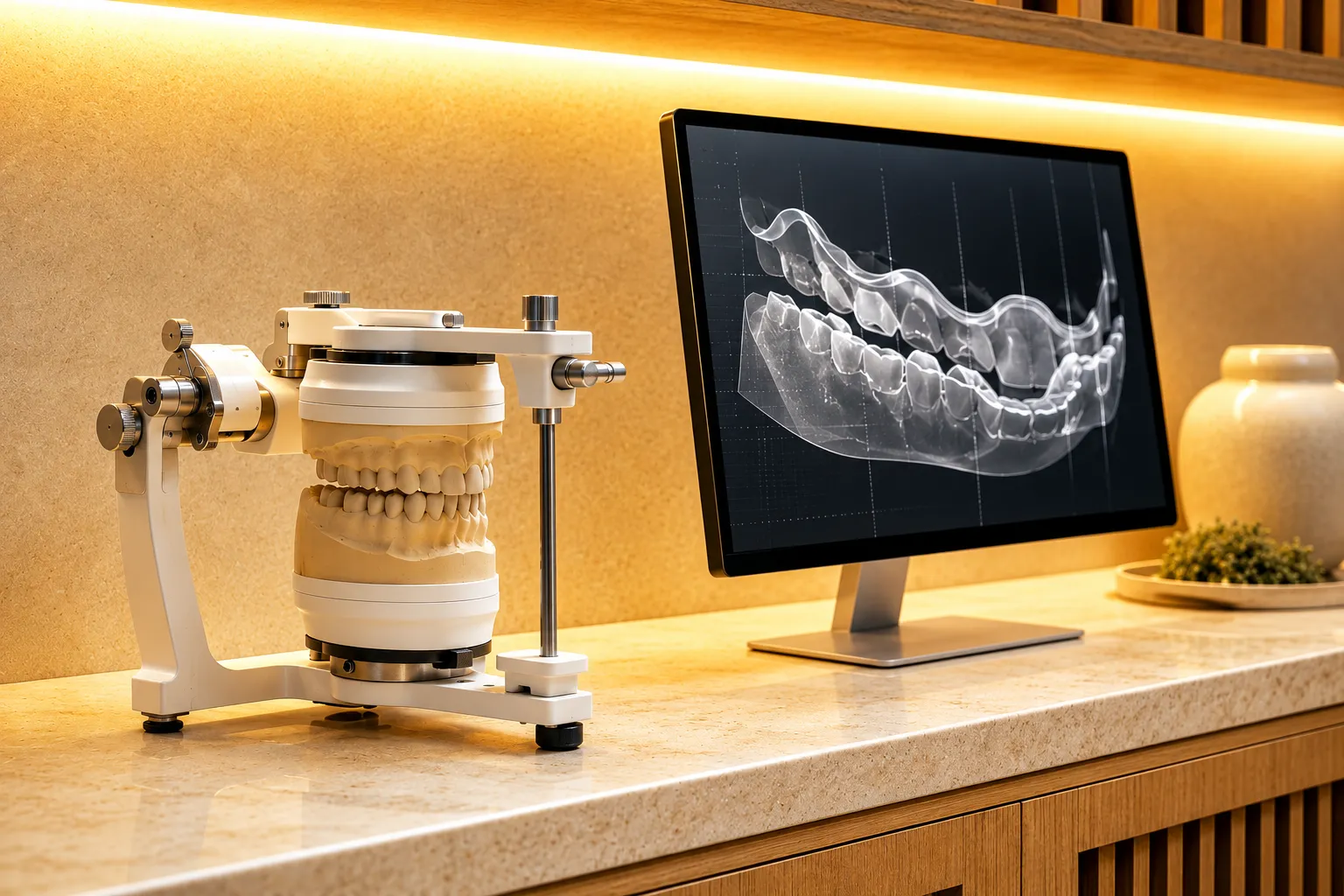
The temporomandibular joints (TMJ) work continuously with the chewing muscles, teeth, and bite to let you speak, chew, and swallow. When this system becomes unbalanced, it can cause jaw pain, headaches, muscle fatigue, clicking or popping, limited movement, and chronic grinding.
Because jaw pain can originate in the joints, muscles, bite, or surrounding structures, effective treatment begins with an accurate diagnosis. A comprehensive functional assessment is designed to identify the true source of discomfort before any treatment is recommended.
The single most useful thing an evaluation establishes is whether your problem is muscular or joint-based, because the two feel similar and respond to different things. Muscular pain — by far the more common — is a dull, diffuse ache in the cheeks and temples, worse in the morning or under stress, often with headaches and tender muscles on palpation. Joint problems localize to the joint itself just in front of the ear, and produce mechanical symptoms: clicking, catching, or the jaw locking.
Not every joint noise is a disorder. Painless clicking that doesn’t limit how far you can open is common in the general population and usually needs monitoring rather than treatment. A jaw that locks, or a click that has recently changed character, is a different matter.
It is also worth saying plainly that most TMJ disorders improve with conservative, reversible care — splints, muscle therapy, habit change, and time. Irreversible treatment, whether extensive bite reshaping, full-mouth reconstruction, or surgery, is not the starting point for a condition that so often settles without it. The evaluation exists to establish which small minority of cases genuinely needs more.
Who it’s for
- Jaw pain, tension headaches, or facial discomfort
- Clicking, popping, catching, or limited jaw movement
- A jaw that has locked open or closed
- Chronic teeth grinding or clenching
- Muscle fatigue or tightness around the jaw, temples, or neck
- Waking with a sore or stiff jaw
- Unexplained tooth wear, cracked teeth, or restorations that keep fracturing
- Ear pain or fullness where an ear examination found nothing wrong
What to expect
- 1
History & pain pattern
When it hurts, what makes it worse, how it started, stress and sleep, and any previous treatment. The pattern often distinguishes muscular from joint pain before anything is examined.
- 2
Functional assessment
Range of opening measured, the path the jaw takes as it opens, joint sounds and where in the movement they occur, and lateral and forward movement.
- 3
Muscle palpation
The chewing muscles and those of the neck and shoulders are systematically palpated for tenderness and referred pain — the most informative part of the exam in muscular cases.
- 4
Joint examination
The joints are loaded and palpated to determine whether the pain genuinely originates there rather than in the muscles overlying them.
- 5
Bite & wear analysis
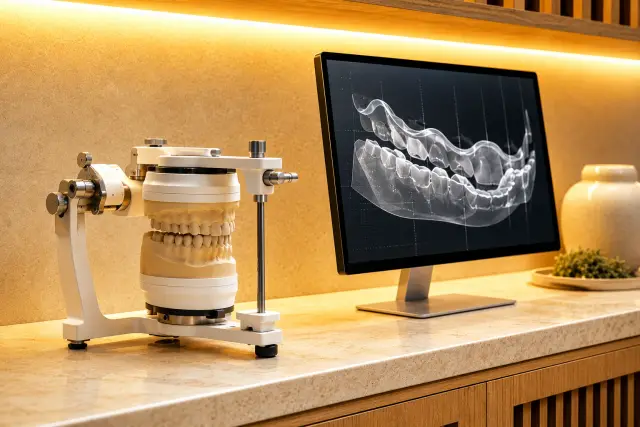
How the teeth meet, whether any interference exists, and the pattern of wear — which records years of grinding history far more reliably than memory does.
- 6
Imaging when indicated
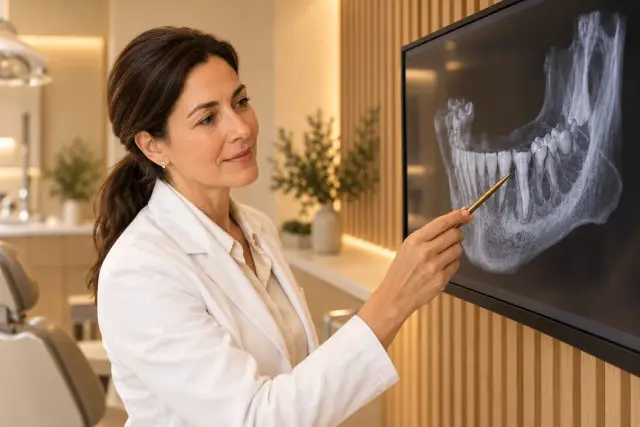
Imaging is taken when it will change the plan — most often where there is locking, a history of trauma, joint pain not responding to treatment, or suspected degenerative change.
- 7
Diagnosis & plan
Findings are explained, the muscular and joint components separated, and a conservative plan set out with what to expect and over what timescale.
Recovery & aftercare
The evaluation is non-invasive, so there is no recovery period. Palpating tender muscles can be briefly uncomfortable — and reproducing your familiar pain is itself a diagnostic finding rather than a problem.
Based on the findings we recommend conservative therapy, which may include a custom splint, targeted muscle therapy, habit awareness, jaw exercises, and — where a specific interference is genuinely implicated — bite adjustment.
Progress is monitored over time and the plan adjusted by response rather than assumption. Where symptoms suggest something outside our scope, such as inflammatory joint disease or a primary headache disorder, we refer rather than treat around it.
Common questions
- What causes TMJ disorders?
- Usually a combination: muscle overactivity from clenching or grinding, stress, joint changes, previous trauma, and sometimes an unstable bite. Single-cause explanations are generally too simple, which is why the evaluation looks at all of these rather than assuming one.
- Is clicking in my jaw a problem?
- Not necessarily. Painless clicking that doesn’t limit your opening is common and usually needs monitoring rather than treatment. It becomes significant when accompanied by pain, when the jaw catches or locks, or when a long-standing click suddenly stops and your opening reduces.
- Will I need imaging?
- Not always. Many cases — particularly muscular ones — are diagnosed on clinical examination alone. Imaging is used where there’s locking, a history of trauma, joint pain that isn’t responding, or suspicion of degenerative change.
- Why do I wake up with a sore jaw?
- Most commonly sleep bruxism. Clenching and grinding during sleep loads the chewing muscles for hours without you knowing, so the pain is at its worst on waking and eases through the morning. That specific pattern is one of the more reliable pointers in the whole assessment.
- Can TMJ problems cause headaches or ear pain?
- Yes. The temporalis muscle covers the side of the head, so tension in it commonly presents as a temple headache. The joint sits immediately in front of the ear canal, so joint and muscle pain is frequently mistaken for an ear problem — a substantial number of patients arrive having been told their ears are normal.
- Will I need surgery?
- Almost certainly not. The overwhelming majority of TMJ disorders respond to conservative, reversible treatment. Joint surgery is reserved for a small number of specific structural problems that haven’t responded to proper non-surgical care, and it is not where treatment begins.
- Does stress really cause this?
- It contributes substantially, mostly through clenching. Many people clamp their teeth together under concentration or stress without any awareness of doing it, and the muscles are loaded for hours a day. Recognizing the habit is often one of the more effective parts of treatment.
- How long will it take to get better?
- Muscular pain often improves noticeably within weeks of starting a splint and addressing the habits driving it. Joint problems are typically slower and more variable. We’ll give you a realistic timeframe for your specific diagnosis rather than a generic one.
Why Choose PerioEdge for TMJ & Functional Bite Therapy?
Successful treatment of temporomandibular disorders begins with understanding the complex relationship between the teeth, bite, jaw joints, muscles, and surrounding oral structures. At PerioEdge, Dr. Smith and her team take a comprehensive, evidence-based approach to diagnosis and treatment, recognizing that lasting relief depends upon identifying and correcting the underlying source of dysfunction rather than simply masking symptoms.
Led by Dr. Smith, an accomplished periodontist, educator, and academician, our practice is built upon many years of advanced clinical experience and an unwavering commitment to precision-driven patient care. Throughout her distinguished career, Dr. Smith has successfully placed thousands of dental implants, reflecting an extraordinary understanding of oral anatomy, bone biology, occlusion, and the functional relationships that support long-term oral health.
Our philosophy emphasizes precision, patient education, minimally invasive treatment, and concierge-level care. Patients throughout Austin and Central Texas trust PerioEdge because they value exceptional clinical expertise, individualized care, and the reassurance of being treated by a practice recognized for excellence in periodontics, implant dentistry, and comprehensive oral rehabilitation.
Talk to a specialist about comprehensive TMJ evaluation
Whether you’re a patient considering treatment or a dentist referring a case, we’ll evaluate, plan, and coordinate care from diagnosis through follow-up.
Sources
This information is provided for educational purposes and is not a substitute for a professional evaluation. Diagnosis and treatment should always be determined by a qualified dental professional based on your individual condition.