
Tooth Extraction
Tooth Extraction & Bone Grafting
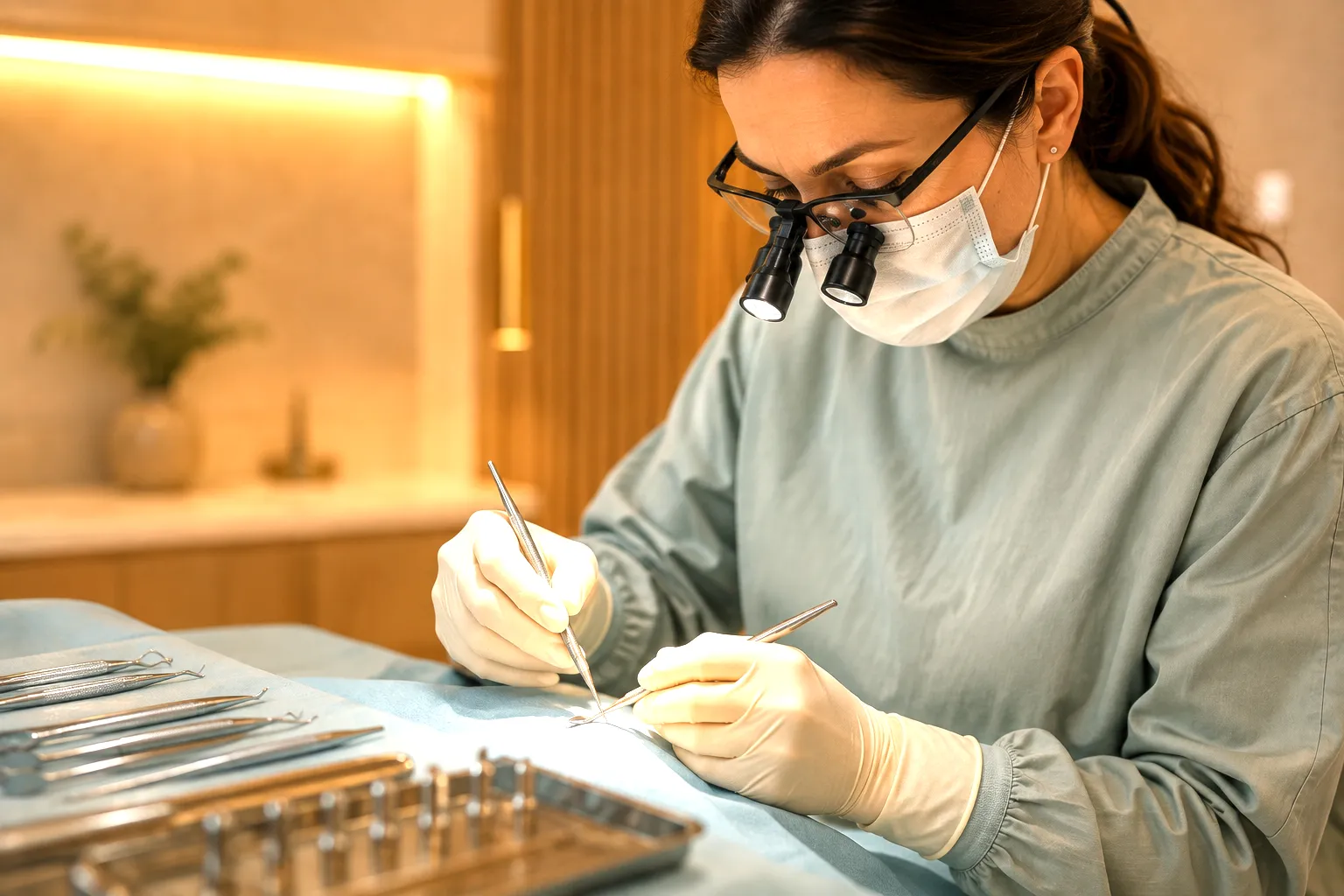
Once a tooth is removed, the surrounding jawbone begins to shrink because it no longer receives stimulation from the tooth’s root. Over time this can change facial appearance, compromise neighboring teeth, and make future implant placement more challenging. While socket preservation maintains existing bone, some patients need a more comprehensive bone grafting procedure to rebuild bone already lost to infection, periodontal disease, trauma, or long-term tooth loss.
Bone grafting places specialized graft material into areas of deficiency, where it serves as a scaffold for your body’s natural healing. Over the following months your body replaces the graft with healthy living bone, restoring strength and volume — one of the most important steps toward successful, long-lasting dental implants.
When grafting is performed
At the time of extraction
Grafting immediately after removal helps preserve and rebuild the jaw before significant bone loss occurs.
Before implant placement
When bone loss already exists, grafting is done months ahead to rebuild adequate volume.
During implant surgery
In selected cases, grafting and implant placement are completed in the same procedure.
Who it’s for
- Significant bone loss already present at the site
- Bone damaged by infection or advanced periodontal disease
- A tooth missing for an extended period
- A large bone defect after extraction
- Additional bone needed before implant placement
- Preserving long-term facial support
What to expect
- 1
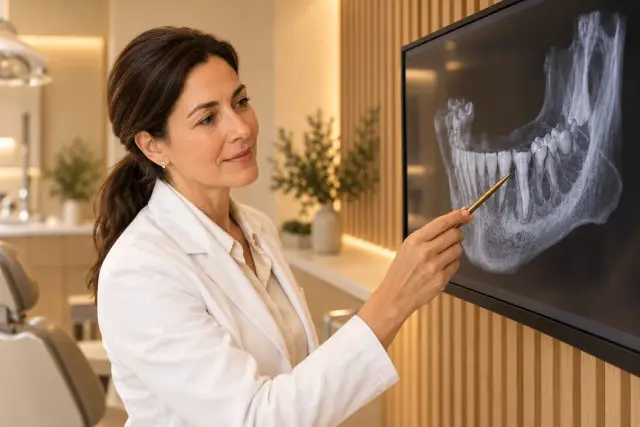
Assessment & 3D imaging
CBCT imaging evaluates the quantity and quality of existing bone before treatment.
- 2
Extraction & grafting
The tooth is removed gently, the site is cleaned, and graft material is placed, protected by a membrane when appropriate.
- 3
Bone maturation
Over the following months, your body incorporates the graft into healthy new bone.
- 4
Implant readiness
Once the foundation is rebuilt, the site is ready for predictable implant placement.
Recovery & aftercare
Recovery is generally similar to a routine extraction — mild swelling, temporary tenderness, minor bruising, and brief dietary restrictions — with detailed instructions to support healing.
Healing continues over several months while the graft matures into natural bone before implant placement or restoration proceeds.
Common questions
- When is bone grafting performed?
- It can be done at the time of extraction to preserve and rebuild bone, before implant placement when bone loss already exists, or — in selected cases — at the same time as implant surgery.
- Why is bone grafting important for implants?
- Healthy bone is essential for implant stability and success. Rebuilding the jaw before placement supports stronger, more natural-looking, and longer-lasting results.
- What’s the difference between this and socket preservation?
- Scale and intent. Socket preservation maintains what is already there at the moment of extraction. Bone grafting rebuilds volume that has already been lost — to infection, periodontal disease, or years without a tooth. Preserving is smaller and more predictable; rebuilding is what’s needed once the bone has gone.
- How long does the graft take to become usable bone?
- Several months in most cases, with larger grafts taking longer than small ones. We re-image to confirm the site has matured rather than working to a fixed interval — an implant placed into an immature graft undermines the reason for grafting at all.
- Can it be done at the same visit as the extraction?
- Frequently, yes, and it’s usually the better plan. Grafting at the time of removal means one surgery instead of two and starts from a larger volume of existing bone than waiting would.
- Does the graft hurt more than the extraction itself?
- Not usually. Recovery from an extraction with grafting is broadly similar to an extraction alone — mild swelling and tenderness for a few days. Larger reconstructions involve more swelling, and you’ll be told which to expect.
- What could make a graft fail?
- Infection, movement or pressure on the site during healing — particularly from an unrelieved denture — and smoking, which is the single largest avoidable factor. Failed grafts can generally be redone successfully once the cause is addressed.
- Is there an alternative to grafting?
- Sometimes: a shorter or narrower implant, an implant angled to use bone elsewhere, or a bridge or partial denture instead. These aren’t always suitable and each has trade-offs, but they’re worth discussing rather than assuming grafting is the only route.
Talk to a specialist about tooth extraction & bone grafting
Whether you’re a patient considering treatment or a dentist referring a case, we’ll evaluate, plan, and coordinate care from diagnosis through follow-up.
Sources
This information is provided for educational purposes and is not a substitute for a professional evaluation. Diagnosis and treatment should always be determined by a qualified dental professional based on your individual condition.