


Tooth Extraction
Tooth Extraction & Socket Preservation
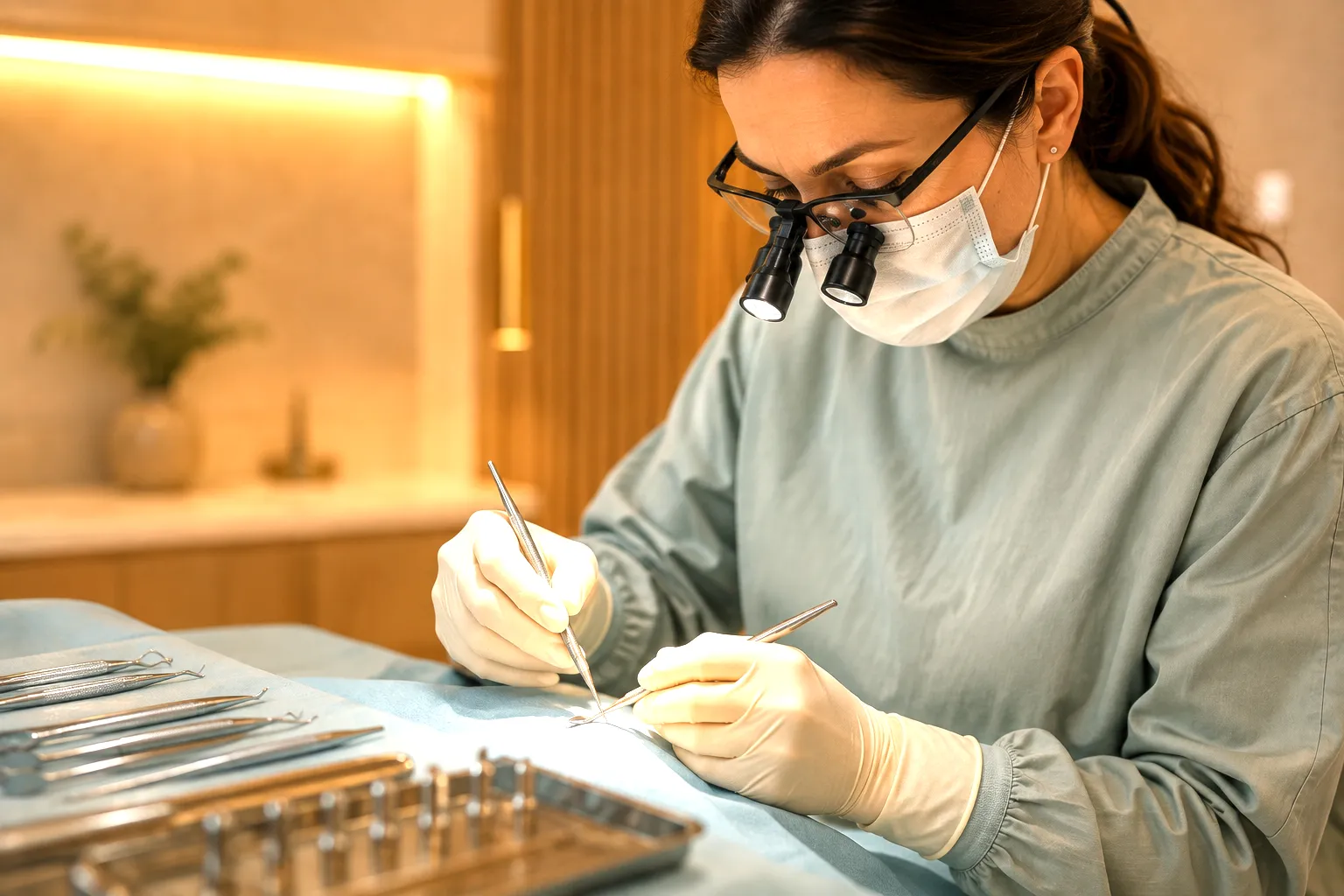
When a tooth is removed, the surrounding jawbone naturally begins to shrink — a significant portion of ridge width can be lost in the first year. Socket preservation places bone graft material into the socket at the time of extraction, protected with a membrane when needed, to limit that collapse and maintain the natural contour of the jaw.
Preserving the site early makes a future implant simpler and more predictable, supports natural facial contours, and often avoids larger grafting later. Whenever possible, preserving bone at the time of extraction is preferable to rebuilding it afterward.
Who it’s for
- An extraction with a dental implant planned for later
- Preserving bone volume and gum contour after removal
- Sites in the esthetic zone where ridge shape matters
- Reducing the need for future grafting
What to expect
- 1
Gentle extraction
The tooth is removed with atraumatic techniques that preserve as much surrounding bone as possible.
- 2
Socket grafting
Bone graft material is placed into the socket and protected with a membrane when needed.
- 3
Healing
The site heals over a few months as the graft matures into bone, maintaining the ridge.
- 4
Implant placement
When ready, an implant can be placed into the preserved ridge with greater predictability.
Recovery & aftercare
Aftercare is similar to a routine extraction — mild soreness, possible minor swelling, and a few days of softer foods, with clear instructions to protect the graft.
Preserving the socket now improves implant predictability and typically makes the later implant phase more straightforward.
Common questions
- Do I need socket preservation for every extraction?
- Not always. It’s recommended when maintaining bone volume matters — for example when an implant is planned or the site is in a visible area.
- Is it done at the same time as the extraction?
- Yes. Socket preservation is performed immediately after the tooth is removed, in the same appointment — it adds only a few minutes to a procedure you’re already having.
- Does it make the extraction more uncomfortable?
- Generally no. The graft goes into a socket that is already open, under the same anesthesia. Most patients describe the recovery as indistinguishable from an ordinary extraction.
- How much does it cost compared with grafting later?
- Considerably less. Preserving a socket is a small addition to an appointment already booked; rebuilding a collapsed ridge later is a separate surgery with its own months of healing. The comparison is the strongest practical argument for doing it at the time.
- What if I decide against an implant later?
- You’ve lost very little. Preservation keeps options open cheaply, and the maintained ridge shape also benefits a bridge or partial denture and looks better under either. It’s insurance rather than a commitment.
- Will I feel the graft material?
- No. It’s placed inside the socket and covered. A few surface granules occasionally work loose into the mouth in the first week, which is normal and doesn’t mean the graft has failed.
- How long until the site is ready for an implant?
- Typically a few months, confirmed with a scan rather than assumed from the calendar. Front teeth and larger sockets can take longer than small back-tooth sites.
Talk to a specialist about tooth extraction & socket preservation
Whether you’re a patient considering treatment or a dentist referring a case, we’ll evaluate, plan, and coordinate care from diagnosis through follow-up.
Sources
This information is provided for educational purposes and is not a substitute for a professional evaluation. Diagnosis and treatment should always be determined by a qualified dental professional based on your individual condition.