
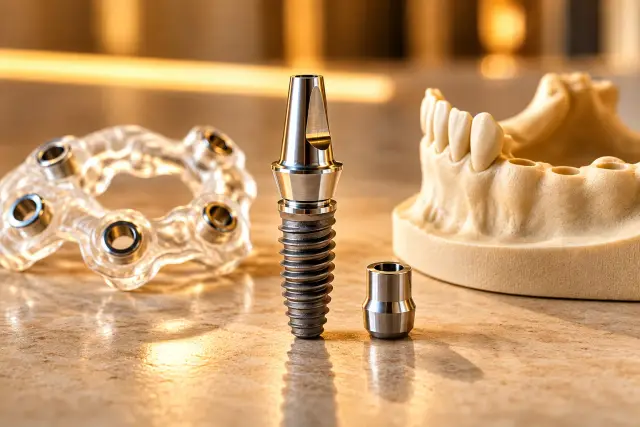

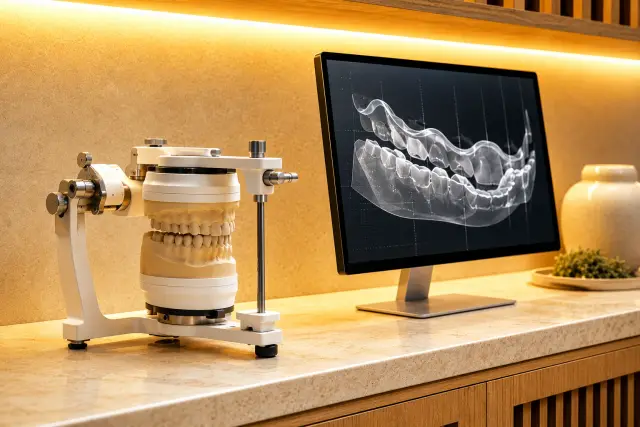
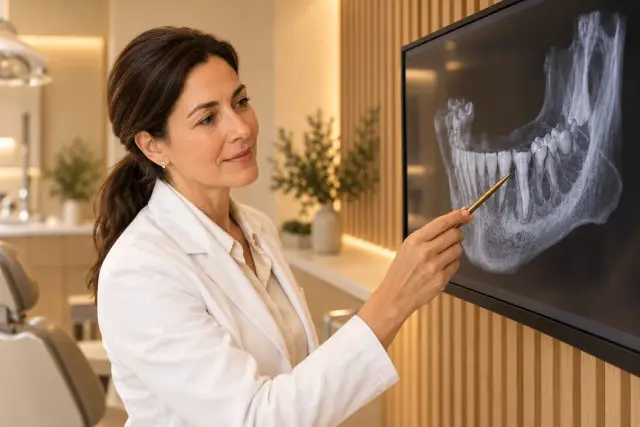
Tooth Extraction
Tooth Extraction for Dental Implants
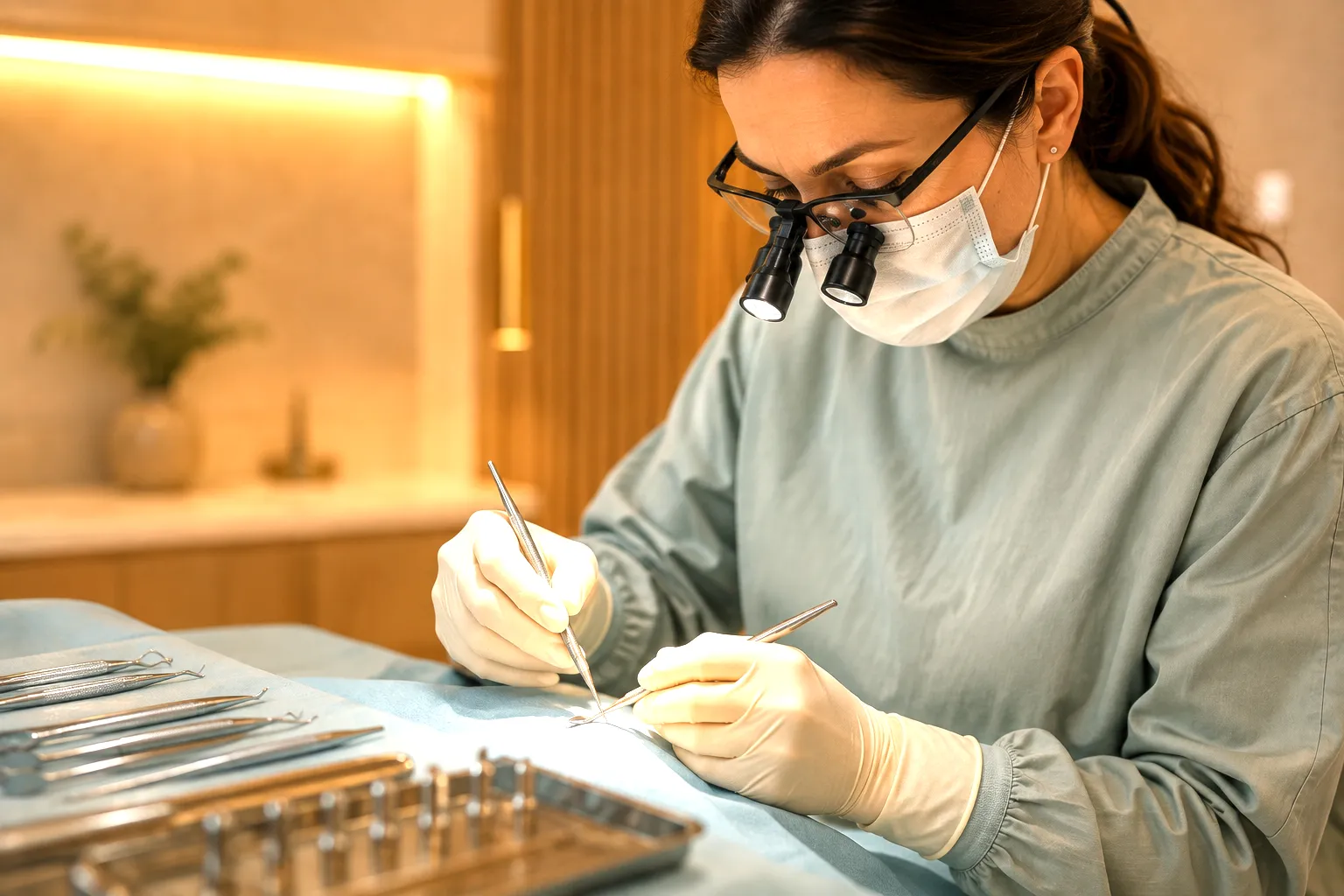
When a tooth cannot be saved, the extraction is only part of the treatment — planning for what comes next is just as important. If you’re replacing a missing tooth with a dental implant, the way the tooth is removed significantly influences the success, appearance, and longevity of your future restoration.
Every implant-focused extraction is approached with long-term restorative success in mind: rather than simply removing the tooth, we preserve healthy bone, protect the soft tissue, and create the ideal environment for implant placement. Whether you’re a candidate for an immediate implant placed the same day or need a period of healing first, careful planning from the start helps ensure predictable, lasting results.
Immediate vs. delayed placement
Immediate placement
In suitable cases the implant is placed the same day as the extraction — fewer procedures, reduced treatment time, and preserved bone and gum tissue.
Delayed placement
When infection or bone loss is present, the site heals first (often with socket preservation or grafting) for the most predictable outcome.
Who it’s for
- A non-restorable tooth being replaced with an implant
- Severe decay, fracture, or failed root canal beyond restoration
- Advanced periodontal disease or significant infection
- Considering immediate vs. delayed implant placement
- Wanting to preserve bone and gum contour for the best result
What to expect
- 1
Comprehensive planning
A full evaluation with CBCT imaging, bone-quality and soft-tissue assessment, and implant treatment planning.
- 2
Atraumatic extraction
The tooth is removed with techniques that preserve the natural bone that will support your future implant.
- 3
Bone & tissue preservation
Socket preservation, bone grafting, or guided bone regeneration is added as needed to maintain the ridge.
- 4
Immediate or delayed implant
An implant may be placed the same day when conditions allow, or after a healing period for the most predictable outcome.
Recovery & aftercare
Recovery varies with whether placement is immediate or delayed; most patients have mild soreness, temporary swelling, and minimal bruising that improve over several days.
If bone grafting or socket preservation was performed, healing continues over several months before implant placement or restoration proceeds.
Common questions
- Can I get the implant the same day as the extraction?
- Sometimes. Immediate placement can reduce treatment time and preserve bone and gum tissue, but not everyone is a candidate — careful evaluation determines whether it’s appropriate, otherwise the site heals first.
- Why preserve bone during the extraction?
- After a tooth is removed the bone shrinks. Preserving it at the time of extraction maintains the natural architecture of the jaw, improving implant stability, esthetics, and long-term success while reducing future procedures.
- Does it matter who removes the tooth if I’m planning an implant?
- It matters more than most patients realize. An extraction performed with the implant in mind — protecting the socket walls, preserving the outer bone plate, grafting where indicated — leaves a site that is straightforward to restore. An extraction performed without that intent can leave a collapsed ridge needing reconstruction. It’s the same tooth, removed with different priorities.
- Should I have the extraction and implant done by the same person?
- Not necessarily, but they should be planned together. What matters is that whoever removes the tooth knows an implant is planned and treats the site accordingly. We’re happy to coordinate with your dentist either way.
- How long do I have to decide about an implant?
- The decision about grafting is time-critical even if the implant decision isn’t. Once the socket has healed unassisted, the option to preserve has passed and rebuilding becomes the alternative. If an implant is even a possibility, graft at the extraction and take your time deciding afterward.
- What if the tooth is badly infected?
- The socket is cleaned thoroughly and the plan adjusted to what we find. Chronic contained infection is often compatible with grafting, and sometimes with immediate placement. Significant acute infection usually means letting the site settle first — which is a delay rather than a change of destination.
- Will I have a temporary tooth in the meantime?
- Yes, for anything visible. Options include a bonded temporary, a removable flipper, or — in suitable cases — an immediate provisional on the implant itself. Nobody is left with a visible gap.
Talk to a specialist about tooth extraction for dental implants
Whether you’re a patient considering treatment or a dentist referring a case, we’ll evaluate, plan, and coordinate care from diagnosis through follow-up.
Sources
This information is provided for educational purposes and is not a substitute for a professional evaluation. Diagnosis and treatment should always be determined by a qualified dental professional based on your individual condition.