


Tooth Extraction
Simple Tooth Extraction
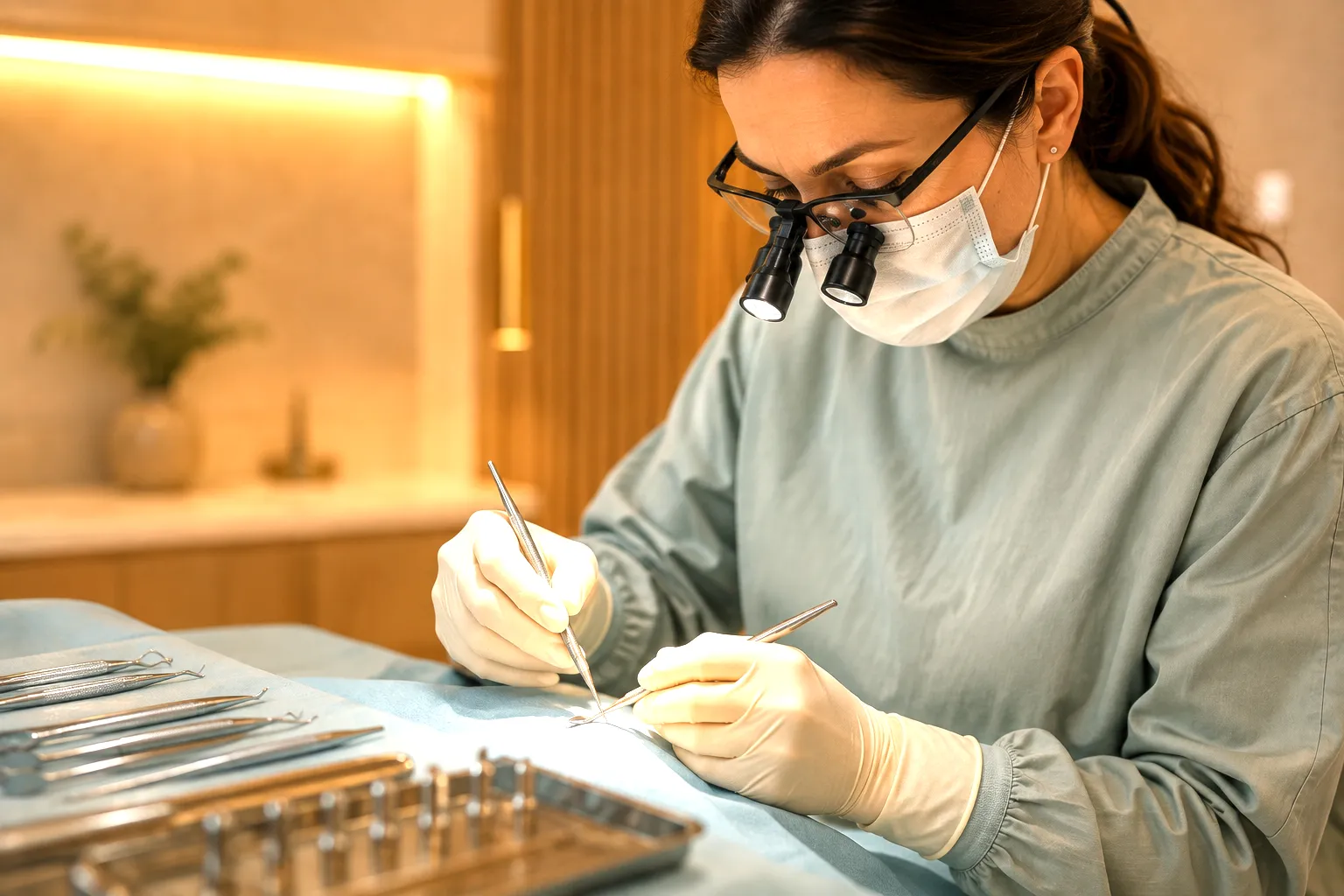
Although preserving your natural teeth is always the primary goal, there are situations where a tooth can no longer be predictably restored. When severe decay, periodontal disease, fracture, or infection compromises a tooth, a simple tooth extraction may be the most effective way to relieve discomfort and protect your overall oral health.
A simple tooth extraction is the removal of a tooth that is fully erupted above the gumline and can be accessed without an incision. Using specialized instruments, the tooth is gently loosened from its supporting ligament and removed under local anesthesia. The way a tooth is removed today can significantly affect your future oral health — especially if you are considering a dental implant — so every extraction is performed to preserve the surrounding bone and tissue.
Who it’s for
- Severe tooth decay that cannot be restored
- Advanced periodontal (gum) disease
- Non-restorable fractures above the gumline
- Loose teeth caused by bone loss
- Retained baby teeth, or teeth removed for orthodontics
- Preparation for prosthetic or implant treatment
What to expect
- 1
Evaluation & imaging
Digital radiographs — and CBCT imaging when indicated — assess the tooth and surrounding bone.
- 2
Comfortable anesthesia
Local anesthesia is administered so the procedure is comfortable, with little to no discomfort.
- 3
Gentle removal
The tooth is loosened and removed while minimizing trauma to the bone and soft tissue, and the socket is cleaned.
- 4
Bone preservation
When appropriate, socket preservation or bone grafting is performed to maintain bone volume for the future.
Recovery & aftercare
Most patients experience mild soreness or swelling for the first few days, managed with over-the-counter or prescribed medication. Bite gently on gauze, avoid smoking or straws, and eat soft foods during early healing.
Most people return to normal daily activities within 24 to 48 hours, with soft-tissue healing continuing over the following weeks.
Common questions
- Is a simple extraction painful?
- The procedure is performed under local anesthesia, so most patients feel little to no discomfort during treatment; mild soreness afterward is easily managed.
- Will I need bone preservation?
- When a tooth is removed, the jawbone naturally shrinks. If you’re considering an implant, socket preservation or bone grafting at the time of extraction helps maintain bone for the future — preserving bone now is preferable to rebuilding it later.
- How long does the healing take?
- The gum closes over the socket within a couple of weeks and most people are comfortable within a few days. The bone beneath continues remodeling for months, which is why implant placement follows later rather than immediately in most cases.
- What is a dry socket and how do I avoid it?
- It’s when the blood clot protecting the socket is lost early, exposing the bone underneath — typically a severe ache starting a few days after the extraction, often radiating to the ear. Smoking, straws, vigorous rinsing, and spitting are the main causes, and all of them are avoidable. It’s treatable, so call us rather than enduring it.
- Can I eat and drink normally afterward?
- Soft food and lukewarm drinks for the first day or two, chewing on the other side. No straws, no alcohol, and nothing very hot while the clot is forming. Most people are back to a normal diet within a few days.
- How long should I wait before exercising?
- Take it easy for the first 24 to 48 hours. Raising your blood pressure through vigorous exercise can restart bleeding or dislodge the clot. Light activity is fine after a day; heavy training is better left for several days.
- Do I need to replace the tooth?
- It depends which tooth. A visible tooth is almost always worth replacing, and a molar usually is too — leaving a gap allows neighboring teeth to drift and the opposing tooth to over-erupt, which complicates replacing it later. Some back teeth can reasonably be left, and we’ll discuss which category yours is.
- Will it hurt afterward?
- Mild to moderate soreness for a few days, peaking on the first or second day and then improving. Over-the-counter pain relief is sufficient for most simple extractions. Pain that worsens after day three rather than improving is worth a call.
Why Choose Dr. Jane Smith for Tooth Extraction?
A successful extraction requires more than technical skill — it requires experience, judgment, and an understanding of how today’s procedure affects your future oral health. Dr. Jane Smith is an internationally recognized periodontist and implant surgeon, educator, and lecturer with many years of clinical experience.
Having successfully placed thousands of dental implants, Dr. Smith approaches every extraction with a restorative mindset — carefully protecting the surrounding bone and tissue to maintain as much healthy anatomy as possible. This is especially valuable for patients who may later receive a dental implant, implant-supported bridge, or full-mouth restoration.
Talk to a specialist about simple tooth extraction
Whether you’re a patient considering treatment or a dentist referring a case, we’ll evaluate, plan, and coordinate care from diagnosis through follow-up.
Sources
This information is provided for educational purposes and is not a substitute for a professional evaluation. Diagnosis and treatment should always be determined by a qualified dental professional based on your individual condition.