

Advanced Periodontal Care
Osseous (Pocket Reduction) Surgery
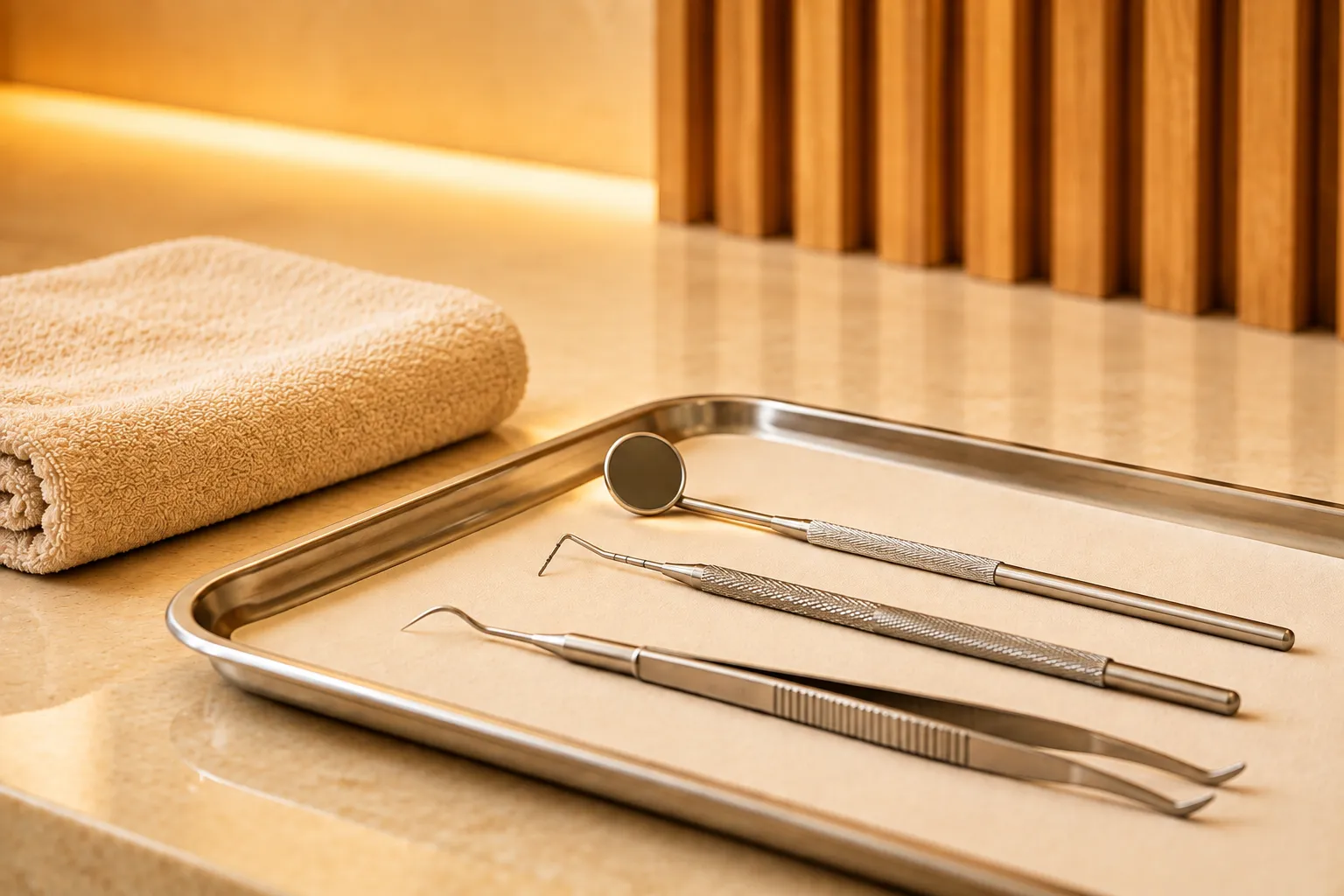
Pocket reduction surgery is a surgical periodontal procedure used to treat advanced gum disease when deep periodontal pockets cannot be effectively managed with non-surgical therapy alone. The goal is to reduce pocket depth, eliminate bacteria, and restore a healthier environment around the teeth.
As gum disease progresses, the gums detach from the teeth, creating spaces called periodontal pockets that trap bacteria and make effective cleaning impossible. During the procedure, the gums are gently lifted to allow direct access to the root surfaces and underlying bone; the area is thoroughly cleaned, infected tissue is removed, and irregular bone may be reshaped, then the gums are repositioned to reduce pocket depth and promote easier long-term maintenance.
Who it’s for
- Moderate to advanced periodontitis
- Deep periodontal pockets that persist after scaling and root planing
- Bone loss and craters left by long-standing infection
- Chronic gum inflammation and bleeding that hasn’t resolved with cleaning
- Pockets too deep to clean at home or with routine maintenance
- Teeth at risk of increasing mobility or loss
- Sites where regeneration isn’t predictable and stability is the goal
What to expect
- 1
Periodontal assessment
Pocket depths, bleeding, attachment levels, and bone architecture are mapped so surgery targets the sites that actually need it.
- 2
Non-surgical therapy first
Surgery follows scaling and root planing and a re-evaluation. A proportion of pockets resolve without it, and surgery is planned only for those that don’t.
- 3
Access & debridement
Under local anesthesia the gum is gently lifted, giving direct vision of root surfaces and bone that cannot be cleaned blind through a pocket.
- 4
Bone reshaping
Craters and irregular bone contours are smoothed so the gum can heal at a shallow, cleanable level rather than draping back into a defect.
- 5
Repositioning & suturing
The gum is repositioned at the new bone level and sutured, so the pocket that remains is one you can actually reach.
- 6
Healing & maintenance
The tissue settles over the following weeks, and a maintenance interval is set — usually every three to four months.
Recovery & aftercare
Most patients recover within one to two weeks, with gradual improvement in comfort and gum health. Discomfort is usually moderate and manageable with over-the-counter pain relief; we use minimally invasive microsurgical techniques wherever possible to preserve healthy tissue.
Expect the teeth to look longer afterward and to feel more sensitive to cold. This is the intended result — the pocket has been eliminated by moving the gum to the level of the underlying bone, which necessarily exposes more root. Sensitivity typically settles over the following weeks, and a desensitizing toothpaste helps.
Long-term success depends entirely on regular periodontal maintenance, which we plan in coordination with your general dentist or hygienist. Surgery creates an environment you can keep clean; it does not cure a chronic disease, and pockets return if maintenance lapses.
Common questions
- Is surgery always necessary for gum disease?
- No, and it’s never the first step. Scaling and root planing is done first, followed by a re-evaluation. Many pockets resolve at that stage. Surgery is recommended only for the sites that remain deep enough that neither you nor a hygienist can clean them.
- How long is recovery?
- Most patients are comfortable within one to two weeks. Sutures come out around a week, and the gum contour continues settling for several weeks after that.
- Will my teeth look longer afterward?
- Yes, and it’s worth being prepared for. Eliminating a deep pocket means positioning the gum at the level of the bone beneath it, so more root is exposed. It is the trade-off for a site that can be kept clean — and it is why we discuss front teeth differently from back teeth.
- Will my teeth be loose after surgery?
- Teeth sometimes feel slightly looser for a few weeks while the tissues heal and firm up, which is expected. Teeth that were already mobile from bone loss won’t tighten dramatically, though removing the inflammation often improves them somewhat.
- How is this different from regenerative surgery?
- Opposite approaches to the same problem. Pocket-reduction surgery removes the pocket by lowering the gum to the bone. Regeneration tries to fill the defect by rebuilding bone and attachment. Regeneration is preferable where the defect shape suits it; pocket reduction is the reliable option where it doesn’t — and many mouths need both, at different sites.
- Can I avoid surgery by having more deep cleanings?
- Repeating scaling on pockets that are too deep to reach doesn’t change the outcome — the instrument still can’t get to the base of the pocket. If sites remain deep and keep bleeding after proper non-surgical therapy, continuing to repeat it is postponing the decision rather than treating the disease.
- Will the pockets come back?
- They can, if maintenance lapses or home care isn’t effective. Periodontitis is a chronic condition, not something surgery cures. What surgery gives you is a mouth that can be maintained — the maintenance itself is what keeps the disease controlled.
- Is it painful?
- The procedure is done under local anesthesia and is painless at the time. Afterward most patients report soreness rather than pain for a few days, managed with over-the-counter medication. It is generally less uncomfortable than people expect from the word surgery.
Talk to a specialist about osseous (pocket reduction) surgery
Whether you’re a patient considering treatment or a dentist referring a case, we’ll evaluate, plan, and coordinate care from diagnosis through follow-up.
Sources
This information is provided for educational purposes and is not a substitute for a professional evaluation. Diagnosis and treatment should always be determined by a qualified dental professional based on your individual condition.