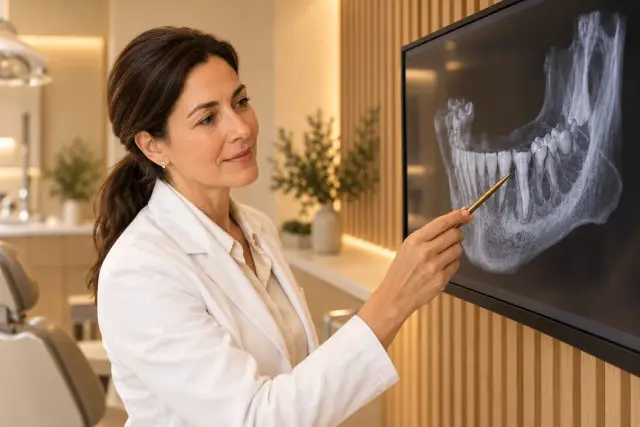
TMJ & Functional Bite Therapy
Bite Adjustment (Occlusal Equilibration)
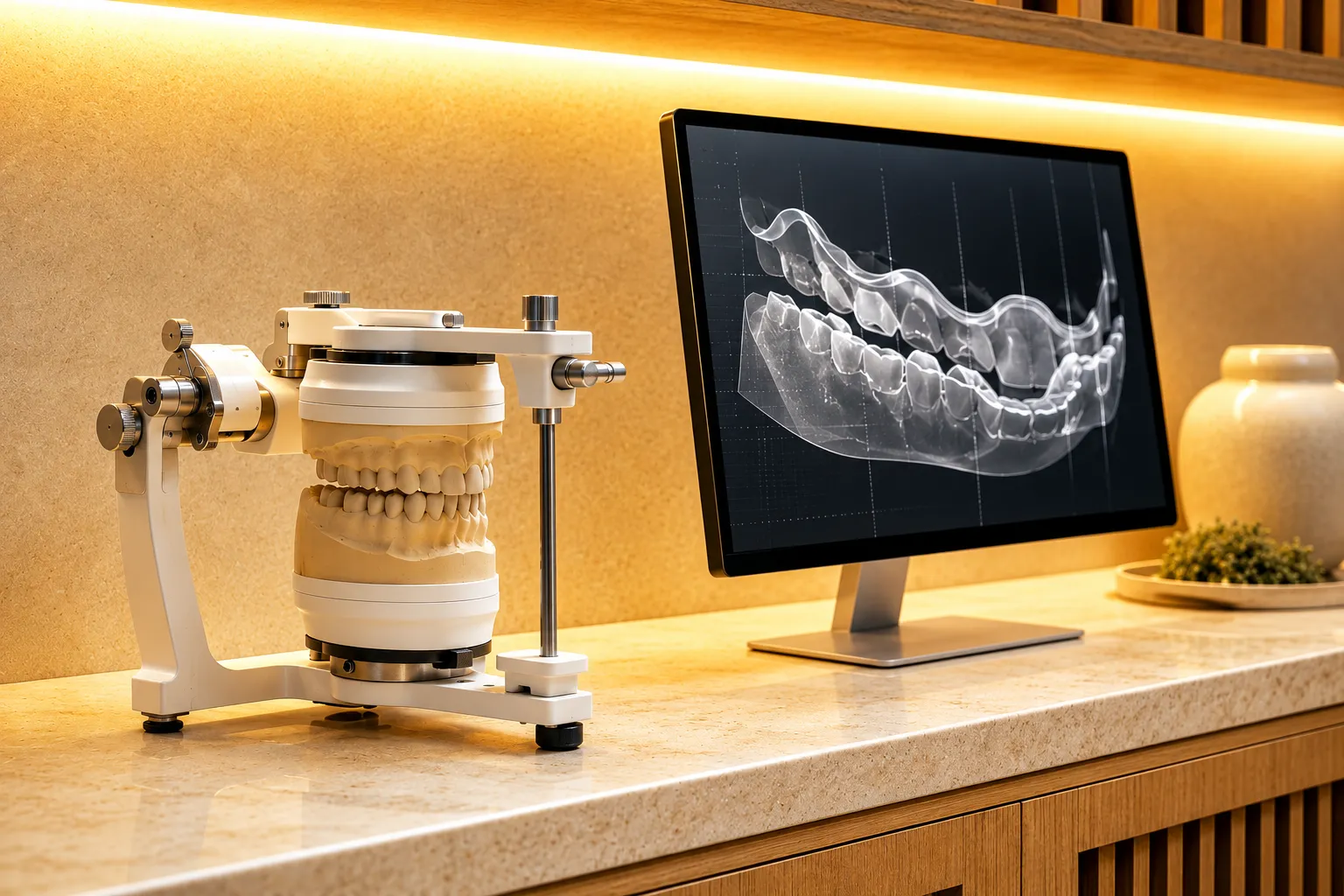
Even minor irregularities in how the teeth come together can place excessive stress on the teeth, supporting bone, periodontal tissues, jaw muscles, and temporomandibular joints. Selective bite adjustment carefully refines tooth contacts to improve how force is distributed and create greater functional harmony.
Following a detailed occlusal analysis, conservative adjustments are made only when clinically indicated — preserving the integrity of your natural teeth while improving function.
The distinction worth drawing at the outset is between a bite problem that has a clear, identifiable cause and one that doesn’t. A new filling or crown left fractionally high, a tooth that has drifted into a space, or an obviously fractured cusp produces a specific premature contact with an obvious remedy — and adjusting it usually gives immediate relief. This is bite adjustment at its most straightforward and most reliable.
Adjusting the bite as a treatment for TMJ symptoms is a different and more contested proposition. The evidence does not support extensive occlusal reshaping as a first-line treatment for temporomandibular disorders, and because enamel removed cannot be replaced, an aggressive equilibration performed on an unstable jaw position can leave a patient worse off with no way back. Reversible treatment comes first for good reason.
Our approach follows from that. Where a specific interference is identifiable and its removal will demonstrably help, we adjust it — precisely and minimally. Where symptoms are muscular or joint-based, we treat those with reversible measures first, and only consider refining the bite once the jaw has settled into a stable, comfortable position.
Who it’s for
- A new filling, crown, or bridge that feels high and hasn’t settled
- A single tooth taking the first or heaviest contact when you close
- Localized tooth pain, sensitivity, or mobility from bite overload
- A tooth that has drifted or over-erupted into a space
- Discomfort persisting after restorative or orthodontic treatment
- Fremitus — a tooth that visibly moves when you tap your teeth together
- A specific interference identified as part of a broader TMJ or periodontal plan
What to expect
- 1
Occlusal analysis
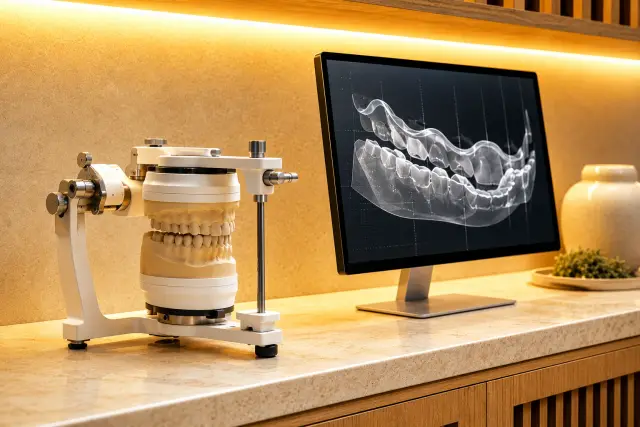
Marking papers, models, and where indicated a digital bite scan map how your teeth meet — in closure, and through the sideways and forward movements where interferences usually hide.
- 2
Deciding whether to adjust at all
A clearly identifiable interference with a clear remedy is adjusted. Diffuse muscular or joint symptoms are treated reversibly first, because enamel cannot be put back.
- 3
Stabilizing first where needed
Where muscles are in spasm, a splint is often used first — a bite recorded from a tense jaw is not the bite you want to adjust to.
- 4
Selective adjustment
Tiny, targeted refinements are made only where indicated, with the tooth re-marked and re-checked after each pass rather than reshaped in one go.
- 5
Verification
The bite is re-checked in every movement to confirm forces are distributed evenly and no new interference has been created.
- 6
Review
You return so we can confirm comfort has held once you’ve been using the bite normally, and refine further only if needed.
Recovery & aftercare
The procedure is conservative and comfortable, with no downtime and no anesthesia needed in most cases. Where a high restoration was the problem, relief is often immediate.
Mild cold sensitivity on an adjusted surface can occur for a short period and usually settles; a desensitizing toothpaste helps. Your bite may feel slightly unfamiliar for a few days as the muscles adapt to an even contact pattern.
Any further refinement is made at follow-up. Adjusting a little, letting you function on it, and reassessing is deliberately slower than doing everything at once — and it is the approach that protects tooth structure.
Common questions
- Does bite adjustment remove much enamel?
- It should not. Adjustments are measured in fractions of a millimeter, made only at marked interfering contacts, and re-checked after each pass. Because enamel doesn’t grow back, minimal and verified is the only responsible way to do it.
- Will bite adjustment cure my TMJ problem?
- Not by itself, and we’d be misleading you to suggest otherwise. The evidence doesn’t support extensive occlusal adjustment as a primary treatment for TMJ disorders — most respond better to reversible measures like a splint, muscle therapy, and habit change. Adjustment has a role where a specific interference is clearly contributing, usually after the jaw has stabilized.
- Is it permanent?
- The refined contacts are lasting, but bites are not static. Teeth wear, drift, and get restored over the years, so occasional review makes sense — particularly after new dental work, which is the most common source of a new interference.
- My new crown feels high. Is this what I need?
- Almost certainly, and it’s the clearest indication for the procedure. A restoration even fractionally high concentrates the whole bite on one tooth, causing pain, sensitivity, and sometimes mobility. It’s a quick adjustment and the relief is usually immediate — go back to whoever placed it rather than living with it.
- Can it help a loose tooth?
- It can, where the looseness is being driven or worsened by bite overload. Relieving the excess force on a periodontally compromised tooth reduces the trauma and gives the supporting tissues a chance to firm up. It doesn’t rebuild lost bone, so it works alongside periodontal treatment rather than instead of it.
- Will I need anesthesia?
- Usually not. Adjustments are made to enamel, which has no nerve supply, so the process is painless. Anesthesia occasionally helps where a tooth is already very sensitive.
- Can bite adjustment be undone?
- No, and that’s the central reason for caution. Enamel removed is gone permanently. It’s why we adjust minimally, verify at each step, and treat reversibly first whenever the indication isn’t clear-cut.
- What’s the alternative if my bite is significantly off?
- Depending on the cause: orthodontic treatment to reposition teeth, restorative work to rebuild worn or short teeth to the right shape, or a splint to distribute forces without altering anything. Where a bite is substantially wrong, grinding teeth down to fit it is rarely the best answer.
Talk to a specialist about bite adjustment (occlusal equilibration)
Whether you’re a patient considering treatment or a dentist referring a case, we’ll evaluate, plan, and coordinate care from diagnosis through follow-up.
Sources
This information is provided for educational purposes and is not a substitute for a professional evaluation. Diagnosis and treatment should always be determined by a qualified dental professional based on your individual condition.