
TMJ & Functional Bite Therapy
Bruxism Therapy
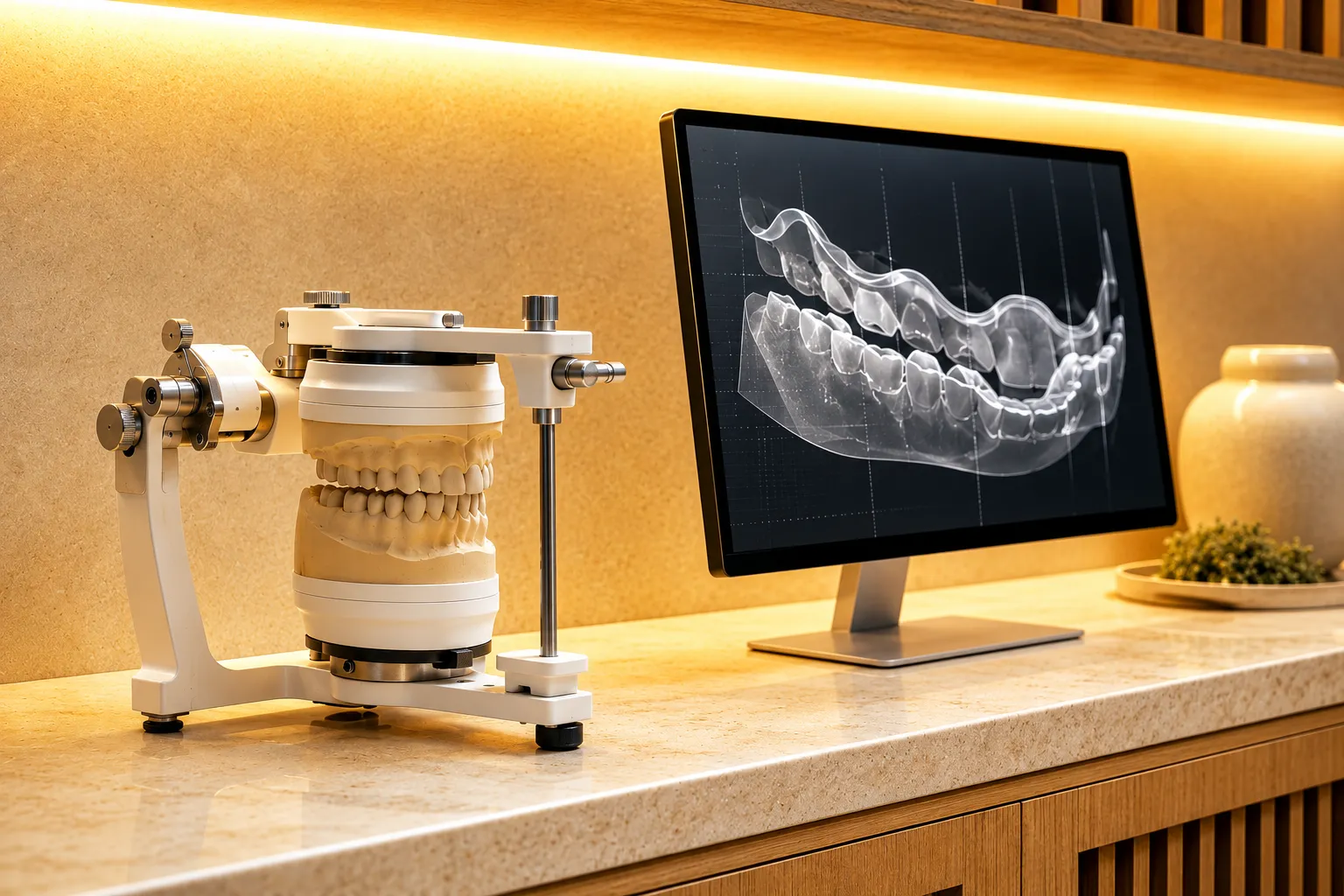
Bruxism is the involuntary grinding or clenching of the teeth, often during sleep. Left untreated, it can contribute to excessive tooth wear, fractured restorations, muscle fatigue, headaches, gum recession, and TMJ dysfunction.
Treatment extends beyond simply fabricating a night guard. We identify contributing factors, evaluate the functional bite, and develop a plan designed to protect the teeth, reduce muscle strain, and support long-term oral health.
Sleep and awake bruxism are usefully thought of as two different conditions that share a name. Sleep bruxism is a rhythmic, involuntary grinding that occurs in association with arousals during sleep — you have no awareness of it, no ability to stop it by deciding to, and it is strongly linked to sleep-disordered breathing. Awake bruxism is a semi-voluntary clenching habit, typically under stress or concentration, and it is amenable to awareness in a way sleep bruxism simply is not.
The distinction changes what treatment makes sense. Sleep bruxism calls for protection — a splint — plus investigation of anything driving the arousals, obstructive sleep apnea in particular. Awake bruxism responds primarily to noticing it: many people clamp their teeth for hours at a keyboard without ever registering the habit, and the teeth should rest apart for most of the day.
The wear itself is worth taking seriously because it does not stop. Enamel lost over years cannot be replaced, and a patient who reaches the point of needing full-mouth rehabilitation for worn teeth has usually been grinding, unprotected, for decades. Recording the wear and protecting against further loss is cheaper and simpler than rebuilding.
Who it’s for
- Chronic teeth grinding or clenching, asleep or awake
- Excessive tooth wear, flattened cusps, or shortening front teeth
- Fractured teeth, chipped enamel, or restorations that keep failing
- Morning jaw soreness, temple headaches, or muscle fatigue
- A partner reporting audible grinding at night
- Grinding associated with TMJ symptoms or gum recession
- Snoring or disrupted sleep alongside grinding — a combination worth investigating
- Protecting substantial restorative or implant work from overload
What to expect
- 1
Assessment & wear mapping
The pattern of wear is recorded tooth by tooth, along with muscle tenderness and jaw function — the wear pattern records a history that memory doesn’t.
- 2
Distinguishing sleep from awake bruxism
They have different drivers and different treatments, and many patients have both. Establishing the balance shapes the whole plan.
- 3
Screening for sleep-disordered breathing
Snoring, daytime sleepiness, and witnessed pauses in breathing are asked about, and referral for a sleep study arranged where indicated.
- 4
Reviewing contributing factors
Stress, caffeine and alcohol, certain medications, and reflux are all recognized contributors and worth identifying.
- 5
Protective therapy
A custom occlusal splint protects the teeth and, through even contact, typically reduces muscle load as well.
- 6
Behavioral measures
For awake clenching, habit awareness and simple cues — the teeth should be apart at rest — are often the most effective single intervention.
- 7
Monitoring
Wear is re-recorded over time against the baseline, so we can confirm the damage has actually stopped rather than assume it.
Recovery & aftercare
There is no downtime. Protective and supportive therapies work over time to reduce strain and prevent further wear, and most patients notice reduced morning soreness within a few weeks of consistent splint wear.
Behavioral change takes longer and is the part patients underestimate. Noticing daytime clenching is difficult at first, and reminders — a phone alert, a note at the desk — genuinely help until the awareness becomes automatic.
Ongoing monitoring protects the teeth and jaw long-term. Comparing wear against the original records is what tells us whether the plan is working; symptoms alone are an unreliable guide, since plenty of heavy grinders have no pain at all.
Common questions
- Is a night guard enough on its own?
- It protects the teeth, which is the most urgent issue. But it doesn’t address why you’re grinding — and where sleep-disordered breathing or a strong daytime clenching habit is driving it, treating only the symptom leaves the cause running. That’s why the assessment looks wider than the appliance.
- Can grinding damage my teeth permanently?
- Yes. Enamel does not regenerate, so wear is cumulative and irreversible. Untreated bruxism progressively flattens the biting surfaces, shortens the front teeth, cracks cusps, and fractures restorations. Patients needing full-mouth rehabilitation for worn teeth have usually ground unprotected for decades.
- What’s the difference between sleep and awake bruxism?
- Sleep bruxism is involuntary rhythmic grinding tied to sleep arousals — you can’t choose to stop it, and it’s linked to sleep-disordered breathing. Awake bruxism is a clenching habit under stress or concentration, and it responds well to awareness. They need different approaches, and plenty of people have both.
- Is grinding connected to sleep apnea?
- There’s a well-recognized association: grinding episodes frequently cluster around the arousals that follow breathing interruptions. It’s a reason we ask about snoring, daytime tiredness, and witnessed breathing pauses, and refer for a sleep study where the picture fits. Treating the apnea sometimes reduces the grinding substantially.
- Does stress cause bruxism?
- It’s a significant contributor, particularly for awake clenching. Sleep bruxism has a more complex basis involving sleep architecture, genetics, and medications, so stress management helps but rarely resolves it on its own.
- Can Botox be used for grinding?
- Botulinum toxin injected into the chewing muscles reduces their force and can help patients with severe muscle pain who haven’t responded to a splint. It’s temporary, needs repeating, and can cause changes to facial contour with prolonged use — so it’s a considered option for resistant cases rather than a first step.
- Will I need my worn teeth rebuilt?
- Not always. Moderate wear that has been stopped can often be monitored and left. Rebuilding becomes appropriate when teeth are sensitive, function is compromised, or the wear affects appearance. Where it’s done, protecting the new work with a splint isn’t optional — unprotected restorations on a grinder fail.
- My child grinds their teeth. Is that a concern?
- Usually not. Grinding is common in children and typically resolves on its own without treatment or lasting damage. It’s worth mentioning to your dentist so it can be monitored, particularly if there’s also snoring or disturbed sleep, but it rarely warrants intervention.
Talk to a specialist about bruxism therapy
Whether you’re a patient considering treatment or a dentist referring a case, we’ll evaluate, plan, and coordinate care from diagnosis through follow-up.
Sources
This information is provided for educational purposes and is not a substitute for a professional evaluation. Diagnosis and treatment should always be determined by a qualified dental professional based on your individual condition.