


Advanced Periodontal Care
Periodontal Maintenance
What Is Periodontal Maintenance?
Periodontal maintenance is specialized ongoing therapy for patients who have been treated for gum disease. Unlike a routine cleaning, it focuses on preventing reinfection by carefully managing bacteria below the gumline and closely monitoring the stability of your gums and bone.
Because periodontal disease is a chronic condition, the risk of recurrence stays elevated after treatment. Regular maintenance visits — usually every three to four months — are essential to preserve your results and protect your natural teeth long-term.
The three-to-four month interval is not arbitrary. The bacterial community in a treated periodontal pocket repopulates over roughly that period, and in someone with a history of disease it re-forms into the pathogenic composition that caused the damage rather than a benign one. Interrupting that cycle before it re-establishes is the entire mechanism of maintenance, which is why stretching the interval to six months undoes much of the benefit.
It is also worth being clear that maintenance is a different procedure from a routine cleaning, not simply a more frequent one. A routine cleaning removes deposits above the gumline for someone with healthy gums. Maintenance involves re-measuring pockets, instrumenting below the gumline where the pockets remain, and formally assessing for recurrence — it is ongoing treatment for a controlled disease.
Who it’s for
- A history of treated gum disease — gingivitis or periodontitis
- Completed scaling and root planing or periodontal surgery
- Residual deep pockets that need ongoing monitoring
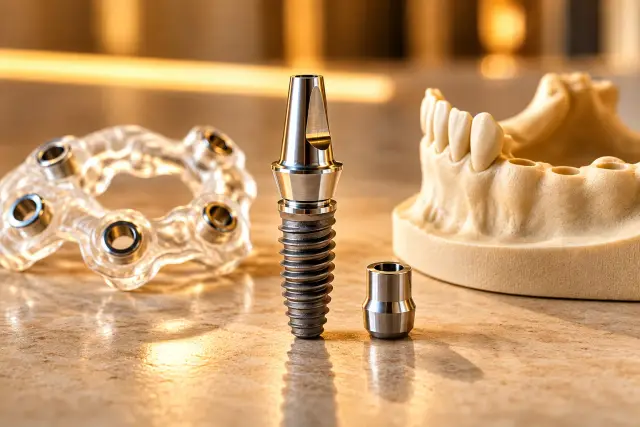
- Dental implants, which carry their own risk of peri-implant disease
- Diabetes, smoking, or other conditions that raise periodontal risk
- A history of gum disease in the family, or previous rapid bone loss
- Anyone working to keep periodontal disease from returning
What to expect
- 1
Re-measure and compare
Pocket depths and bleeding points are recorded and compared against your previous visits, so change is detected as a trend rather than noticed once it’s obvious.
- 2
Targeted subgingival cleaning
Plaque and calculus are removed above and below the gumline, with instrumentation focused on the sites that remain deep.
- 3
Check the difficult sites
Furcations, crowded areas, bridge margins, and around implants — the places disease recurs first because they’re hardest to clean.
- 4
Assess home care
Where plaque is being missed is identified and technique is adjusted. Most recurrence traces back to a small number of consistently missed areas.
- 5
Radiographs at intervals
Imaging is repeated periodically to confirm bone levels are stable rather than quietly declining.
- 6
Set the interval
The next visit is scheduled to your individual risk — shortened if activity is found, extended only when stability is well established.
Recovery & aftercare
There is no real downtime. Local anesthesia may be used if deeper cleaning is needed at particular sites, and any mild tenderness or cold sensitivity settles within a day or so.
Maintenance is most effective as a consistent, lifelong routine. We coordinate the schedule with your general dentist or hygienist — many patients alternate between the two practices, which keeps the interval short without doubling the appointments.
If active disease is found at a visit, the response is to treat the affected sites and shorten the interval rather than carry on as before. Catching a single site early is a far smaller intervention than treating a relapse across the whole mouth.
Common questions
- How often do I need periodontal maintenance?
- Most patients need visits every three to four months. The interval reflects how quickly the bacteria in treated pockets re-establish, and it’s adjusted to your individual risk — shortened where disease has been active, occasionally extended where stability is well proven.
- Can I go back to regular cleanings?
- Usually not. Patients with a history of periodontitis typically need lifelong maintenance, because the susceptibility that allowed the disease doesn’t go away. Returning to twice-yearly routine cleanings is one of the more common reasons treated periodontal disease relapses.
- How is maintenance different from a normal cleaning?
- A routine cleaning treats healthy gums by removing deposits above the gumline. Maintenance is ongoing therapy for a controlled disease — pockets are re-measured, sites below the gumline are instrumented, and recurrence is actively looked for. Different procedure, different purpose.
- Why every three months and not every six?
- Because the bacterial population in treated pockets returns to a disease-causing composition over roughly three months in susceptible patients. Disrupting it before that point is what maintains stability; waiting six months allows it to re-establish between visits.
- My gums feel fine — do I still need to come?
- Yes, and that’s precisely the difficulty. Periodontitis is usually painless, and by the time a tooth feels loose the bone has already gone. Maintenance exists to detect change through measurement rather than symptoms.
- Can I have maintenance at my regular dentist instead?
- Often, and we’re happy to arrange it. Many patients alternate — us and their own practice — which keeps the interval short and shares the care. Specialist maintenance is more important where disease has been severe, where sites remain deep, or where implants need monitoring.
- What happens if I skip appointments for a while?
- Come back rather than avoid it. Lapses are common and the response is to re-chart, see what has changed, and treat any active sites — often a limited amount of work. Delaying further because of the lapse is what turns a manageable situation into a difficult one.
- Does maintenance cover my implants too?
- Yes, and it should. Implants are susceptible to peri-implant disease driven by the same bacteria, and patients with a history of periodontitis are at higher risk of it. The tissues around implants are probed and monitored at the same visits, using instruments chosen not to damage the implant surface.
Talk to a specialist about periodontal maintenance
Whether you’re a patient considering treatment or a dentist referring a case, we’ll evaluate, plan, and coordinate care from diagnosis through follow-up.
Sources
This information is provided for educational purposes and is not a substitute for a professional evaluation. Diagnosis and treatment should always be determined by a qualified dental professional based on your individual condition.