


Tooth Extraction
Impacted Tooth Extraction
An impacted tooth fails to erupt into its normal position because it is blocked by bone, gum tissue, or neighboring teeth. While wisdom teeth are most commonly impacted, canines, premolars, and supernumerary (extra) teeth can be impacted too. Left untreated, impacted teeth may cause pain, infection, damage to adjacent teeth, cyst formation, orthodontic problems, and bone loss.
Treatment is tailored to the tooth and your goals — from monitoring an asymptomatic tooth, to surgical exposure that lets an orthodontist guide a tooth into place, to surgical removal when the tooth cannot be preserved or is causing complications. Every case is planned with advanced 3D imaging to protect surrounding bone and tissue.
Teeth that can become impacted
Canines
Upper canines are important for appearance and bite; when trapped, they’re often preserved with surgical exposure and orthodontics.
Premolars
Premolars occasionally fail to erupt due to crowding or developmental issues.
Wisdom teeth
Third molars frequently lack space and often require surgical removal.
Supernumerary / retained primary teeth
Extra teeth or retained baby teeth can block normal eruption and may need removal.
Who it’s for
- An impacted tooth causing pain, pressure, or infection
- Damage or root resorption affecting neighboring teeth
- Orthodontic crowding or a tooth failing to erupt
- Cyst or pathology developing around the tooth
- Difficulty cleaning the area
- Coordination with orthodontic or implant treatment
What to expect
- 1
3D diagnosis
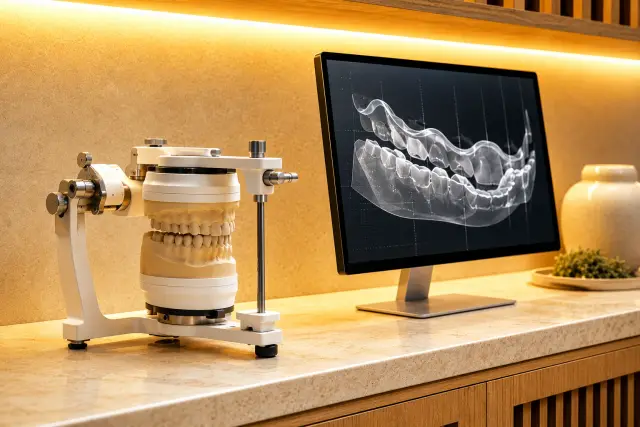
CBCT imaging pinpoints the tooth’s position relative to roots, bone, nerves, and the sinus.
- 2
Treatment options
We review options — monitoring, surgical exposure for orthodontics, or extraction — and choose the healthiest approach.
- 3
Minimally invasive surgery
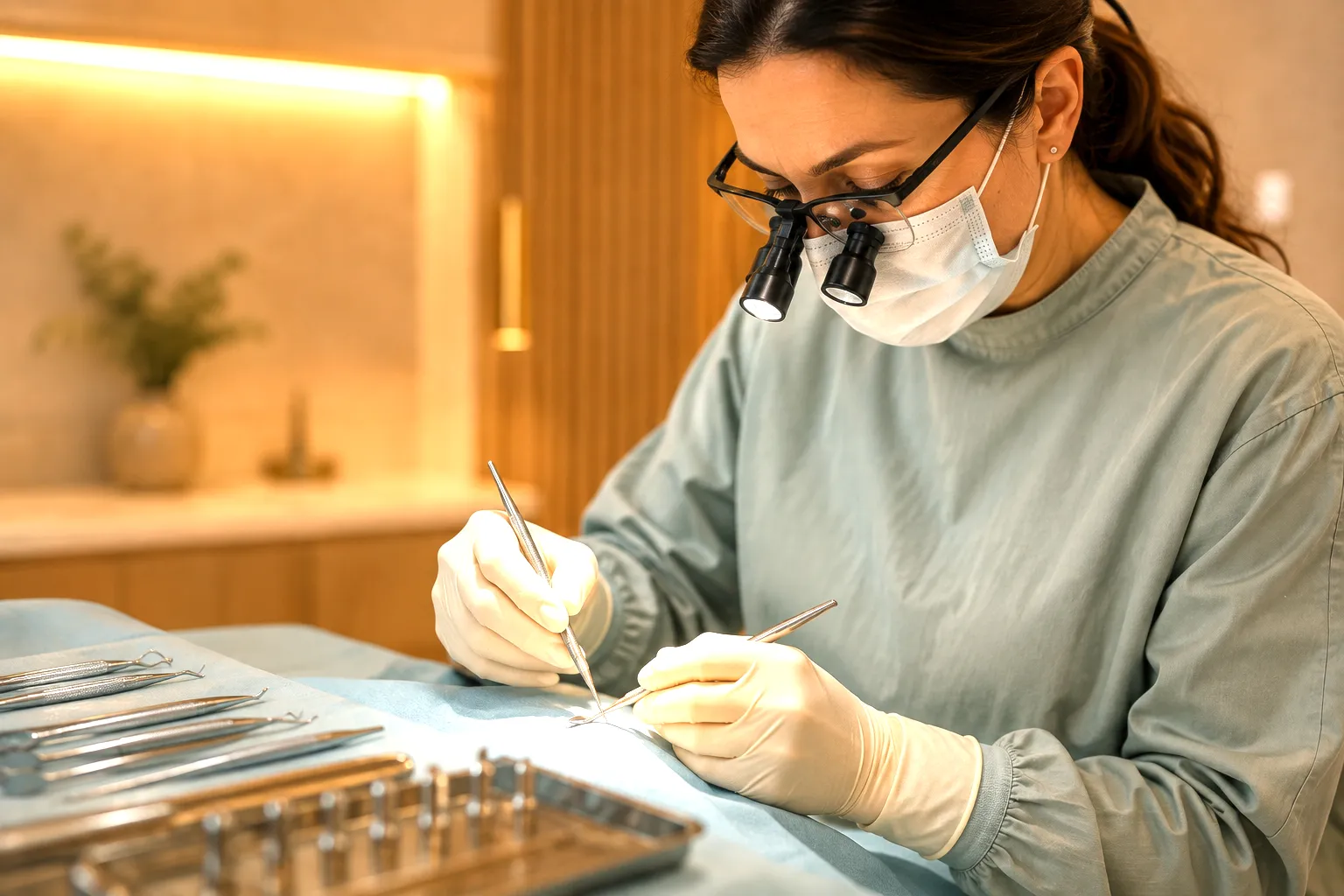
Under local anesthesia (and sedation when appropriate), the tooth is exposed or removed while protecting nearby structures.
- 4
Healing support
The site is cleaned and sutured, with personalized aftercare for comfortable healing.
Recovery & aftercare
Healing varies with the tooth’s location and complexity; most patients have mild swelling, bruising, jaw soreness, and limited mouth opening for several days.
Following personalized aftercare — soft foods, good hygiene, activity modification, and follow-up — most patients recover comfortably over the following weeks.
Common questions
- Can an impacted tooth be saved instead of removed?
- Sometimes. Impacted canines and certain teeth can often be preserved through surgical exposure and orthodontic guidance into position. Removal is recommended when the tooth can’t be preserved or is causing complications.
- How is an impacted tooth diagnosed?
- Some impacted teeth cause no symptoms and are found on routine exams. A comprehensive examination with 3D CBCT imaging confirms the diagnosis and guides treatment.
- Does an impacted tooth always need treating?
- No. A deeply buried, asymptomatic tooth causing no damage to its neighbors can reasonably be monitored with periodic imaging. Treatment becomes necessary when it causes pain or infection, resorbs an adjacent root, develops a cyst, or blocks orthodontic treatment.
- Can an impacted tooth damage the teeth next to it?
- Yes, and this is the risk that most often forces the decision. An impacted canine can resorb the root of the incisor beside it — sometimes severely enough to lose that tooth — and the process is silent. It’s the main reason canine position is screened for rather than waited on.
- Which teeth become impacted most often?
- Wisdom teeth by a wide margin, followed by upper canines. Premolars, second molars, extra (supernumerary) teeth, and retained baby teeth blocking their successors account for most of the rest.
- Save it or remove it — how is that decided?
- Chiefly by which tooth it is and how it’s positioned. Canines are functionally and esthetically important and generally worth guiding into place if the angle and the patient’s age allow. Wisdom teeth rarely justify the effort. Depth, angulation, age, and whether the tooth is already fused to bone all feed into it.
- Can a cyst form around an impacted tooth?
- It can. A fluid-filled sac developing around the crown of an unerupted tooth can enlarge painlessly and destroy surrounding bone before it’s noticed. It’s uncommon but it’s a real reason to image an impacted tooth periodically rather than forget about it.
- Is the surgery different from a wisdom tooth extraction?
- The principles are the same, but access is often harder. Impacted canines are frequently positioned on the palatal side, high in the bone, and near the roots of other teeth — which is why the 3D imaging that maps their exact relationship isn’t optional.
Talk to a specialist about impacted tooth extraction
Whether you’re a patient considering treatment or a dentist referring a case, we’ll evaluate, plan, and coordinate care from diagnosis through follow-up.
Sources
This information is provided for educational purposes and is not a substitute for a professional evaluation. Diagnosis and treatment should always be determined by a qualified dental professional based on your individual condition.