
Periodontal Plastic Surgery
Gum Recession Treatment
Gum recession gradually exposes the roots of the teeth, increasing sensitivity while compromising both appearance and long-term health. Left untreated, recession can progress — leaving exposed roots at greater risk of decay, wear, and further tissue loss.
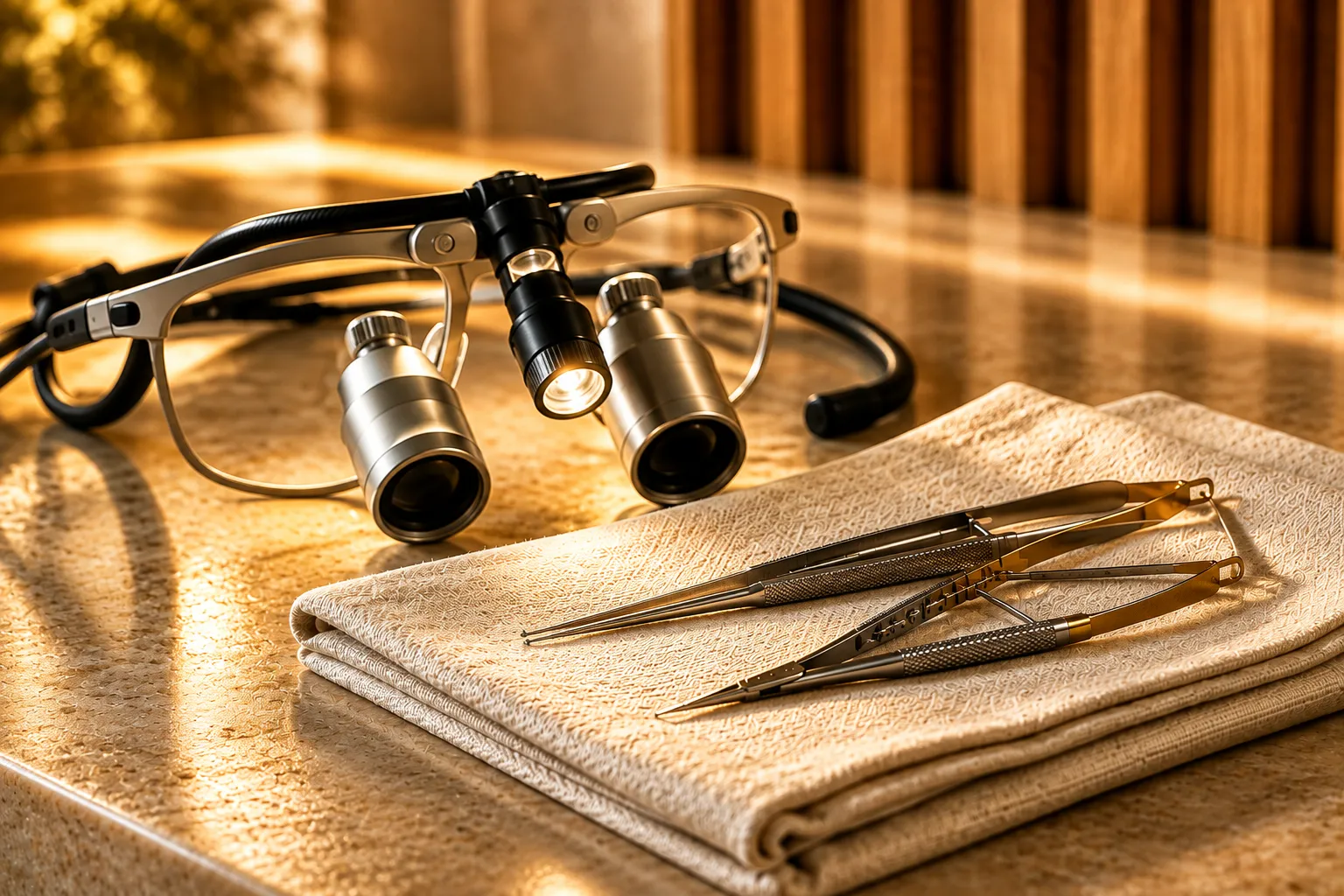
Treatment uses advanced soft-tissue reconstruction and minimally invasive microsurgical techniques to restore healthy gum coverage and strengthen delicate tissue. The approach is tailored to the severity of recession and your tissue quality. (For the specific grafting techniques used, see soft-tissue & gum grafts and connective tissue grafting.)
Recession is rarely a single-cause problem, and identifying which factors apply to you is what makes treatment last. Thin gum tissue and a root positioned prominently in the arch create the vulnerability. Aggressive brushing, a hard-bristled brush, grinding, an unbalanced bite, a tight frenum pulling at the margin, orthodontic movement, or periodontal disease then supply the insult. The graft repairs the damage; correcting the cause is what stops it recurring.
There is a useful distinction between recession that is stable and recession that is progressing. Stable recession — unchanged over years, not sensitive, not visible — can often be monitored rather than treated. Progressive recession is a different matter, because every millimeter lost makes the eventual repair less predictable and takes bone with it.
Who it’s for
- Receding gums and exposed, sensitive tooth roots
- Recession measurably progressing between check-ups
- Roots at increased risk of decay, abrasion, or notching at the gumline
- Esthetic concern about a lengthening or uneven gumline
- Teeth that feel uncomfortable to brush because there is no firm gum left
- Recession around a tooth that will need a crown or filling at the margin
- Thin tissue identified before orthodontic treatment begins
What to expect
- 1
Evaluation & measurement
The severity and pattern of recession are recorded, along with tissue thickness and the amount of firm attached gum — so progression can be tracked objectively over time.
- 2
Identifying the cause
Brushing technique and brush type, grinding and bite forces, frenum pull, orthodontic history, and periodontal status are all examined. This is where lasting results are decided.
- 3
Deciding whether to treat
Stable, symptom-free recession may be better monitored than operated on. Progressive, sensitive, or visible recession is where surgery earns its place.
- 4
Technique selection
Connective tissue graft, tunnel technique, pedicle flap, or free gingival graft — chosen for the site rather than by habit.
- 5
Treatment
Healthy tissue or a substitute is positioned to restore coverage using microsurgical instruments and fine sutures under local anesthesia.
- 6
Healing & maturation
The tissue integrates over the following weeks and continues blending in color and contour for several months.
- 7
Follow-up & prevention
We recheck the site, confirm the corrected technique has stuck, and re-measure to make sure the recession has genuinely stopped.
Recovery & aftercare
Expect mild tenderness at the treated site for several days, eased by soft foods and gentle care around the area. Where tissue is taken from the palate, that donor site is usually the more sore of the two for a week or two.
The treated area is not brushed, flossed, or chewed on until we clear it — an antimicrobial rinse takes over in the meantime. This is the phase where results are won or lost, and the restrictions are short-lived.
Lasting results depend on the cause being addressed alongside the surgery. That usually means switching to a soft brush and a gentler technique, and sometimes a night guard for grinding or a bite adjustment. We check at follow-up that the change has actually held, because a graft placed under the same forces that caused the recession will eventually go the same way.
Common questions
- Will receded gums grow back on their own?
- No. Gum tissue that has receded does not regenerate, and no product restores it. Improving your technique can halt further recession, which is genuinely worthwhile — but replacing tissue that has already been lost requires a graft.
- What causes gum recession?
- Usually a combination: naturally thin tissue and a prominent root position create vulnerability, then aggressive or hard-bristled brushing, grinding, bite overload, a tight frenum, orthodontic movement, or periodontal disease does the damage. Treatment is paired with addressing the cause so the result lasts.
- Does gum recession always need treating?
- No. Recession that has been stable for years, isn’t sensitive, and isn’t visible can reasonably be monitored with careful measurement. Treatment is indicated when it’s progressing, when the root is sensitive or notching, when decay is developing, or when it affects your smile.
- Am I brushing too hard?
- It’s one of the most common contributors, and one of the easiest to fix. Signs include a flattened, splayed brush head within weeks, recession worse on the side you don’t lead with, and notches worn into the roots. A soft brush held lightly — or an electric brush with a pressure sensor — is the practical answer.
- Can recession make me lose the tooth?
- Recession alone rarely causes tooth loss, because it typically affects the outer surface while support on the other sides remains. It becomes serious when combined with periodontal bone loss around the whole tooth, or when it advances so far that very little attachment remains. Both are reasons to treat rather than watch.
- Is my sensitivity from recession, and will treatment fix it?
- Exposed root surfaces are a very common cause of cold and air sensitivity, since dentin is exposed without its enamel covering. Covering the root usually resolves it, and the improvement is often noticeable within the first weeks. Desensitizing products can help in the meantime.
- Will braces make my recession worse?
- They can, if teeth are moved outward through thin bone and tissue. This is why an assessment beforehand matters — grafting to thicken vulnerable sites before orthodontic treatment is far easier than repairing recession afterward. We’re happy to coordinate with your orthodontist.
- How much coverage can I expect?
- It depends chiefly on the tissue between the teeth. Where that is intact, near-complete coverage is a realistic goal. Where periodontal disease has destroyed it, partial coverage is the honest limit — the graft has nothing to be supported by at the sides. You’ll know which applies before surgery.
Talk to a specialist about gum recession treatment
Whether you’re a patient considering treatment or a dentist referring a case, we’ll evaluate, plan, and coordinate care from diagnosis through follow-up.
Sources
This information is provided for educational purposes and is not a substitute for a professional evaluation. Diagnosis and treatment should always be determined by a qualified dental professional based on your individual condition.