
Periodontal Plastic Surgery
Connective Tissue Grafting
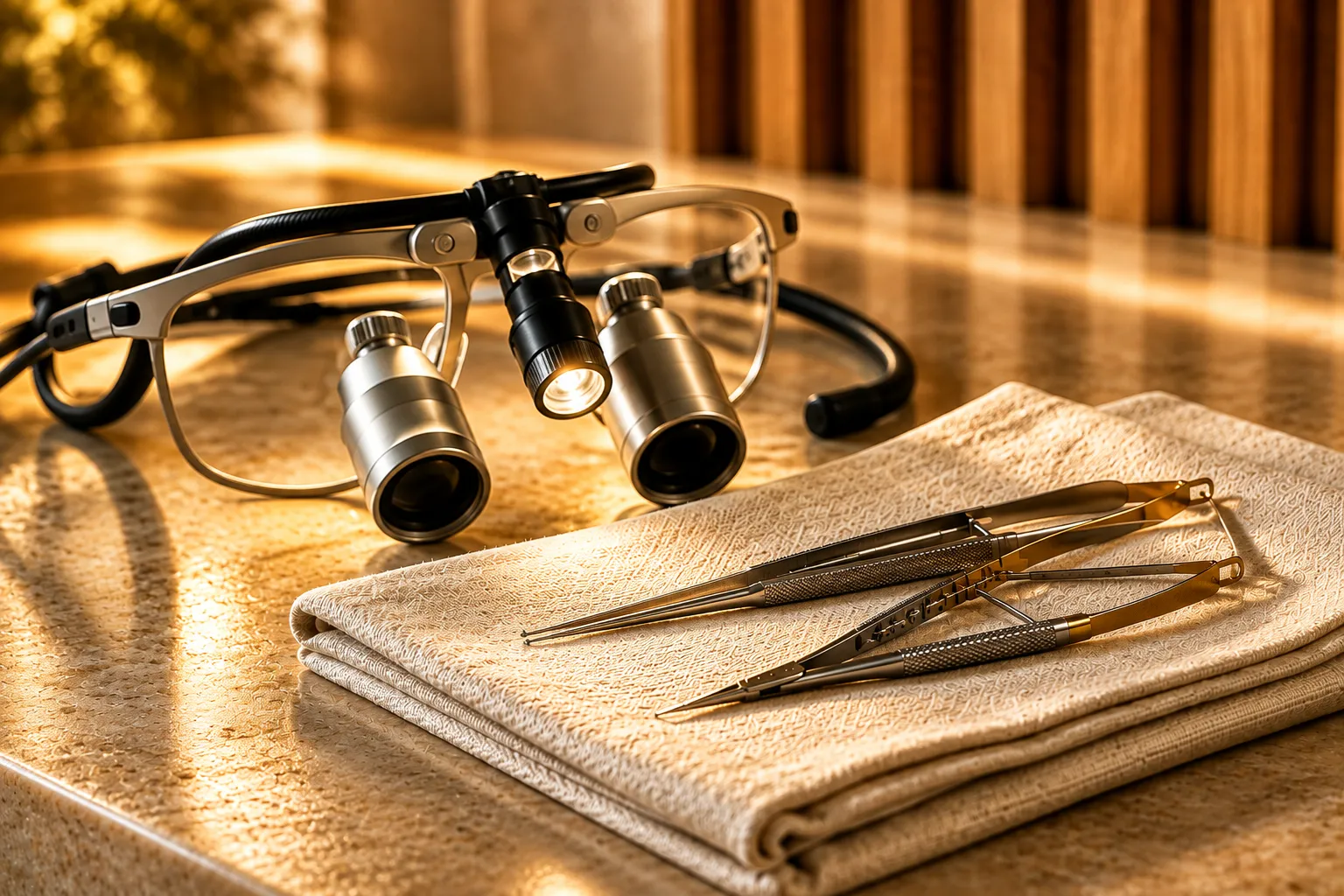
What Is a Connective Tissue Graft?
A connective tissue graft is the most predictable procedure available for covering exposed tooth roots and reinforcing thin gum tissue. Healthy connective tissue — usually taken from beneath the surface of your own palate — is positioned under the existing gum and drawn over the recession, restoring root coverage, reducing sensitivity, and thickening tissue that was too delicate to hold its position.
What distinguishes it from other gum grafts is that the graft is placed beneath the surface rather than on top of it. The palate has a surface layer and a deeper connective tissue layer; only the deeper layer is harvested, and it is tucked under your own gum, which is then advanced over it. Blood supply reaches the graft from both the underlying root bed and the overlying flap — a double supply that is precisely why this technique succeeds where others struggle.
The consequence for appearance is significant. A free gingival graft, harvested from the palate’s surface, brings the palate’s color and texture with it and can leave a visible patch. A connective tissue graft is covered by your own gum, so what shows is your own tissue in your own shade. This is why it is the standard for anything in the smile zone.
The tissue placed also does more than cover. It thickens the gum permanently, and thicker tissue is markedly more resistant to further recession — meaning the graft treats both the damage that has occurred and the vulnerability that allowed it.
Who it’s for
- Exposed tooth roots from gum recession, particularly in the smile zone
- Root sensitivity to cold, air, or brushing caused by recession
- Thin, delicate gum tissue at risk of receding further
- Recession that has progressed measurably between check-ups
- Exposed roots at increased risk of root decay or abrasion notching
- Thickening tissue before orthodontic movement that could cause recession
- Patients wanting a durable result that matches the surrounding gum
What to expect
- 1
Evaluation & classification
The extent of recession and — critically — how much tissue remains between the teeth is assessed. That interdental tissue determines how much root coverage is realistically achievable.
- 2
Addressing the cause
Aggressive brushing technique, a heavy bite, grinding, or a restrictive frenum are identified and corrected. Grafting without addressing the cause invites the recession to return.
- 3
Preparing the recipient site
Under local anesthesia the gum around the recession is released into a tunnel or flap, and the exposed root surface is cleaned and conditioned.
- 4
Graft harvest
A thin layer of connective tissue is taken from beneath the palate’s surface through a small incision, leaving the surface layer intact to close over it.
- 5
Placement & suturing
The graft is positioned over the root and secured, and the overlying gum is advanced coronally to cover it — microsurgical instruments and fine sutures throughout.
- 6
Healing & maturation
The graft integrates over the following weeks and continues to blend in color and contour for several months.
Recovery & aftercare
Most patients find the grafted site itself surprisingly comfortable — it is covered, sutured, and protected. The palate donor site is the part people actually notice, and it typically feels like a pizza burn for a week or two. A protective plate or dressing is often provided to cover it.
The graft must not be disturbed. No brushing over the site until cleared, no pulling the lip out to check on it, no flossing the treated teeth, and no chewing on that side. An antimicrobial rinse takes the place of brushing in the meantime. Mechanical disturbance in the first weeks is the main reason grafts fail.
Discomfort is usually managed with over-the-counter pain relief. The tissue continues to mature in color and contour over the weeks and months after surgery — the site often looks blanched or mismatched early on and blends in as it matures, so early appearance is not a guide to the final result.
Common questions
- Where does the graft tissue come from?
- Usually from beneath the surface of your own palate, through a small incision that is closed over afterward. Donor tissue or a collagen substitute can be used instead where several sites are being treated or you’d rather avoid a second surgical site — with slightly less predictability but a much easier recovery.
- How is it different from a free gingival graft?
- A free gingival graft takes the surface layer of the palate and places it on the surface at the recipient site, so it brings the palate’s paler color and firmer texture with it. A connective tissue graft takes the deeper layer and buries it under your own gum. The first is better at creating firm attached tissue; the second is far better esthetically and better at covering roots.
- Will the root be completely covered?
- Often, but it depends on the tissue between the teeth. Where that interdental tissue and bone are intact, complete coverage is a realistic expectation. Where they have been lost to periodontal disease, partial coverage is the honest ceiling — the graft has nothing to be supported by at the sides. We tell you which applies before surgery, not after.
- How painful is the palate?
- It is the least comfortable part, and worth knowing about in advance. Most patients describe soreness like a burn on the roof of the mouth for one to two weeks, most noticeable when eating. A protective plate helps considerably. Substitute materials avoid it entirely if that trade-off appeals to you.
- How long does healing take?
- Initial healing takes one to two weeks, sutures come out around then, and the tissue matures over the following months. The color and contour at two weeks are not the final result — grafts often look patchy early and blend in substantially over the first few months.
- Will the recession come back?
- Not if the cause has been dealt with. Grafts are stable long term, and the thicker tissue they create is genuinely more resistant to recession than what was there before. Recession recurs when the original cause — usually aggressive brushing — was never changed.
- Can several teeth be treated at once?
- Yes. Adjacent recessions are routinely treated in a single procedure using a tunnel technique, which is more efficient and needs only one palate harvest. Treating them together also produces a more even gumline than doing them piecemeal.
- Do I need this, or can I leave the recession alone?
- Some recession is stable and can reasonably be monitored, particularly if it isn’t sensitive, isn’t visible, and isn’t progressing. Treatment is indicated when it is getting worse, when the root is sensitive or notching, or when it shows when you smile. We’ll tell you which category yours is in.
Talk to a specialist about connective tissue grafting
Whether you’re a patient considering treatment or a dentist referring a case, we’ll evaluate, plan, and coordinate care from diagnosis through follow-up.
Sources
This information is provided for educational purposes and is not a substitute for a professional evaluation. Diagnosis and treatment should always be determined by a qualified dental professional based on your individual condition.