
Dental Implant Dentistry
Sinus Elevation (Sinus Lift)
What Is a Sinus Lift?
The maxillary sinuses are air-filled spaces sitting directly above the upper back teeth, separated from them by a floor of bone and lined by a thin membrane. That floor is often all that stands between a molar root and the sinus cavity, and in some people it is barely a millimeter thick to begin with.
When upper back teeth are lost, two things happen at once. The ridge below resorbs downward, as it does anywhere a tooth is removed. And the sinus itself expands downward into the space the roots vacated — a process called pneumatization. The bone between them is squeezed from both directions, and the upper back jaw ends up with less usable height than any other region of the mouth.
A sinus elevation, or sinus lift, restores that height. The sinus membrane is carefully separated from the bony floor and lifted upward, and bone graft material is placed into the space created beneath it. The sinus is not entered — the membrane stays intact and simply forms the new ceiling of the grafted compartment.
The result is a rebuilt floor of bone deep enough to hold implants securely in a region where they otherwise could not be placed at all. It is one of the most reliable procedures in implant surgery, and for many patients it’s the difference between fixed teeth and a removable appliance.
Who it’s for
- Planned implants in the upper back jaw with insufficient bone height
- Long-standing missing upper molars or premolars
- A pneumatized (downward-expanded) sinus crowding the available bone
- Bone loss from periodontal disease in the upper posterior jaw
- Naturally thin sinus floor anatomy, even without much tooth loss
- Patients told there was too little bone for upper back implants
How Is the Procedure Performed?
- 1
Imaging & assessment
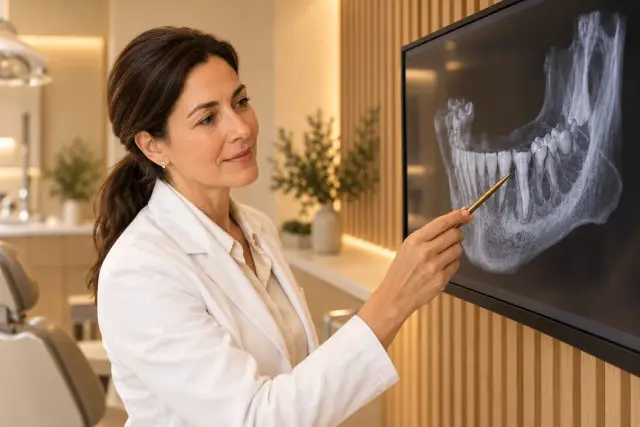
CBCT imaging shows the exact sinus anatomy — floor height, membrane thickness, any septa dividing the sinus, and the position of the blood vessel in the lateral wall.
- 2
Choosing the technique
How much bone is present decides the approach. A few millimeters short calls for the internal (crestal) technique; a substantially deficient floor calls for the lateral window.
- 3
Access
Either through the implant channel itself, or through a small window prepared in the outer wall of the sinus, depending on the technique chosen.
- 4
Lifting the membrane
The sinus membrane is gently separated from the bony floor and elevated. Keeping it intact is the critical step of the operation.
- 5
Grafting
Bone graft material is placed into the space beneath the raised membrane and the access is closed, typically with a membrane over the window.
- 6
Maturation & implant placement
The graft matures into solid bone over several months. Where enough native bone remained, implants may have been placed at the same visit.
Recovery & aftercare
Expect mild swelling and, occasionally, minor nasal congestion, a stuffy feeling on that side, or light bleeding from the nostril for a few days. A little blood-tinged nasal discharge in the first days is normal after a lateral-window lift and is not a sign that something has gone wrong.
The sinus-specific instructions matter here in a way they don’t for other grafts. Don’t blow your nose for the period we specify — sneeze with your mouth open, avoid straws, don’t fly if we’ve advised against it, and skip heavy lifting, diving, and anything else that swings sinus pressure. Pressure differentials are what dislodge a healing graft through a membrane.
Most patients manage comfortably with over-the-counter pain relief plus whatever decongestant or antibiotic has been prescribed. Discomfort is typically less than patients expect given how the procedure sounds.
Common questions
- What’s the difference between an internal and a lateral-window sinus lift?
- The internal (crestal or osteotome) technique lifts the sinus floor a small amount through the channel prepared for the implant itself — minimally invasive, but limited in how much height it can gain. The lateral window approach opens a small access in the side wall of the sinus, giving direct vision and the ability to raise the floor considerably more. Available bone height decides which is appropriate.
- Is a sinus lift dangerous?
- It’s a well-established procedure that is safe and effective in experienced hands. The recognized risks are a tear in the sinus membrane — the most common, and usually repairable during the same surgery — and post-operative sinus infection. Careful 3D planning and gentle technique are what keep both uncommon.
- Will it affect my breathing or sense of smell?
- No. The procedure raises the floor of the sinus and reduces its volume slightly; it doesn’t enter the airway or alter how the sinus drains. Patients don’t notice a difference in breathing or smell once healing is complete.
- Can the implant go in at the same time?
- Sometimes. If enough of your own bone remains to hold the implant stable at placement, the lift and the implant can be combined into one surgery. Below that threshold, the graft matures first and the implant follows — which adds months but substantially improves predictability.
- How long before implants can be placed?
- When the graft heals on its own first, implant placement typically follows after several months of bone maturation. Larger lifts take longer than small ones, and we confirm with imaging before scheduling placement.
- What happens if the sinus membrane tears during surgery?
- Small perforations are a recognized and manageable event — they are usually repaired with a collagen membrane during the same procedure and the graft proceeds normally. A large tear may mean stopping, letting the membrane heal, and returning in a few months. Either way it is handled at the time, not left.
- I have chronic sinus problems. Can I still have this done?
- Often yes, but it needs assessing first. Active sinus infection, significant polyps, or a blocked drainage pathway should be addressed before grafting, sometimes with an ENT referral. A healthy, well-draining sinus tolerates a lift well; a chronically inflamed one is a different proposition.
- Is there an alternative to a sinus lift?
- In some cases — shorter implants, tilted implants angled to avoid the sinus, or placing implants further forward where bone is adequate. These aren’t suitable everywhere, but they’re worth discussing. The evaluation determines which options are genuinely open to you.
Want a second opinion first?
If you’ve been quoted implant, bone-grafting, or sinus-lift treatment and want to be sure it’s the right plan, a specialist second opinion is a low-cost, no-pressure way to confirm your options before you commit.
Request a second opinionTalk to a specialist about sinus elevation (sinus lift)
Whether you’re a patient considering treatment or a dentist referring a case, we’ll evaluate, plan, and coordinate care from diagnosis through follow-up.
Sources
This information is provided for educational purposes and is not a substitute for a professional evaluation. Diagnosis and treatment should always be determined by a qualified dental professional based on your individual condition.