

Austin · Dental Implants
Dental implants in Austin
If you’re missing a tooth — or several — dental implants are the closest thing to getting your natural teeth back. At our Austin practice, implant surgery is led by Dr. Jane Smith, a specialist-trained periodontist and oral plastic reconstructive surgeon with many years of experience and thousands of dental implants placed.
From a single missing tooth to full-arch restoration, and from straightforward placement to complex cases that first need bone grafting or a sinus lift, we focus on rebuilding a stable, natural-looking foundation for your smile — and we coordinate closely with your general or restoring dentist throughout.
Why patients across Austin choose Dr. Smith
A specialist, not a generalist
Implant surgery is Dr. Smith’s focus — a periodontist and oral plastic reconstructive surgeon with many years of experience and thousands of implants placed.
The cases others decline
Severe bone loss, failing teeth, and sites that need grafting or sinus elevation — complex cases are a core part of the practice, not an exception.
Minimally invasive technique
Periodontal microsurgery and guided, image-based placement support precise results and comfortable healing.
Coordinated with your dentist
Surgical placement is sequenced with your restoring dentist so your care stays connected from start to finish.
What the process looks like
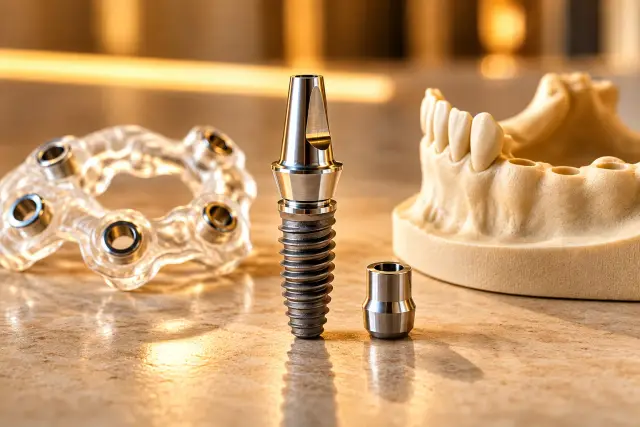
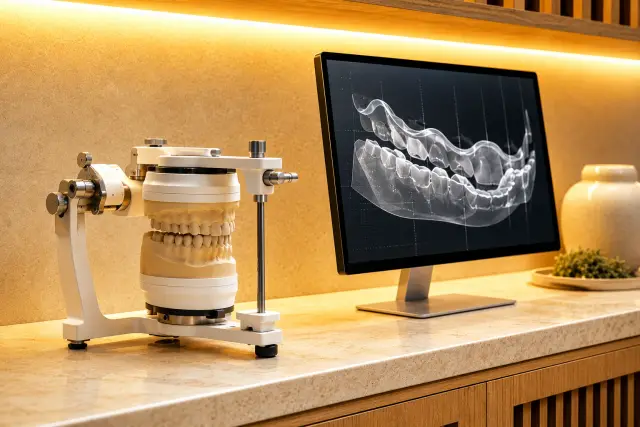
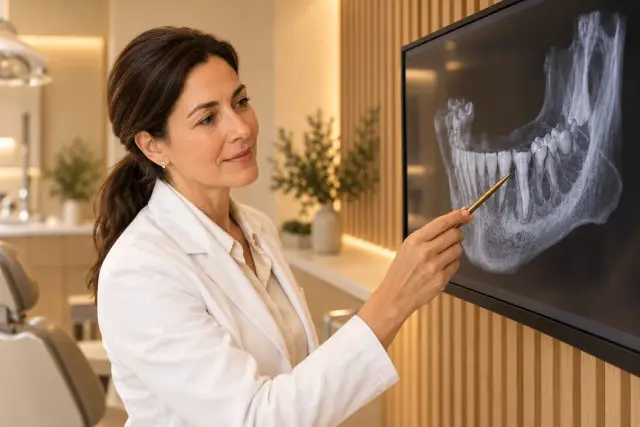
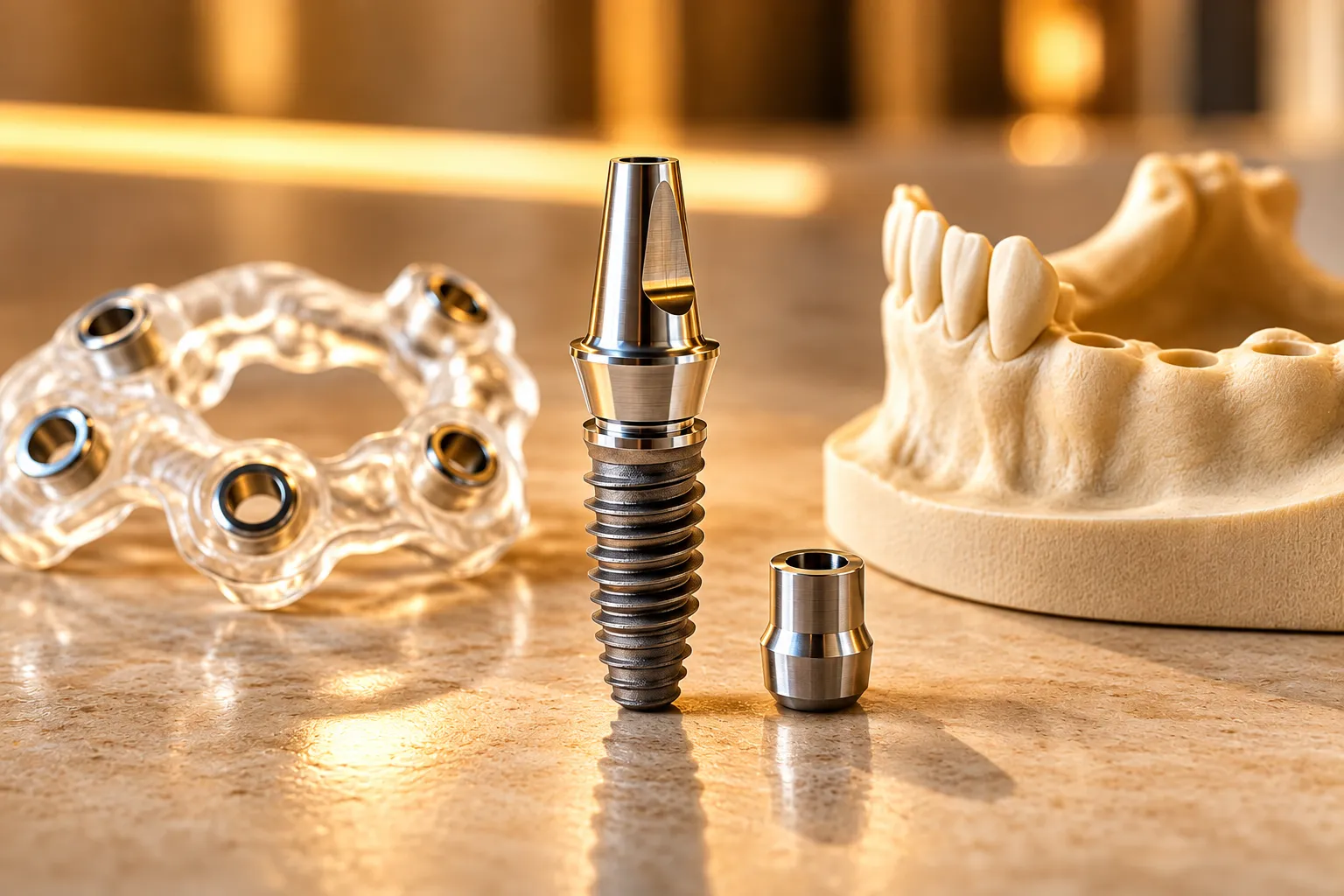
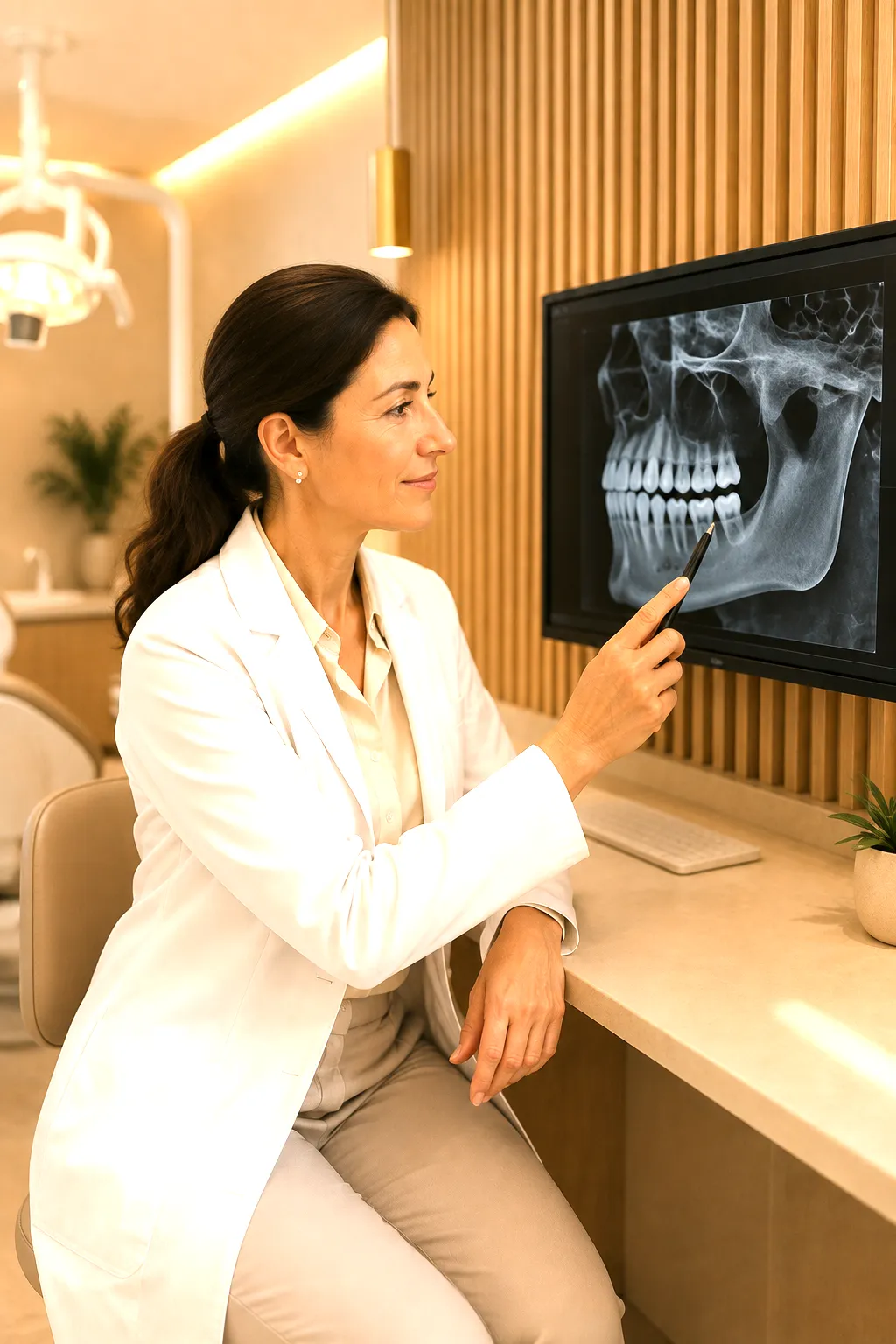
Treatment begins with a thorough evaluation and 3D imaging to map your bone, nerves, and sinus so placement is precise. The titanium implant is then placed into the jawbone in a focused, minimally invasive procedure, usually under local anesthesia. Over the following months the bone fuses to the implant — a process called osseointegration — creating a durable anchor. Finally, your restoring dentist completes the tooth with a custom crown, bridge, or implant-supported denture.
If there isn’t enough bone to support an implant — common after years of missing teeth or gum disease — procedures like bone grafting and ridge augmentation rebuild the site first. You can read the full overview on our dental implants guide.
Serving Austin & Central Texas
Our practice welcomes patients and referrals from across the area — including Austin, West Lake Hills, Clarksville, Rollingwood, Tarrytown, Hyde Park, Barton Hills, Zilker, Greater Austin. We’re located at 123 Example Boulevard, Suite 100, Austin, TX 78701. Patients also travel to us from across Central Texas — see areas we serve.
What actually drives the cost
The single most common question we’re asked, and the one with the least satisfying short answer: it depends almost entirely on what your site needs before the implant can go in. Two patients replacing the same tooth can be quoted very differently, and the difference is rarely the implant itself.
Rather than publish a headline figure that turns out not to apply to you, here is what moves the number — and you receive a written, staged breakdown after your evaluation, before committing to anything.
Whether the tooth is still there
An extraction adds to the treatment, and socket preservation at the same visit adds a little more — but it is far cheaper than rebuilding a collapsed ridge later. Grafting at extraction is usually the economical choice, not the expensive one.
How much bone you have
The largest single variable. A site with adequate bone needs nothing extra. A resorbed ridge may need augmentation, and an upper back site may need a sinus lift — each a separate procedure with its own healing time.
How many teeth are being replaced
Not one implant per tooth. A few implants can carry a bridge spanning several teeth, so treating a whole area together often costs less per tooth than doing it piecemeal.
Where the tooth sits
Front teeth demand more of the soft tissue and the final esthetics, which sometimes means additional grafting to get the gum contour right. Back teeth are usually more straightforward.
The restoration on top
The crown, bridge, or full-arch prosthesis is generally provided by your restoring dentist and quoted separately. It’s a meaningful part of the total, so ask both of us for figures.
Health factors
Smoking, uncontrolled diabetes, and a history of periodontal disease all raise the risk of complications, which changes how a case is planned and monitored rather than simply what it costs.
Most dental plans cover implants partially at best, though the associated extractions and grafting are sometimes treated differently. We’ll go through what your plan covers and what financing is available — see insurance & financing.
Where implant treatment can go wrong
Dental implants are among the more predictable procedures in dentistry, and the great majority succeed and last decades. But we see enough of the failures — our own patients and others’ — to know where they come from, and none of it is mysterious.
The first is placing an implant into untreated periodontal disease. The bacteria that destroyed the bone around your teeth attack the tissue around an implant just as readily, and implants are in some respects less able to resist them. Gum disease is treated and stabilized first, not concurrently.
The second is placing an implant where the bone happened to be rather than where the tooth needs to be. It integrates perfectly well and the restoration is compromised anyway — emerging at the wrong angle, impossible to clean around, and never quite looking right. Planning backward from the finished tooth is what prevents it.
The third is what happens afterward. An implant cannot decay, which leads a lot of people to assume it needs less attention than a natural tooth. The gum and bone holding it are just as vulnerable, and peri-implantitis is usually painless until it is advanced — which is why implant maintenance is part of the treatment rather than an optional extra.
Common questions about dental implants
- Am I too old for dental implants?
- There’s no upper age limit — implants are placed successfully in patients well into their eighties and beyond, and general health and bone quality matter far more than the number. There is a lower limit: the jaw needs to have finished growing, usually the late teens or early twenties.
- How long does the whole process take?
- Commonly several months from placement to final crown, most of which is bone healing rather than appointments. It runs longer where grafting is needed first and shorter in the selected cases suitable for same-day placement. Typically three or four visits spread over the year.
- Will I be without a tooth while it heals?
- No. A temporary tooth fills the space throughout — a bonded provisional, a removable flipper, or in suitable cases an immediate provisional crown on the implant. Front teeth are always provisionalized.
- Do implants have to be done by a specialist?
- Not legally — general dentists can and do place implants, and many place them well. What a periodontist brings is volume in the difficult cases: sites needing bone rebuilt, front teeth where the gum contour decides the result, and implants that have already failed once. The more the case departs from routine, the more the training matters.
- Does it hurt?
- Placement is done under local anesthesia and is painless at the time. Most patients report mild soreness for a couple of days afterward, managed with over-the-counter medication — and a surprising number say it was easier than having the tooth removed.
- What’s the success rate?
- High and well documented across decades of use. The figures fall in smokers, in patients with uncontrolled diabetes, and where a history of periodontal disease hasn’t been treated first — all of which is why those factors are assessed at planning rather than discovered afterward.
- Can I have implants if I grind my teeth?
- Yes, with protection. Implants lack the shock-absorbing ligament natural teeth have, so heavy grinding is harder on them and on the porcelain above. A night guard is normally part of the plan rather than an afterthought.
- Titanium or zirconia?
- Titanium has by far the longest track record and remains the default. Zirconia is a metal-free ceramic alternative, useful if you prefer to avoid metal or where thin gum tissue might show a gray shadow at a front tooth. Both work; titanium has more long-term data behind it.
For detail on a specific procedure, see single tooth implants, multiple implants, full-arch reconstruction, sinus elevation, ridge augmentation, or failed implant treatment.
Want a second opinion first?
If you’ve been quoted implant, bone-grafting, or sinus-lift treatment and want to be sure it’s the right plan, a specialist second opinion is a low-cost, no-pressure way to confirm your options before you commit.
Request a second opinionConsidering implants? Start with a consultation
We’ll evaluate your case, explain your options in plain language, and recommend the most conservative path that gives a lasting result. Call (000) 000 0000 or request a consultation online.
This information is provided for educational purposes and is not a substitute for a professional evaluation. Diagnosis and treatment should always be determined by a qualified dental professional based on your individual condition.