
Dental Implant Dentistry
Immediate Dental Implants
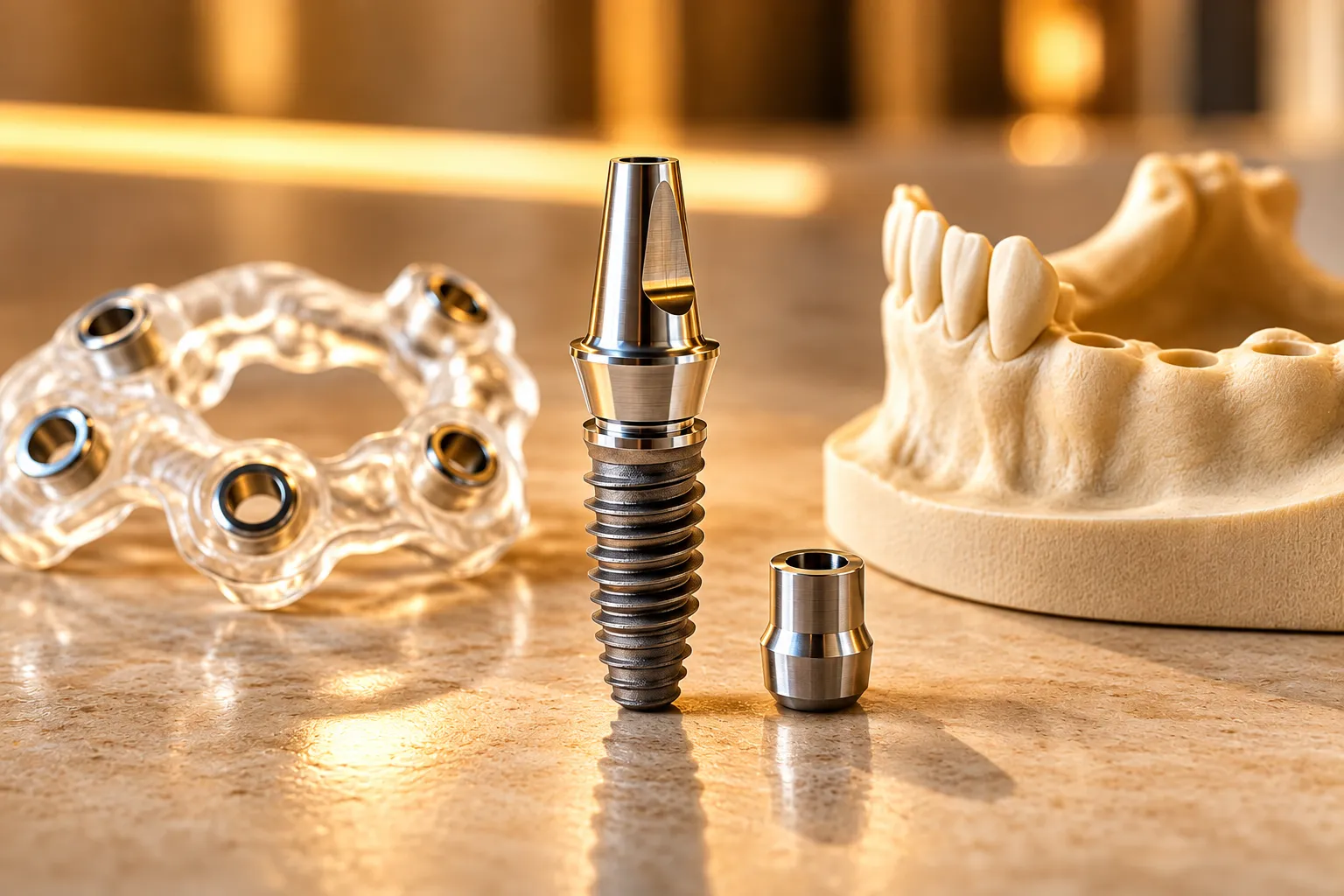
What Are Immediate Dental Implants?
Immediate dental implants are placed into the socket at the same visit the tooth is extracted, rather than waiting months for the site to heal first. Where conditions allow, this removes an entire surgical stage, shortens overall treatment time, and helps preserve the bone and gum contour that would otherwise collapse during healing.
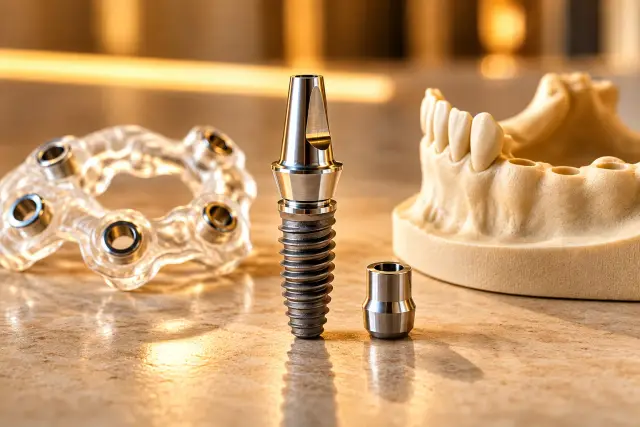
The technique works because an implant does not sit in the socket the way the root did — it is anchored into the solid bone beyond the socket walls, usually below or behind the old root position, with the remaining gap grafted. That anchorage in native bone is what provides stability on the day, and it is also why not every socket is suitable.
The appeal is obvious: fewer surgeries, less total time, and — at a front tooth — the gum architecture preserved at its original level rather than rebuilt afterward. The constraint is equally real. Immediate placement demands more of the site than delayed placement does, and forcing it where the conditions aren’t met produces a worse result than simply waiting.
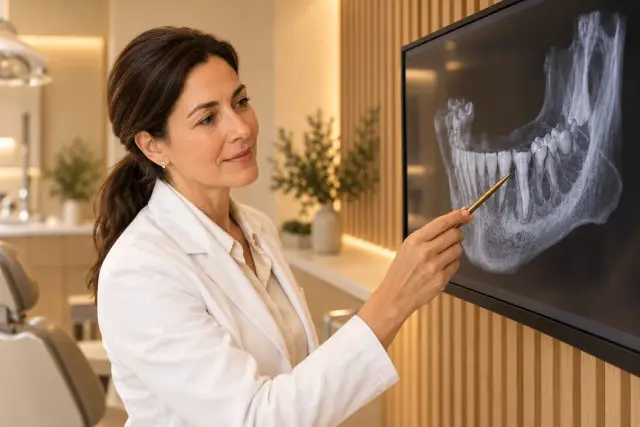
CBCT-guided evaluation is what settles the question, and sometimes the final call is made in the moment, once the tooth is out and the socket can be seen directly. Being prepared to abandon immediate placement mid-procedure and graft instead is part of doing it properly.
Who it’s for
- A tooth needing removal that will be replaced with an implant
- Intact socket walls, particularly the thin outer wall
- Adequate bone beyond the socket to anchor the implant
- No active infection or significant inflammation at the site
- Front teeth where preserving gum and ridge contour matters most
- A preference for fewer surgical visits, where the site allows it
What to expect
- 1
CBCT evaluation
3D imaging assesses socket wall thickness, the bone available beyond the root tip, and proximity to the sinus or nerve.
- 2
Atraumatic extraction
The tooth is removed without expanding or fracturing the socket walls — the technique matters more here than in any other extraction.
- 3
Socket assessment
The empty socket is inspected directly. If the outer wall is missing or infection is present, the plan changes to grafting and delayed placement.
- 4
Implant placement
The implant is placed into the bone beyond the socket, positioned for the restoration rather than following the old root angle.
- 5
Grafting the gap
The space between the implant and the socket walls is filled with graft material to support the surrounding bone and gum.
- 6
Provisional when suitable
In selected cases a temporary crown is fitted the same day, kept deliberately out of the bite; otherwise the site is closed and heals first.
Recovery & aftercare
Aftercare resembles a routine extraction with implant surgery combined — mild soreness and swelling for a few days, a softer diet, and standard pain relief. Most patients report it as one recovery rather than two.
If a same-day temporary crown was placed, treat it as decorative rather than functional. It is deliberately kept clear of your bite, and biting on it during the integration period is the fastest way to lose the implant.
The implant then integrates over the following months exactly as a delayed implant would, before the final restoration is completed. The saving is in the number of surgeries, not in the integration time.
Common questions
- Can every tooth be replaced immediately?
- No — and this is the most important thing to understand about the technique. Suitability depends on intact socket walls, enough bone beyond the socket for anchorage, no active infection, and sufficient stability at placement. When those aren’t met, grafting and delayed placement produces a better result.
- Will I leave with a tooth the same day?
- Sometimes. Immediate placement and immediate provisionalization are two separate decisions — the implant can go in on the day while the temporary crown waits, if stability isn’t high enough to risk loading it. Front teeth are always given some form of temporary tooth, even if it isn’t attached to the implant.
- Is it as reliable as waiting?
- In well-selected cases the long-term success is comparable. The qualifier is doing the work: immediate placement is less forgiving of a marginal site, so the selection criteria carry the outcome. Applied indiscriminately it performs worse than delayed placement.
- What if the socket turns out to be unsuitable once the tooth is out?
- Then we graft the socket and place the implant later. This isn’t a failure — it’s the plan working. Being willing to change course once the site is visible is precisely what protects the result, and we’ll have discussed the possibility with you beforehand.
- Can it be done if the tooth is infected?
- It depends on the extent. A chronic, contained infection can often be thoroughly cleaned and the implant placed successfully. Significant acute infection or a large area of destroyed bone generally means grafting first and placing later.
- Does immediate placement stop the bone from shrinking?
- It reduces the change but doesn’t prevent it — an implant on its own doesn’t hold the outer socket wall. That’s why the gap around the implant is grafted, and why a thin outer wall is one of the strongest reasons to graft rather than place immediately.
- Is it more expensive?
- Usually less, overall. Combining extraction and placement into one surgery removes an appointment and a separate healing phase. The individual visit is longer and more involved, but the total treatment is typically shorter and simpler.
Want a second opinion first?
If you’ve been quoted implant, bone-grafting, or sinus-lift treatment and want to be sure it’s the right plan, a specialist second opinion is a low-cost, no-pressure way to confirm your options before you commit.
Request a second opinionTalk to a specialist about immediate dental implants
Whether you’re a patient considering treatment or a dentist referring a case, we’ll evaluate, plan, and coordinate care from diagnosis through follow-up.
Sources
This information is provided for educational purposes and is not a substitute for a professional evaluation. Diagnosis and treatment should always be determined by a qualified dental professional based on your individual condition.