
Dental Implant Dentistry
Mandibular Nerve Repositioning
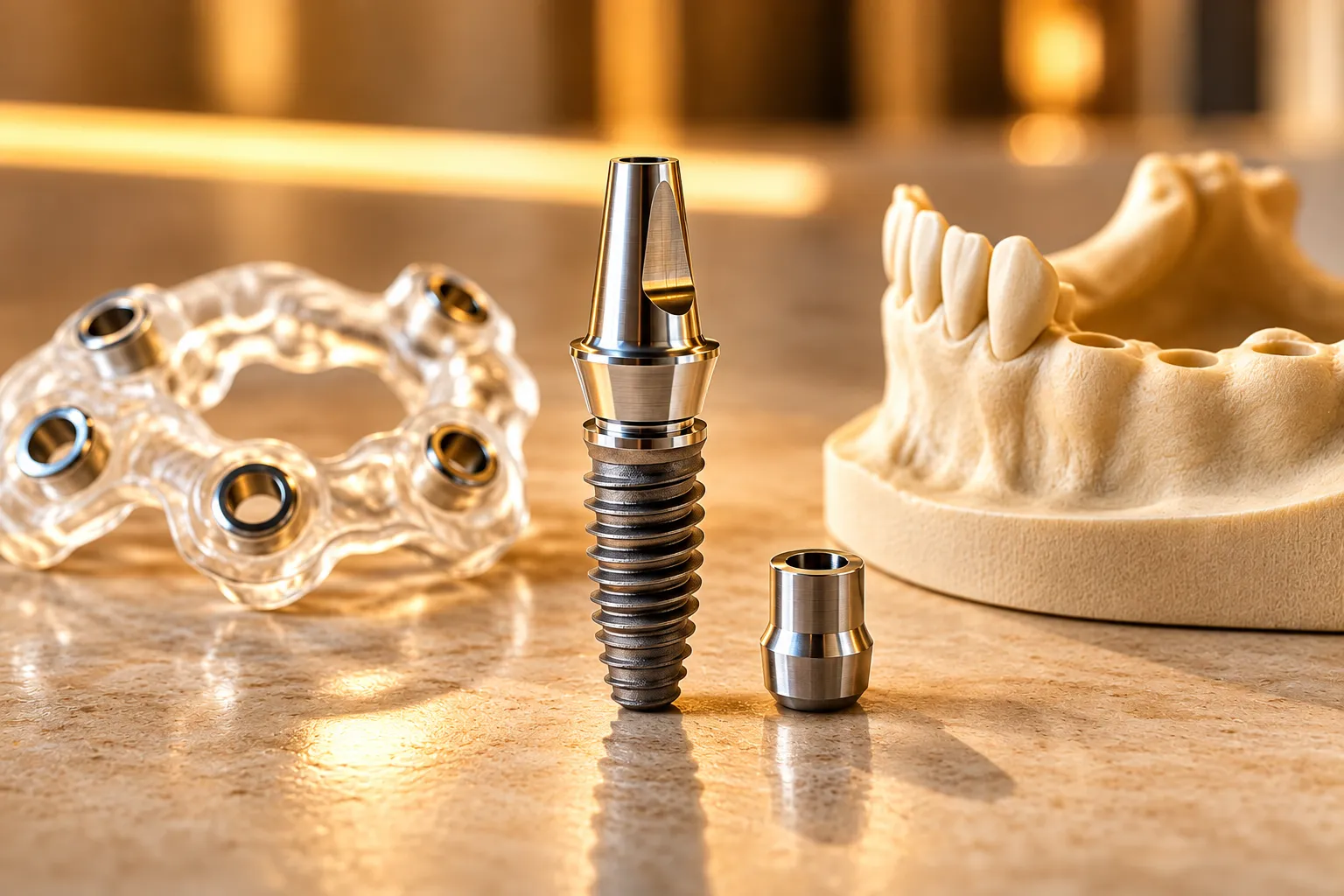
The inferior alveolar nerve runs through the lower jaw and supplies feeling to the lip and chin. In a severely resorbed back jaw there can be too little bone above the nerve to place an implant safely. Nerve repositioning (lateralization) carefully moves the nerve aside so implants can be placed into the full height of bone.
It is an advanced procedure reserved for specific, well-planned cases where conventional placement or grafting alone is not enough.
Who it’s for
- Severe bone loss in the lower back jaw, with the nerve close to the ridge crest
- Implants wanted where bone height above the nerve canal is inadequate
- Cases where vertical grafting alone cannot create enough usable height
- Patients seeking a fixed alternative to a lower denture
- Situations where short or tilted implants have been considered and ruled out
What to expect
- 1
Detailed 3D planning
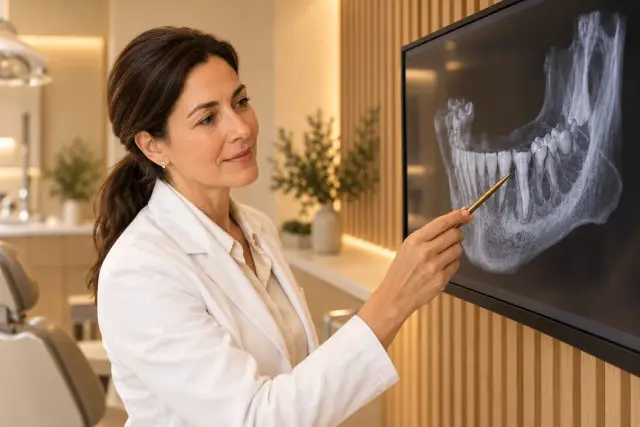
Precise CBCT mapping of the nerve canal along its full course is essential and guides every step of the surgery.
- 2
Reviewing the alternatives first
Short implants, tilted placement, vertical grafting, and a shorter restorative span are all considered and discussed before this route is chosen.
- 3
Informed consent
The risk of altered lip and chin sensation, including the possibility that it is permanent, is discussed in detail and in writing before you decide.
- 4
The procedure
A window is opened in the outer jaw, the nerve bundle is carefully freed and moved aside, and implants are placed into the full height of bone.
- 5
Repositioning & grafting
The nerve is returned against the implants, protected with graft material or a membrane, and the site is closed.
- 6
Monitored healing
Sensation is formally tested and recorded at each follow-up so recovery is tracked objectively rather than by impression.
- 7
Restoration
Once integrated, the implants are restored in coordination with your dentist.
Recovery & aftercare
Altered sensation of the lip and chin on the treated side is expected immediately after surgery — numbness, tingling, or a heavy feeling. This is the anticipated consequence of moving the nerve, not a complication, and it typically improves progressively over weeks to months as the nerve recovers.
We monitor sensation closely and formally throughout healing, mapping the affected area at each visit so that recovery can be tracked. Most patients see steady improvement; a minority are left with some permanent alteration, which is why the decision is weighed so carefully beforehand.
The surgical discomfort itself is usually mild and managed with standard aftercare — swelling and soreness for several days, comparable to other implant surgery. It is the sensory change, not the pain, that defines this recovery.
Common questions
- Will I lose feeling in my lip?
- A change in lip and chin sensation is expected right after surgery and usually improves over weeks to months. There is also a small but real risk of permanent altered sensation — reported in roughly 3–5% of cases for nerve lateralization, and higher for nerve transposition — so it is a recognized risk we discuss in detail and weigh against the alternatives before surgery.
- What is the difference between lateralization and transposition?
- Lateralization moves the nerve sideways out of the way while leaving its exit point intact. Transposition additionally frees the nerve where it leaves the jaw, allowing it to be moved further back. Transposition creates more room but carries a higher risk of lasting sensory change, so lateralization is preferred where it is sufficient.
- Is there another option?
- Usually yes, and they are considered first — short implants, implants tilted to avoid the canal, vertical bone grafting, placing fewer implants further forward, or accepting a shorter restoration. Nerve repositioning is reserved for cases where the alternatives have been genuinely examined and don’t work.
- Does altered sensation affect how I speak or eat?
- It affects feeling, not movement. The nerve involved is sensory only — it does not control the muscles of the lip or face — so speech and facial expression are unaffected. What patients notice is numbness when eating or drinking, and difficulty telling if something is on the lip.
- How long does sensation take to return?
- Most of the recovery happens over the first several months, with slower improvement continuing beyond that. Sensation that has not recovered by around a year is less likely to change substantially afterward, which is why we map and record it at every follow-up.
- Why not just use short implants instead?
- Often that is the better answer, and modern short implants perform well in situations that once required this surgery. They aren’t universally suitable — very little bone height, heavy bite forces, or a long restorative span can all rule them out. Where short implants will work, we use them.
Want a second opinion first?
If you’ve been quoted implant, bone-grafting, or sinus-lift treatment and want to be sure it’s the right plan, a specialist second opinion is a low-cost, no-pressure way to confirm your options before you commit.
Request a second opinionTalk to a specialist about mandibular nerve repositioning
Whether you’re a patient considering treatment or a dentist referring a case, we’ll evaluate, plan, and coordinate care from diagnosis through follow-up.
Sources
This information is provided for educational purposes and is not a substitute for a professional evaluation. Diagnosis and treatment should always be determined by a qualified dental professional based on your individual condition.