Dental Implant Dentistry
Peri‑Implant Soft‑Tissue Procedures
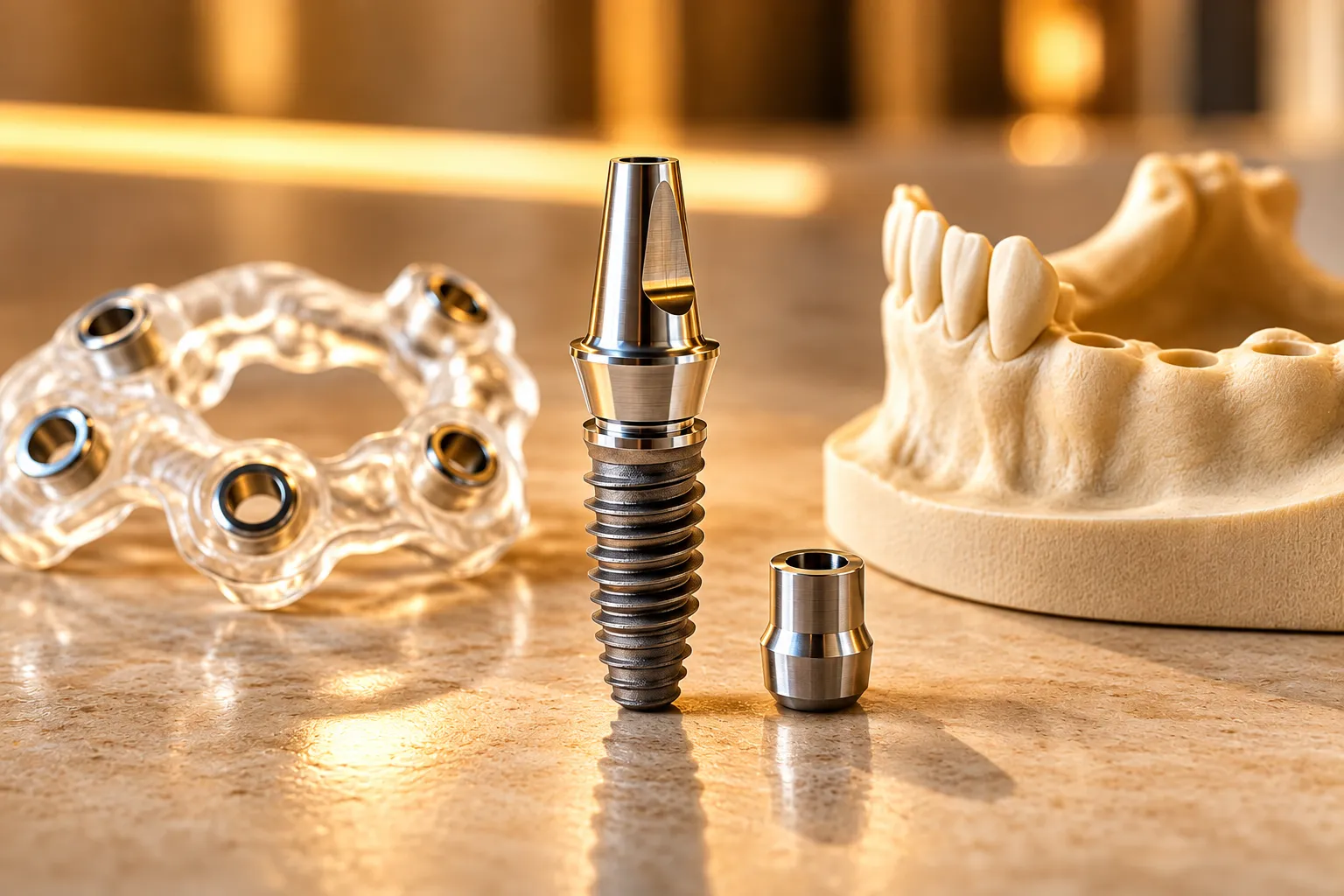
Healthy gum tissue around dental implants is essential for long-term stability, function, and a natural appearance. Peri-implant soft-tissue procedures enhance or restore that tissue — adding thickness, increasing the band of firm attached gum, and refining the way the tissue meets the restoration.
The tissue around an implant is not built like the tissue around a tooth. A natural tooth is attached to the surrounding gum by fibers that insert into its root surface, forming a genuine biological seal against bacteria. An implant has no such attachment; the fibers run parallel to it rather than into it. The seal is weaker by design, which is why thickness and the presence of firm, immobile tissue matter far more around an implant than around a tooth.
Thin or mobile tissue around an implant has practical consequences. It is harder to keep clean because brushing pulls at it, it is more prone to recession that exposes the metal beneath, and it offers less resistance to the inflammation that leads to peri-implant bone loss. At a front tooth, thin tissue also shows the gray of the implant through it.
Grafting can be done before implant placement, at the same time as it, when the implant is uncovered, or years later to correct a problem. Doing it earlier is generally easier and more predictable than correcting a deficiency after the restoration is in place.
Who it’s for
- Thin or inadequate gum tissue around an existing or planned implant
- Recession that has exposed the implant collar or abutment
- A gray shadow showing through thin tissue at a front-tooth implant
- Little or no firm attached tissue, making the area uncomfortable to clean
- Esthetic concerns where an implant sits in the smile zone
- A history of peri-implant inflammation, to reduce the risk of recurrence
What to expect
- 1
Evaluation
We assess tissue thickness, the width of firm attached gum, and how the tissue sits relative to the restoration and the neighboring teeth.
- 2
Timing the graft
Whether to graft before placement, at placement, at uncovering, or after restoration — each has different advantages, and the choice depends on your situation.
- 3
Soft-tissue grafting
Connective tissue from the palate, or a substitute material, is placed to thicken the gum and increase the band of firm attached tissue.
- 4
Contouring
The tissue is shaped so the restoration emerges from the gum the way a natural tooth would, rather than sitting on top of it.
- 5
Healing & maturation
The graft integrates over the following weeks and continues to blend in color and contour for some months afterward.
Recovery & aftercare
Expect mild tenderness at the treated site for several days, managed with soft foods and gentle care around the area. Where tissue was taken from the palate, that donor site is often the more noticeable of the two and stays tender for a week or two.
Don’t brush over the graft until cleared, and don’t pull the lip out to inspect it — grafts around implants are as vulnerable to disturbance as grafts around teeth.
The tissue continues to mature and blend over the following weeks and months. We monitor implant health at follow-up and confirm the tissue has stabilized before finalizing any restoration.
Common questions
- Why does gum tissue matter more around an implant than a tooth?
- Because the attachment is weaker. Natural teeth have fibers inserting directly into the root, forming a real biological seal. Around an implant those fibers run parallel instead, so the barrier depends much more on having thick, firm, immobile tissue. Thin tissue around an implant is a genuine risk factor, not just an esthetic one.
- Can gum tissue be rebuilt if it’s already been lost around an implant?
- Often, yes. Soft-tissue grafting can restore thickness and, in many cases, coverage — though full coverage of an exposed implant surface is harder to achieve than root coverage on a natural tooth. We’ll be realistic about what’s achievable at your specific site.
- There’s a gray shade showing through my gum. Can that be fixed?
- Usually. The gray is the implant or abutment showing through tissue that’s too thin to mask it. Thickening the tissue with a connective tissue graft is the standard solution, and changing to a differently colored abutment sometimes helps alongside it.
- Is it better to graft before or after the implant?
- Earlier is generally easier. Grafting before or during placement works with an undisturbed site and no restoration in the way. Correcting a deficiency after the crown is fitted is possible but more demanding, and may mean removing the restoration temporarily.
- Where does the graft tissue come from?
- Usually from beneath the surface of your own palate, which gives the most predictable result. Donor or substitute materials avoid a second surgical site and are a reasonable alternative, particularly where several sites need treating.
- Will this stop me getting peri-implantitis?
- It reduces one risk factor rather than removing the risk. Adequate thick tissue makes the area easier to clean and more resistant to inflammation, but plaque control and regular maintenance remain what actually prevent peri-implant disease.
Want a second opinion first?
If you’ve been quoted implant, bone-grafting, or sinus-lift treatment and want to be sure it’s the right plan, a specialist second opinion is a low-cost, no-pressure way to confirm your options before you commit.
Request a second opinionTalk to a specialist about peri‑implant soft‑tissue procedures
Whether you’re a patient considering treatment or a dentist referring a case, we’ll evaluate, plan, and coordinate care from diagnosis through follow-up.
Sources
This information is provided for educational purposes and is not a substitute for a professional evaluation. Diagnosis and treatment should always be determined by a qualified dental professional based on your individual condition.