
Waco & the I-35 Corridor · Periodontics & Implant Surgery
Specialist gum & implant surgery for Waco & the I-35 corridor
The Waco, Temple, and Killeen area has grown quickly, but advanced periodontal and implant surgery often still means looking to a larger metro. Waco sits about 90–100 miles north of our Austin office — a direct route down I-35 — and care is led by Dr. Jane Smith, a specialist-trained periodontist and oral plastic reconstructive surgeon with many years treating exactly these cases.
We make the distance workable: a clear plan from the first visit, treatment grouped into as few trips as practical, and close coordination with your dentist in Waco, Temple, Belton or anywhere along the corridor so day-to-day care stays local.

What we treat
Common reasons Waco and I-35 corridor patients and dentists reach out:
Advanced gum disease
Treatment for moderate-to-severe periodontitis — pocket reduction, osseous, and regenerative surgery to save teeth.
Learn more →Dental implants
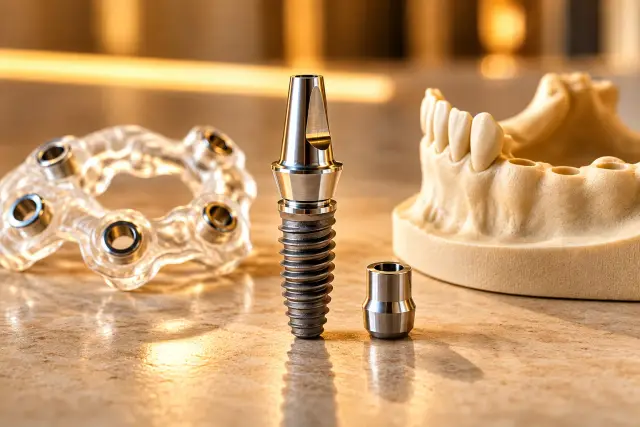
Single-tooth, multiple-tooth, and full-arch implants, including cases other offices have declined.
Learn more →Bone grafting & sinus lifts
Rebuilding the jawbone foundation when bone has been lost to disease, extractions, or time.
Learn more →Extractions with grafting
Socket and ridge preservation at the time of extraction to protect future implant options.
Learn more →Serving communities across the I-35 corridor
We see patients and accept referrals from Waco, Temple, Belton, Killeen, Harker Heights, Salado, Hewitt, Woodway, and the wider region along the I-35 corridor. Whether you’re coming from the Waco–Temple–Killeen area or somewhere in between, we’ll help you decide if specialist treatment is the right step. See all areas we serve →
We also serve Round Rock & Williamson County, San Antonio, San Marcos & New Braunfels.
The corridor problem
The stretch of I-35 from Waco through Temple and Killeen is home to several hundred thousand people, a major university, and one of the largest military installations in the country — and it sits almost exactly midway between the two metros where the region’s surgical specialty care is concentrated. General dentistry along the corridor is plentiful. Advanced periodontal reconstruction and complex implant surgery are not.
The result is a familiar pattern: a patient in Temple or Killeen is told they need something their dentist doesn’t perform, and the options are Austin to the south or Dallas–Fort Worth to the north. For most of the corridor south of Waco, Austin is the shorter and simpler drive — one road, no metro crossing, and predictable timing outside of rush hour.
The distance is real, and we plan for it rather than around it. What that means in practice is fewer, longer appointments, a clear roadmap before you start, and as much of the routine care as possible handed back to your own dentist in Waco, Temple, Belton, or Killeen.
Planning treatment around a ninety-mile drive
A ninety-mile trip is a half-day commitment. That has to shape the treatment plan, not just the appointment book.
- 1
Talk before you travel
Call and describe the situation, or send recent radiographs. We can often tell you whether a visit is likely to help — and if the answer is that this is better handled locally, we’ll say so before you spend a morning on I-35.
- 2
One visit for all records
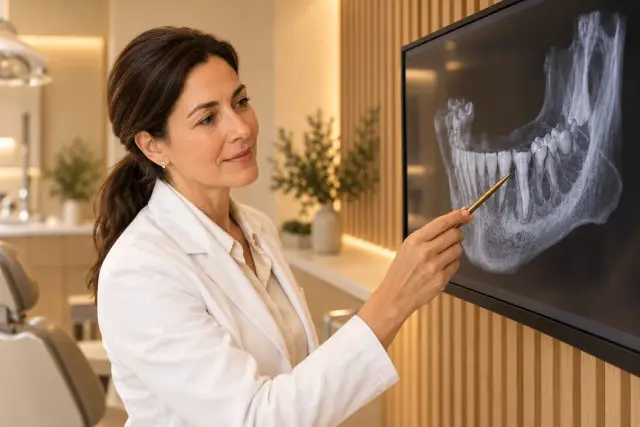
Consultation, examination, CBCT scan, and digital scans in a single longer appointment. Nobody should drive from Killeen twice to be diagnosed.
- 3
A written plan you take home
Findings, options, sequence, timeline, and costs in writing. You decide at home rather than on the spot, and you know the total number of visits before you agree to the first one.
- 4
Consolidated surgery
Where clinically sound, extractions, grafting, and placement are combined into one surgical visit instead of three separate trips.
- 5
Aftercare that doesn’t require the drive
Written post-operative instructions, direct contact details, and phone or photo review for anything that doesn’t genuinely need a physical examination.
- 6
Care handed back locally
Hygiene, maintenance, restorative work, and routine follow-up stay with your own dentist along the corridor. We send them the imaging, the report, and the plan.
Questions from corridor patients
- How long is the drive from Waco or Temple?
- Roughly ninety to a hundred miles from Waco and around seventy from Temple, straight down I-35 — usually an hour and a half from Waco, an hour or so from Temple and Belton, outside peak periods. We schedule to avoid the worst of the Austin approach where we can.
- Is it worth coming this far?
- For routine periodontal care or a single straightforward implant, probably not — that’s better done close to home. For complex reconstruction, severe bone loss, failing implants, or a second opinion on a large plan, it’s a small number of trips for a materially different outcome. Call and describe it; we’ll give you a straight answer.
- What if something goes wrong after surgery when I’m back home?
- You’ll leave with written guidance on what’s normal, what isn’t, and direct contact details. The great majority of post-operative concerns are resolved by phone. Where you need to be seen and can’t travel, we’ll coordinate with your local dentist.
- Can my dentist in Waco or Killeen do the follow-up?
- For hygiene, maintenance, and routine review, yes — and we’ll coordinate directly with them. Surgical checks such as suture removal and graft assessment we’d rather do ourselves, and we schedule those to minimize the number of trips.
- Can you review my scans before I commit to the drive?
- Yes, and it’s the sensible first step. A recent CBCT or panoramic radiograph is usually enough for us to say whether a visit is likely to be productive. It doesn’t replace an examination, but it avoids a wasted morning.
- I’m having sedation. Can I get home the same day?
- You’ll need someone to drive you, so plan that in advance. For a longer surgery some corridor patients prefer to stay in Austin overnight rather than make the return trip the same afternoon.
- Do you take referrals from dentists along the corridor?
- Regularly. Send whatever you have — radiographs, a note, or a phone call — and we’ll confirm receipt, schedule promptly, and send you the plan before treatment begins. Implant cases are planned restoratively and shared with you before surgery.
Request a consultation
Patients and referring doctors are both welcome. Call (000) 000 0000 or use the buttons below.
This information is provided for educational purposes and is not a substitute for a professional evaluation. Diagnosis and treatment should always be determined by a qualified dental professional based on your individual condition.