


Austin · Periodontics
Periodontist in Austin
A periodontist is the dental specialist for the gums, the bone that supports your teeth, and dental implants. If you’ve been referred for specialist care — or you’re dealing with bleeding gums, gum recession, loose teeth, or missing teeth — our Austin practice is led by Dr. Jane Smith, a specialist-trained periodontist and oral plastic reconstructive surgeon with many years of experience.
The focus is straightforward: protect your natural teeth wherever possible, rebuild what has been lost, and restore a healthy, comfortable smile — using minimally invasive, patient-centered techniques and working in step with your general dentist.

What a periodontist treats
These are the most common reasons patients in Austin are referred to or seek out a periodontist. Each links to a plain-language guide.
Gum disease
From early gingivitis to advanced periodontitis — scaling and root planing through to surgical and regenerative treatment.
Learn more →Dental implants
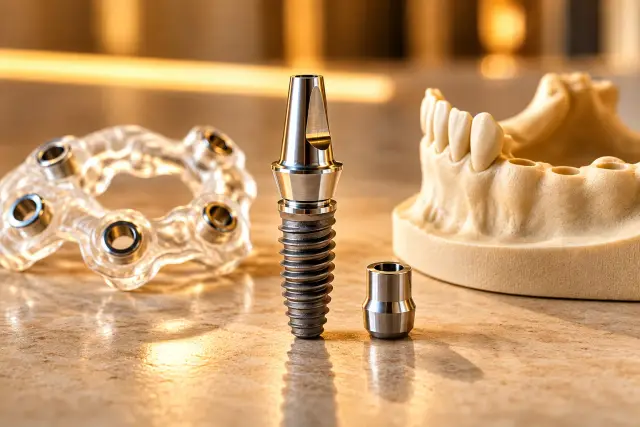
Single-tooth, multiple-tooth, and full-arch implant placement, including complex cases.
Learn more →Bone loss & grafting
Bone grafting, ridge augmentation, and sinus elevation to rebuild a foundation for treatment.
Learn more →Gum recession & grafting
Soft-tissue grafting and periodontal plastic surgery to cover exposed roots and restore the gumline.
Learn more →Why choose Dr. Smith
Dr. Smith brings advanced specialty training in periodontics, and many years teaching and lecturing on periodontal surgery, implant reconstruction, and bone grafting. That depth matters most in difficult cases — severe periodontal disease, significant bone loss, failing teeth, and patients who may have been told their situation was hopeless elsewhere.
For patients, that translates into careful diagnosis, honest options explained in plain language, and a calm, conservative approach that prioritizes long-term health and natural-looking results. Meet Dr. Smith →
What a periodontist does that a general dentist doesn’t
A periodontist completes several additional years of hospital-based specialist training after dental school, focused entirely on one thing: the gum, the bone, and the ligament that hold teeth in place — and, because implants replace roots in that same bone, on implant surgery.
Your general dentist treats the teeth themselves and manages the early stages of gum disease well. A referral comes when the problem has moved past that: pockets too deep to clean without surgical access, bone that has been destroyed and might be rebuilt, gum that has receded and needs grafting, or an implant site that needs bone before it can take an implant at all. These are procedures a specialist performs every week rather than occasionally.
It is a collaboration, not a transfer. Your dentist keeps your check-ups, fillings, crowns, and hygiene visits; we handle the surgical phase and hand the case back with a written plan. Nobody expects you to change practices — and if you don’t have a regular dentist, we’ll help you find one in your part of Austin.
Your first visit
The first appointment is diagnostic, not surgical. Nothing is done to you on the day beyond examination and imaging — you leave with information and a plan, and decide afterward.
- 1
Before you arrive
Bring a list of your medications, any recent X-rays from your dentist (we’d rather request those than repeat them), and your insurance details if you have coverage.
- 2
The examination
Pocket depths measured around every tooth, along with recession, mobility, and bleeding points — the numbers that distinguish gingivitis from periodontitis, and the baseline everything afterward is measured against.
- 3
Imaging
Digital radiographs, and a 3D CBCT scan where implants are being planned or the anatomy needs mapping in three dimensions. The scan itself takes well under a minute.
- 4
The conversation
Your own findings explained with the chart in front of you, the options set out including the option of doing nothing, and an honest view of what each one involves.
- 5
A written plan
Stages, sequence, timeline, and costs in writing, with a copy to your referring dentist. You take it away and think about it.
Questions Austin patients ask
- Do I need a referral to see a periodontist?
- No. Many patients are referred by their general dentist and we work closely with practices across Austin, but you’re welcome to book an evaluation directly — particularly if your gums bleed, a tooth has become loose, or you’ve been told you need implants and want the site assessed first.
- Will I have to change dentists?
- No. We handle the surgical phase and send your dentist a full report; your check-ups, cleanings, and restorative work stay exactly where they are. If you don’t currently have a general dentist, we’ll help you find one nearby.
- What does treatment cost, and does insurance cover it?
- Costs depend entirely on what’s involved — a course of scaling and root planing is a very different proposition from implant surgery with bone grafting. Periodontal treatment is often at least partly covered; implants vary widely by plan. You get a written breakdown by stage after the evaluation, before committing to anything.
- How many visits will I need?
- Non-surgical periodontal therapy is usually one to two visits plus a re-evaluation. Surgical treatment adds an appointment and a follow-up. Implant treatment runs over months, though most of that is healing time rather than appointments — typically three or four visits spread over the year.
- I’ve been told a tooth is hopeless. Is it worth a second opinion?
- Often, yes. Some teeth genuinely can’t be saved, and we’ll tell you so plainly. But regenerative techniques change the prognosis for certain defects, and a tooth written off on a two-dimensional X-ray sometimes looks quite different in three. It costs you one appointment to find out.
- Do you see emergencies?
- Yes. Gum abscesses, sudden swelling, and implant problems are seen promptly — call the office and we’ll triage over the phone. For difficulty breathing or swallowing, or rapidly spreading facial swelling, call 911 instead.
- I’m nervous about surgery. What are my options?
- Most periodontal procedures are done under local anesthesia and are considerably less demanding than patients expect. Sedation is available for longer or more involved treatment. Tell us at the consultation — it changes how we plan the appointment, not just how we reassure you.
Visit us in Austin
We serve patients and referring doctors throughout Austin, West Lake Hills, Rollingwood, Tarrytown, Clarksville, Hyde Park, Barton Hills, Zilker, Mueller, and greater Austin. Our office is at 123 Example Boulevard, Suite 100, Austin, TX 78701 — call (000) 000 0000. Office hours are Monday–Friday, 9:00 AM – 5:00 PM.
Patients also travel to us from along the I-35 corridor — Round Rock & Williamson County, San Marcos & New Braunfels, San Antonio, and Waco. See all areas we serve.
Request a periodontal consultation
Whether you’re a patient or a referring doctor, we’ll help you understand the condition and the most conservative path forward.
This information is provided for educational purposes and is not a substitute for a professional evaluation. Diagnosis and treatment should always be determined by a qualified dental professional based on your individual condition.